Showing posts with label Home and Garden. Show all posts

DIY Home Organization Hacks


DIY Home Organization Hacks for Busy Families


Missing shoes, crowded kitchen counters, laundry piles, and school papers can make an ordinary weekday feel harder than it needs to. The most useful DIY home organization hacks for busy families don't require a custom closet or a free weekend.

They rely on simple supplies, make everyday items easy to see, and take little effort to maintain. Every family member gets an obvious place to put things, so the home can be reset without losing your evening to it. The goal isn't a picture-perfect house. It's a home that works for real life.

Key Takeaways

  • Start with one high-impact hotspot, sort items into keep, move, donate, and trash, and work in 10- or 15-minute sessions.
  • Create visible drop zones for shoes, coats, backpacks, lunch containers, paperwork, and other everyday belongings.
  • Organize kitchens, bedrooms, and laundry areas around family routines so frequently used items stay easy to reach.
  • Match storage, labels, and chores to each child's age while keeping unsafe or rarely used items secured or out of sight.
  • Use short daily resets, weekly family meetings, and one-in, one-out rules to keep the system manageable as routines change.

Time-Saving Organization Hacks for the First Trouble Spot

Start by organizing one trouble spot, not the whole house. A kitchen counter, hallway bench, or junk drawer gives you a quick win and shows where the system breaks down.

Before buying bins, remove what doesn't belong. Group the remaining items by how your family uses them, then create a clear home for each group. Open storage works well for daily-use belongings because people can see where things go. Use hidden organization for rarely used items.

Set a timer for 10 or 15 minutes. When it rings, stop. Small sessions keep you from pulling everything out and creating a larger mess.

Use a quick sort with keep, move, donate, and trash piles

Work on one drawer, shelf, or surface at a time. Make four temporary piles: keep, move, donate, and trash. This simple decluttering approach is also the basis of a practical home decluttering guide.

Toss broken markers, dried glue, expired food, and mystery cords. Donate outgrown clothes, duplicate kitchen tools, and toys no one has touched in months. Move items that belong in another room before deciding where to store them.

Keep a donation bag near the door or in the trunk. When you run errands, take it with you. That prevents unwanted items from circling back into closets.

Choose inexpensive supplies that make items easy to find

Printable labels, wall hooks, storage bins, baskets, drawer dividers, magazine files, clear storage containers, a binder, and a three-hole punch can solve most daily clutter problems.

Measure shelves and drawers first. Then test one bin or divider before buying a matching set. A container that looks great but doesn't fit the way your family moves through the house becomes another thing to manage.

Storage only works when the person putting an item away can do it in seconds.

Build entryway drop zones that prevent clutter at the door

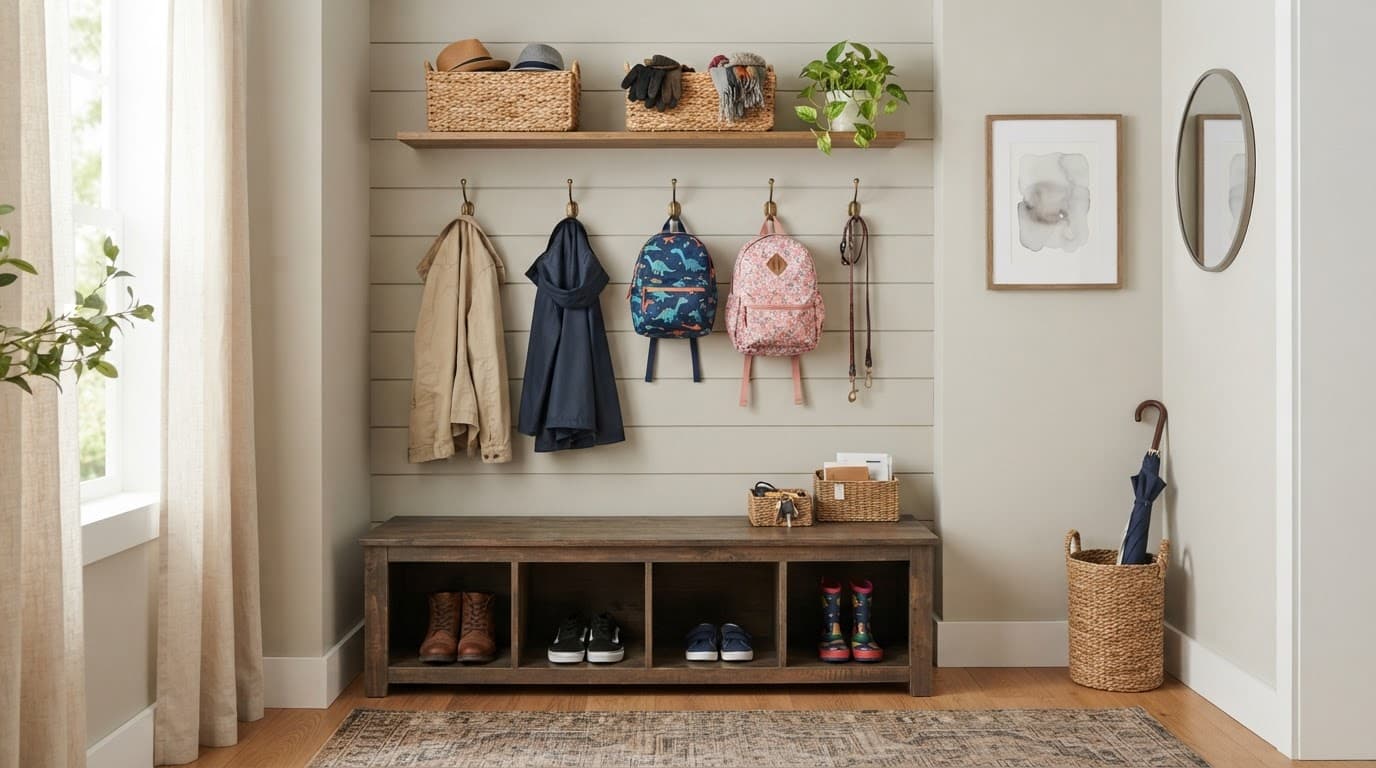
The entryway collects the proof of a busy life: backpacks, mail, shoes, coats, sports gear, and random toys. Give each person a small, visible spot before those items spread through the house.

Install two rows of hooks if wall space allows. Put low hooks where children can reach them, and use higher hooks for adult coats and bags. Add one basket per person for hats, gloves, library books, or small gear.

Tidy family entryway with coats, backpacks, shoes, and baskets.

An open shoe rack or shoe caddy works well for pairs worn every day. Set a limit, such as two pairs of shoes and one coat per person. A bench compartment or upper shelf adds hidden organization for seasonal or occasional gear. Keep everyday shoes and coats easy to reach.

Create a five-minute leaving-the-house station

Place a small basket near the door for things that need to leave, such as returns, permission slips, library books, or packages. Put keys on a high hook, safely out of children's reach.

Keep lunch containers and daily bags in one visible spot. Each evening, return washed containers, pack what you can, and move tomorrow's essentials to the drop zone.

Once a week, spend 10 minutes decluttering mail, stray toys, trash, and out-of-season gear. A modest routine works better than a complicated setup that nobody remembers to use. For another simple decluttering routine, try the 12-item sorting method for items to toss, donate, and return.

Organize the kitchen around busy family routines

Kitchen organization should make breakfast, dinner, and lunch packing less chaotic. Arrange supplies by the task they support, rather than grouping everything by cabinet type.

Create zones for breakfast foods, snacks, lunch supplies, baking, and dinner prep. These areas can support meal planning without making the kitchen feel rigid. Keep frequently used plates, cups, and utensils close to where people eat. Put mixing bowls, pans, and cooking tools near the range or prep area.

Clear containers help you spot low supplies before a rushed morning. Drawer dividers stop utensils and food-storage lids from turning into a tangled pile.

Set up a kid-friendly snack and drink zone

Choose a low pantry shelf, drawer, or refrigerator bin for approved snacks, water bottles, napkins, and simple dishes. Young children do well with picture labels. Older kids can use word labels and refill the area with guidance.

During family meetings, parents can agree on approved snacks, refill responsibilities, and device-charging expectations. Keep sharp tools, cleaning products, medications, and adult-only foods somewhere secured and out of reach. The U.S. Environmental Protection Agency lists products such as cleaners, batteries, pesticides, paint, and oils among common household hazardous waste, so don't treat those items as ordinary pantry clutter.

Make a lunch-packing and family charging station

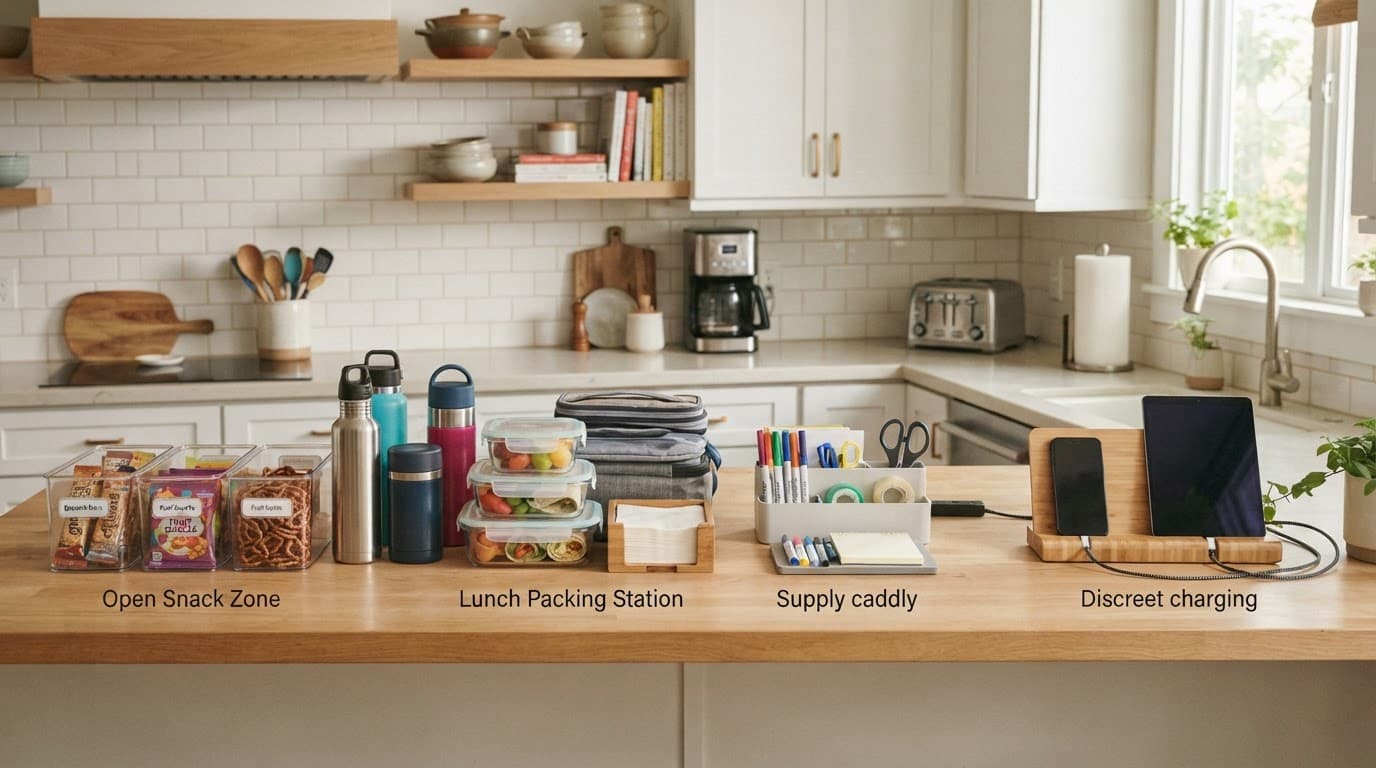
Keep lunch bags, reusable containers, labels, and grab-and-go foods together near the kitchen or entryway. A small caddy can hold scissors, reusable utensils, and snack bags.

Organized kitchen counter with snack bins, bottles, lunch containers, and a charging area.

Set up a compact family command center for device charging, lunch reminders, and school forms. If space is limited, keep it visibly separate from food-prep zones. Use hidden organization inside a cabinet or concealed drawer for cords and occasional kitchen tools, while keeping frequently used supplies easy to see.

During the evening reset, wash lunch items, plug in devices, and place backpacks and forms in the drop zone.

Make kids' rooms easier to clean and maintain

Children are more likely to clean up when storage is simple and within reach, including low, open storage bins. A room with six toy categories supports simple toy containment better than one with 30 tiny containers.

When space allows, divide the room into sleep, play, and study areas. Use low bins for toys, open shelves for books, and a basket for everyday odds and ends; toy rotation can limit how many toys are available at once. Use hidden organization, such as under-bed bins and high shelves, for seasonal clothes or rarely used items, while keeping everyday belongings at child level.

Match labels and storage to each child's age

Preschoolers need big open bins and picture or printable labels. Elementary-age kids can sort books, building toys, dolls, and art supplies with word labels. Teens usually need flexible drawers, shelves, and wardrobe storage for clothing, laundry, or seasonal items.

Store everyday clothes, favorite books, and common toys at child level. Keep fragile, valuable, or unsafe belongings elsewhere. For clothing that no longer fits, build a donate box into the closet routine as part of your closet organization. Professional organizing tips on donating household items can help you make regular edit sessions part of family life.

Use a simple morning and evening reset

A short reset can include putting pajamas in a basket, returning shoes to their spot, making the bed, and doing a five-minute pickup before screen time or bedtime.

Use family meetings to choose one or two age-appropriate tasks for each child. Visual chore charts may help younger kids follow the routine without repeated reminders. Keep the standard realistic, especially during school weeks.

Stop laundry and paperwork from turning into piles

Laundry and paper piles grow because they involve several decisions. The fix is to reduce those decisions and place supplies where the work already happens.

Place hampers where clothing tends to land, such as bedrooms, bathrooms, or a stair landing. For paperwork, set up one family command center near the place where you open mail or unpack backpacks. Include folders, forms, and the shared schedule.

Create a laundry system that reduces rework

Use separate hampers or labeled sections to sort lights, darks, towels, or sports uniforms before wash day. A simple laundry system keeps stain supplies together in a child-safe caddy and reserves a clear table or counter for folding.

Maintain the laundry system with a quick daily sweep for stray socks and dish towels. Return clean clothing to bedrooms as soon as practical. Don't create so many steps that everyone leaves baskets in the hallway instead.

Process mail and school papers within 48 hours

Give each piece of paper one destination: recycle it, file it, add it to the command center, or punch it into a binder. Use separate folders for each family member, with printable labels on folders or binder tabs.

Track school events, appointments, and deadlines on a shared calendar or a digital calendar. Hold weekly family meetings to review forms, upcoming events, and responsibilities.

The NPR Life Kit guide to organizing important paperwork offers a useful reminder: papers need decisions, not a larger pile. Do a weekly paper reset, complete forms, file what matters, and clear the command center.

Keep the whole home organized with short family resets

A one-time organizing project fades fast without maintenance. Short family resets make the system stick because everyone handles a small part before clutter gets out of hand.

Try a daily five- or 10-minute reset after dinner or before bedtime. Add an after-school routine for backpacks, shoes, lunch containers, and school papers. These small habits fit into daily routines without becoming a full cleaning routine. A Sunday reset can cover the laundry system, calendar checks, and a quick sweep of shared spaces.

Use hotspot-first decluttering when time is limited

Focus on high-impact spots: the front door, kitchen counter, dining table, hallway, pantry, or laundry catchpoint. Use low-cost storage solutions while decluttering, then pick one hotspot and set a 10- to 15-minute timer. Stop when time is up.

Use a one-in, one-out rule when the house starts feeling full. It works well for toys, shoes, clothing, water bottles, and kitchen gadgets. A pre-birthday and post-holiday review also creates room before new gifts arrive.

Adapt the system for small spaces and changing needs

Apartments and shared bedrooms need vertical space. Use over-the-door organizers, wall hooks, narrow shelving, under-bed bins, and slim rolling carts for hidden organization that keeps infrequently used items out of sight.

Review your setup during family meetings, sharing household chores by age and availability as children grow, sports seasons change, or work schedules shift. The best DIY home organization hacks for busy families can change with your routines instead of locking you into one rigid system.

Frequently Asked Questions

What is the best place to start organizing a busy family home?

Start with one trouble spot, such as the entryway, kitchen counter, or laundry catchpoint. A 10- or 15-minute session can create a quick win without making the rest of the house harder to manage.

How can I make home organization easier for children?

Keep everyday belongings at child level and use open bins, simple categories, and picture or word labels that match each child's age. Assign one or two realistic tasks so children can take part without needing constant reminders.

How do I prevent entryway clutter from spreading through the house?

Create a visible drop zone with hooks, baskets, and a shoe rack or caddy. Give each family member a defined place for coats, bags, shoes, and items that need to leave the house.

What is a simple way to manage laundry and paperwork?

Place hampers where clothes usually land and sort laundry before wash day. For mail and school papers, give each item one destination: recycle it, file it, add it to the command center, or place it in the appropriate binder.

How often should we reset the home?

Try a five- or 10-minute reset each day, followed by a short weekly review of laundry, paperwork, and shared spaces. Regular small resets are easier to maintain than occasional large organizing projects.

A calmer home starts with one easy reset

The best systems are visible, simple, and easy enough for everyone to use. Start with one hotspot, remove what no longer belongs, and give everything left a clear home.

A basket by the door, a snack bin at child height, or a 10-minute evening reset can make a busy house feel more manageable. Small daily habits create order without a large budget or perfect schedule. Use family meetings to choose the next hotspot or adjust responsibilities together.

Fall Mantel Ideas without Pumpkins


25 Fall Mantel Ideas Without Pumpkins for a Cozy Home


I want to add one thing before you read the article.  When it comes to candles, I personally just use no- flame candle warmers.  I'm always afraid to take the chance on a fire.  If you use real fire in a fireplace, please take every precaution.  No amount of beautiful decorating is worth losing your home or loved ones.

A fall fireplace mantel can feel seasonal without a single pumpkin. Warm colors, layered texture, and gentle light create a softer look with dried branches, amber glass, books, baskets, artwork, candles, and cozy textiles.

This neutral fall decor works with pieces you already own and suits farmhouse, cottage, rustic, traditional, modern, and rental homes. Together, these elements create a relaxed autumn aesthetic that feels collected instead of crowded.

Start With the Mantel, Room, and Decorating Style

Before buying a single vase or candle, study the fireplace as part of the room. Measure the mantel's length and depth, note the wall height, and consider nearby living room decor, media consoles, artwork, built-ins, televisions, and architectural details. Is the fireplace the room's main focal point, or does it compete with a large window or media console?

A narrow mantel needs slimmer, fewer pieces so the display doesn't feel cramped. Wide mantels can handle layers, a larger central feature, and taller objects at each end. Choose one style direction and repeat at least one color or material already found elsewhere in the room. This simple connection makes seasonal decorating feel intentional instead of looking like autumn items placed at random.

Choose a Warm Fall Color Palette

Start with calm neutrals such as cream, beige, tan, camel, and soft brown. These colors create a comfortable backdrop for seasonal accents without making the mantel look busy. Benjamin Moore recommends considering existing furniture, flooring, cabinets, countertops, and warm or cool lighting when building a room palette. Its whole-house color guidance also suggests choosing a dominant color, secondary colors, trim, and an accent that coordinate with the rest of the room.

For a seasonal touch, add one restrained autumn shade, then support it with one or two related colors:

  • Cream with warm wood and olive creates a soft, natural display.
  • Rust with amber glass and brown feels richer and more traditional.
  • Burgundy with brass and ivory adds depth without relying on bright decorations.
  • Charcoal with beige and black gives a modern mantel a grounded autumn look.

Use the room's existing colors as your guide. If your sofa has camel upholstery, repeat camel in a throw or ceramic vessel. If your artwork includes olive, bring that shade onto the mantel with foliage or a small bowl. One dominant color usually feels more polished than several accents competing for attention.
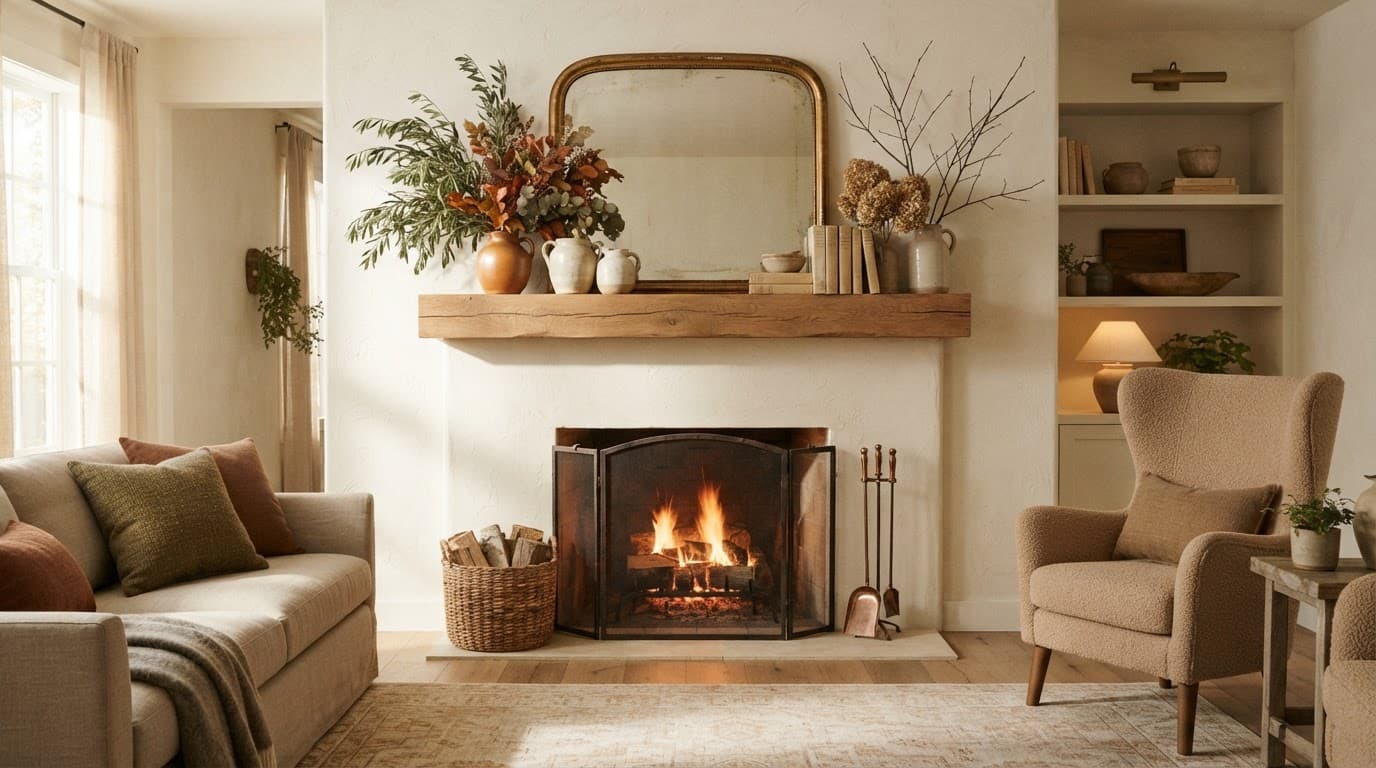
A cream mantel styled with olive branches, books, ceramics, and a rust-colored vessel.

Match the Display to Your Home's Style

The most successful pumpkin-free seasonal mantel displays look as though they belong in the room all year, with a few thoughtful adjustments. Farmhouse rooms pair well with galvanized metal, distressed wood, linen, and woven accents. For more farmhouse color ideas, see this modern farmhouse decor guide.

Cottage mantels welcome floral prints, aged books, baskets, and vintage items such as old containers. Traditional rooms can also use vintage items, along with framed art and rich fabrics. Modern rooms look better with clean lines, simple ceramic vessels, and fewer objects. Rustic spaces suit raw wood, stone, branches, wool, brass, and tarnished silver used as subdued metallic touches.

Avoid combining every style on one small shelf. A galvanized bucket, ornate brass frame, modern sculpture, and rustic branch may each look appealing alone, but together they can make the mantel feel unsettled. Pick one clear direction, then vary the height and texture within that style.

The Best Pumpkin-Free Elements for a Cozy Fall Mantel

A cozy fall mantel depends on more than seasonal objects. Fall mantel decor feels intentional when it combines warm color, varied height, soft light, and contrasting textures. Choose a few elements, then leave enough open space for each piece to breathe.
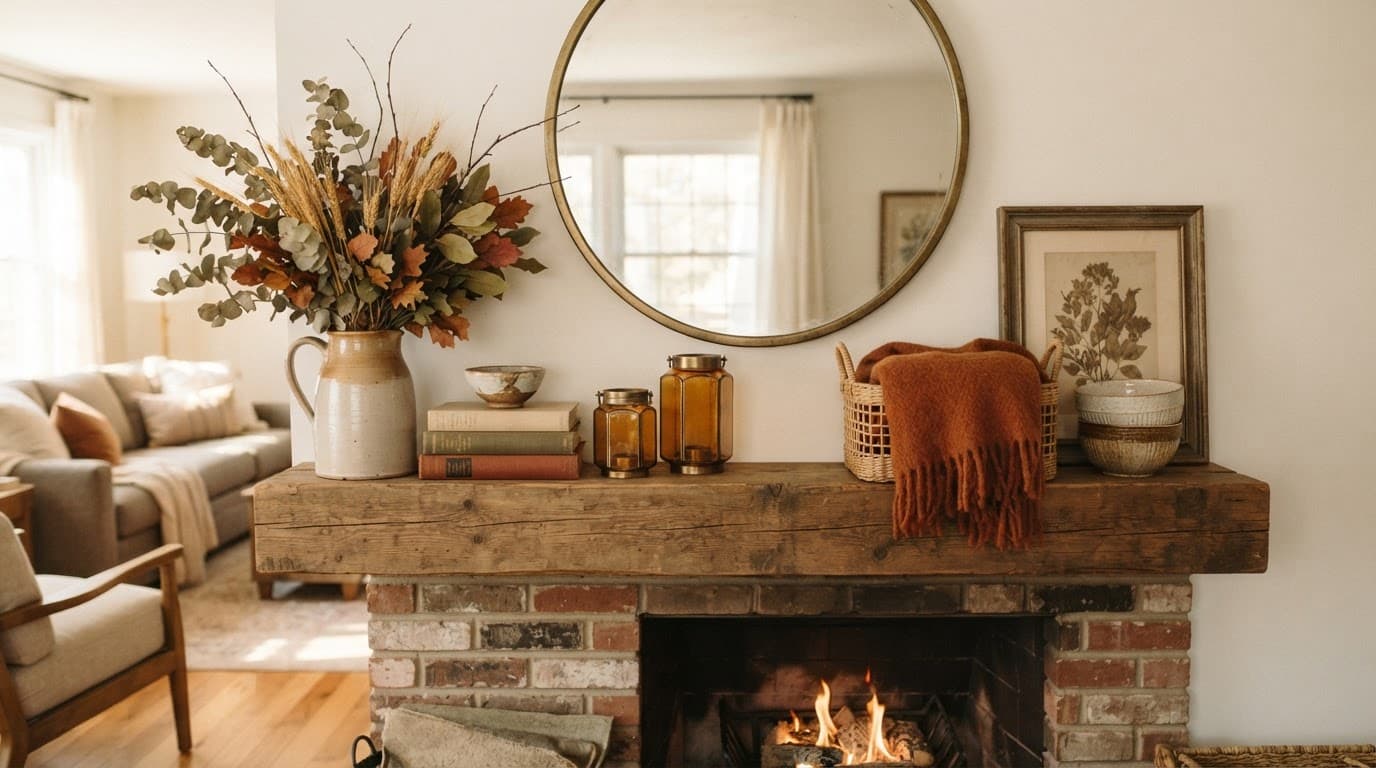
Cozy mantel with dried foliage, amber lanterns, books, and a wool throw in a nearby basket.

Use Dried Branches, Leaves, and Foliage

Place dried florals, dried hydrangeas, eucalyptus stems, wheat, preserved leaves, or bare twigs in a tall vase, pitcher, or stoneware vessel. An off-center arrangement adds height beside a television or mirror without creating a stiff, symmetrical display. These natural elements bring fall foliage and warm color into the room without relying on seasonal symbols.

Dried foliage is combustible decor, so keep it away from flames, pilot lights, hot metal, vents, and other heat sources. Avoid stems that overhang the firebox or could fall toward heat. In homes with children or pets, sturdy artificial branches can provide the same shape with less shedding and fewer fragile pieces.

Add Warm Light With Candles and Lanterns

LED taper candles, battery-operated pillars, string lights, amber glass, and frosted holders add a gentle glow without pumpkin-shaped accents. Vary the heights, but keep the display simple. For example, pair one lantern with two candles and a short glass holder instead of filling every inch.

Use stable, tip-resistant holders on a sturdy surface. Keep anything that can burn at least 12 inches from a lit candle, and follow the U.S. Fire Administration's candle safety guidance. Never leave a burning candle unattended. Extinguish it before leaving the room or going to sleep, and keep matches, loose clothing, and hair away from the flame.

Flameless candles are the better choice near dried foliage, fabric, children, pets, or heat. For a working fireplace, follow the manufacturer's exact clearances and local fire-safety guidance. No single mantel distance applies to every fireplace.

Layer Books and Small Decorative Objects

Horizontal stacks of decorative books can raise a vase, candle, bowl, or small sculpture to the right height. Choose neutral covers, warm brown, rust, olive, or muted burgundy for a subtle seasonal palette.

Support the stacks with only a few additional pieces, such as a ceramic bowl, wooden beads, framed print, or vintage object. Keep every book pile flat and stable, especially if children or pets can reach the mantel. Open space around the stacks prevents the display from looking crowded.

Bring in Woven, Wood, Stone, and Ceramic Texture

Mix baskets, rattan, seagrass, jute, terracotta, stone, raw wood, glass, and ceramic vessels. Rough materials add warmth, while smooth glass and glazed ceramic catch light and create contrast, even when the palette stays mostly neutral.

A small basket beside the fireplace can hold a folded throw or firewood when that placement suits the fireplace and remains safe. Layering textiles in a nearby basket adds softness without crowding the mantel. Keep woven materials away from flames, hot surfaces, vents, and falling embers.

Use Textiles and Seasonal Artwork Carefully

Place one folded wool, boucle, cotton, linen, or chunky-knit throw in a basket near the hearth. Add a plaid accent only when the mantel is deep enough to keep fabric safely away from flames and hot surfaces.

For artwork, choose fall-toned leaves, forests, landscapes, botanical sketches, still lifes, or muted abstracts. One large central piece works well above a wide mantel. On a narrower wall, layer two frames with different sizes, keeping the arrangement balanced without hiding every inch of the wall.

Choose a Focal Point That Is Not a Pumpkin

Every balanced mantel benefits from one main visual anchor. This mantel focal point might be tall branches, a mirror, seasonal artwork, a wreath, a lantern, or a candle grouping. Choose one piece with enough scale to hold attention, then leave breathing room around it instead of adding several competing centerpieces.

Create a Loose Branch Arrangement

Fill a cream ceramic vase, stoneware pitcher, glass vessel, or aged container with tall, relaxed branches. Bare branches, willow, and muted golden stems create a relaxed autumn mantel treatment without making the space feel themed. Their loose shape softens the straight lines of a fireplace, while their forest-inspired character introduces subtle woodland motifs.
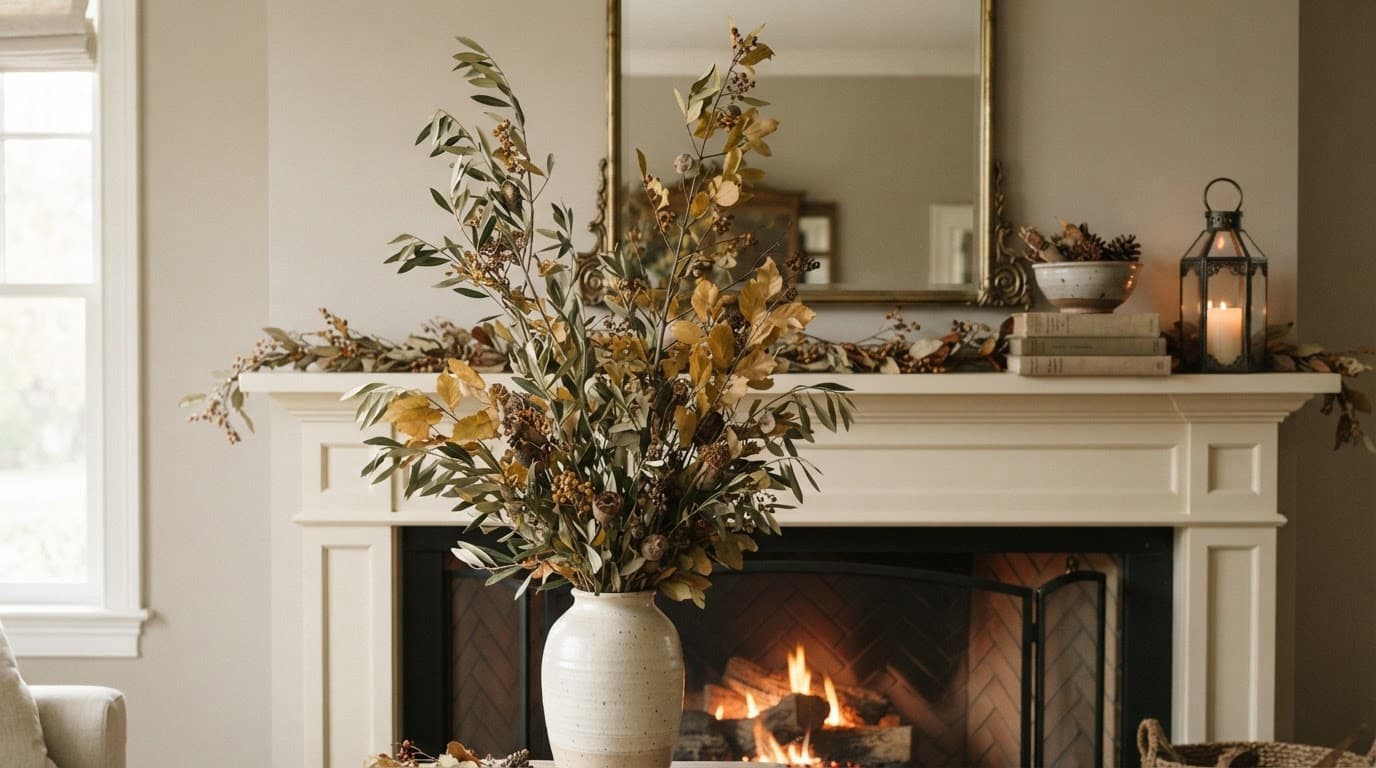
Tall autumn branches in a vase anchor a neutral mantel with books and a lantern.

Place the vessel slightly off-center rather than directly in the middle. Balance it with shorter items on the opposite side, such as a small stack of books, a low bowl, or one lantern. The branches provide the height and visual interest that a large pumpkin display often supplies, while the uneven arrangement feels more relaxed.

Keep dried branches away from flames, sparks, hot surfaces, and vents. If you plan to use the fireplace, remove combustible stems before lighting a fire.

Use a Mirror or Seasonal Artwork

One large piece keeps a simple mantel polished. Choose a round mirror for a softer look, an arched frame for a cottage feel, or a rectangular piece for a clean, classic arrangement. Fall art prints featuring leaves, landscapes, botanical sketches, or muted abstracts can add seasonal character without overwhelming the room.

A wide mantel can support one large frame layered with a smaller one. For a narrower shelf, use one piece and let the surrounding wall remain visible. Wood, brass, black, cream, or tarnished silver frames and vessels can complement different rooms without competing with the primary piece. Leaning artwork against the wall is useful when drilling isn't practical, especially in a rental, but keep the frame stable and away from the fireplace opening.

Heavy mirrors and frames need proper wall anchors or mounting hardware. Secure them carefully above a fireplace so they don't shift or fall, and follow the fireplace manufacturer's clearance instructions.

Try a Wreath or Lantern Grouping

A muted wreath is an easy pumpkin-free focal point. Look for eucalyptus, wheat, grapevine, magnolia, or simple branch wreaths in faded green, tan, cream, and brown. Hang one directly above the mantel, or place it over a mirror for a layered arrangement.

A wreath isn't your only option. One large lantern can anchor a compact mantel, while a pair of lanterns creates balance on a wider one. Fill them with battery-operated candles, pinecones, leaves, or glass votives, but avoid cramming in every seasonal accent.

Keep combustible filler separate from lit flames, and choose battery-operated candles near dry materials. The U.S. Fire Administration's candle guidance recommends stable holders and keeping burning candles at least 12 inches from anything that can burn. Skip multiple signs and small wreaths, which can make the arrangement look scattered.

Five Ready-to-Use Fall Mantel Arrangements

These five mantel vignettes offer complete starting points for different decorating styles. Each combination can be adapted to your room's scale, so shop your home before buying anything new. Keep the focal point clear, repeat a restrained fall color palette, and leave open space between objects.
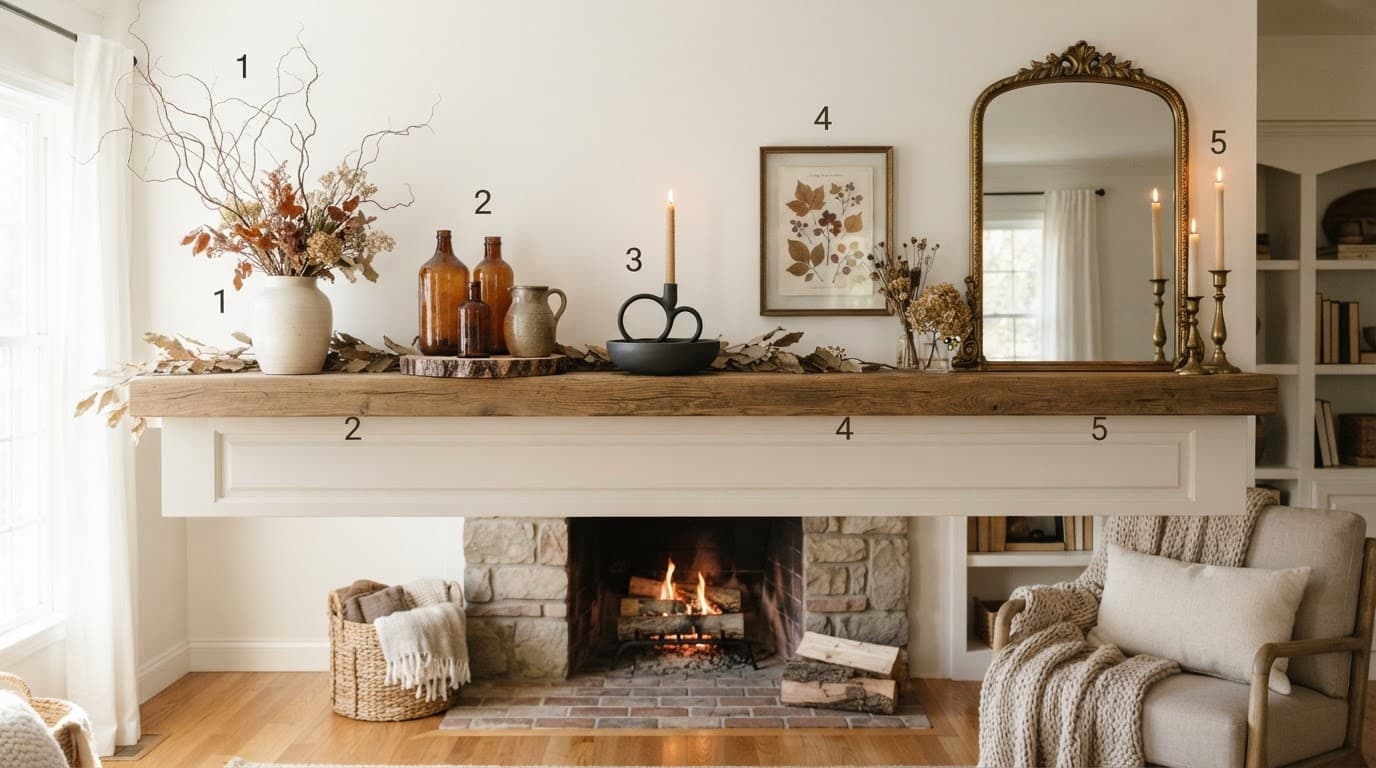
Five pumpkin-free fall mantel arrangements span a cozy living room fireplace.

Neutral and Natural

Start with a cream ceramic vase filled with bare branches. Place it slightly off-center, then balance its height with beige candlesticks or battery-operated candles on the opposite side. A short stack of neutral books can raise a small olive or tan accent without making the mantel feel crowded.

Add a woven basket near the hearth with a folded throw inside. Cream, beige, olive, and light tan create soft neutral fall decor for Scandinavian, farmhouse, and relaxed transitional interiors. Keep the arrangement airy, with visible wall space around the vase and branches.

Rustic and Warm

For a rustic mantel, lean a distressed wood frame against the wall and place a stoneware pitcher nearby. Add two amber glass bottles and brass candle holders for warmth and shine against the rougher materials. Tarnished silver is another aged-metal option that adds depth without brightening the display.

A folded wool throw in rust, brown, or oatmeal can sit in a basket beside the fireplace. This arrangement works especially well in cabins, farmhouse rooms, and traditional homes with wood floors. Use wood, brown, and rust as the main colors, then add one smooth ceramic or glass piece so the display doesn't become visually heavy.

Modern and Minimal

Choose one large abstract print or a simple round mirror as the focal point. Beneath it, place a low ceramic vessel, one sculptural candleholder, and a small stack of books. Resist the urge to fill every open area, because generous space gives this arrangement its modern look.

Keep the palette to cream, charcoal, black, and muted brown. This combination suits contemporary, mid-century, and pared-back apartments. Battery-operated candles are practical, especially when the mantel sits above a working fireplace.

Cottage-Inspired

Layer botanical artwork with a small vintage frame, keeping the larger piece behind the smaller one. Add a floral vase with dried stems, a stack of aged books, and a woven basket near the hearth. Soft brown, faded rose, cream, and olive give the display a gentle country feel.

Choose one main pattern, such as the botanical print or floral vase, and let the other pieces remain quiet. That approach keeps cottage decor collected rather than cluttered. This arrangement fits English cottage, vintage farmhouse, and casual traditional interiors.

Rich and Traditional

Center a framed landscape or antique-style mirror above the mantel. Place brass candle holders with burgundy taper candles or battery-operated alternatives on either side. Add dark wood, amber glass, and a deep brown ceramic vase for depth.

The layered palette feels right in traditional dining rooms, historic homes, and spaces with leather or dark wood furniture. Keep the display refined by skipping novelty signs and overly themed decorations. If you use real candles, follow the USFA's candle safety guidance and keep combustible decor well away from heat.

How to Style a Fall Mantel Step by Step

A polished fall fireplace mantel starts with editing, not shopping. This repeatable fall decor styling method works for wide stone fireplaces, narrow apartment mantels, and shallow shelves above electric inserts. Build the arrangement slowly, then finish with a careful safety check.

Clear and Clean the Surface

Remove every existing decoration so you can see the mantel's actual shape and condition. Wipe away dust, soot, and residue with a suitable cleaner. Then inspect the surface for heat damage, discoloration, cracks, uneven spots, or loose trim.

Check for blocked vents, fireplace controls, switches, remote receivers, and access panels. Everyday pieces can stay if they don't compete with your design, but store anything too colorful, fragile, or bulky until winter. Starting with fewer objects makes seasonal decorating easier and keeps the next steps manageable.

Place the Largest Piece First

Choose one anchor, such as a mirror, artwork, wreath, vase, or lantern, as the mantel focal point. Center it for a formal arrangement, or shift it slightly for a more relaxed look. A large focal piece should remain visible from both the main seating area and the room's entrance.
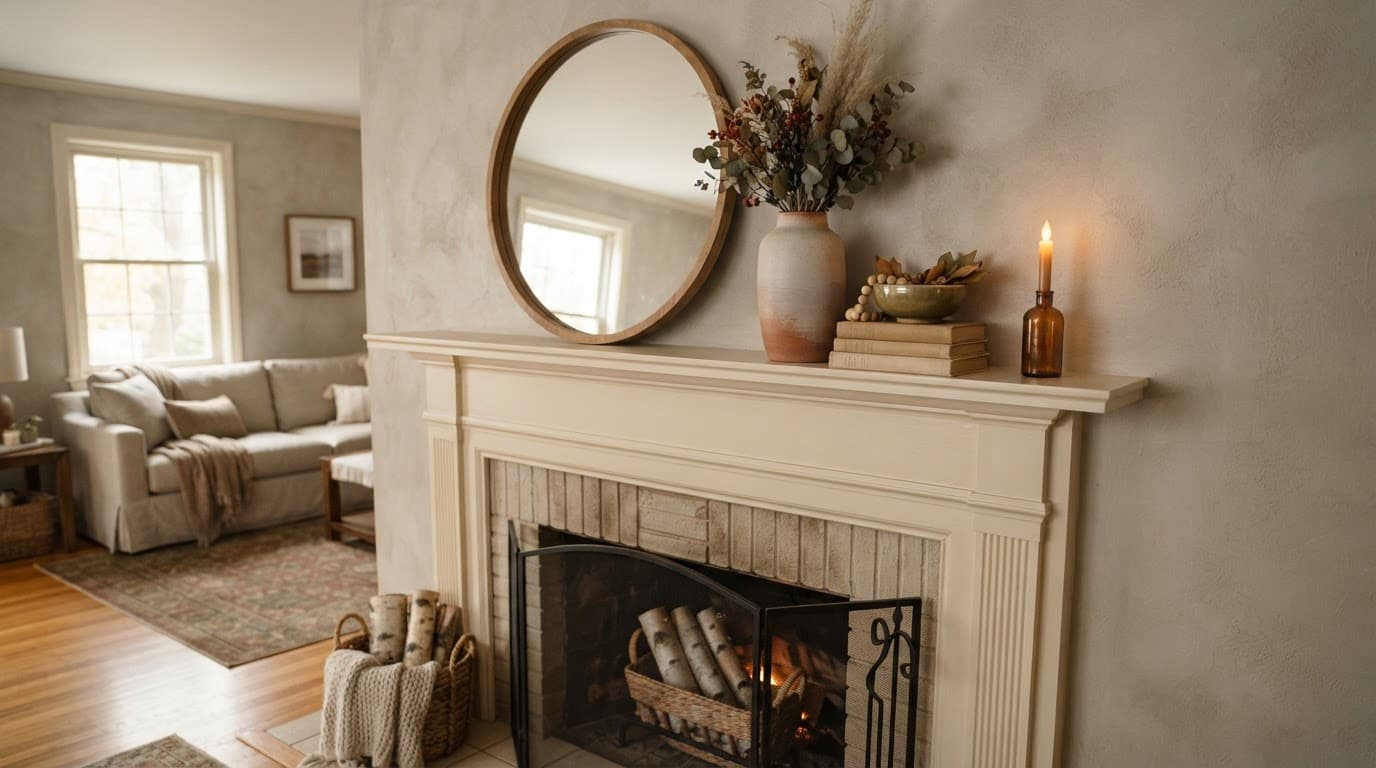
Autumn mantel with a mirror, vase, books, bowl, and warm candle glow.

Lean artwork only when it sits securely and can't slide toward the firebox. Heavy mirrors and frames need proper wall anchors or mounting hardware. If your fireplace has a manufacturer clearance chart, follow it before positioning any combustible frame, wreath, or vase.

Balance Height, Weight, and Layers

Next, add taller objects near the focal point and shorter pieces toward the edges. For example, balance a tall vase with stacked books, a low bowl, or candlesticks on the opposite side. The two sides should feel related, but they don't need to match unless you prefer a formal style.

Lean smaller frames against the wall and overlap a few pieces to create depth. Keep heavier objects on stable surfaces, especially in homes with children or pets. Leave the front edge clear so the mantel feels open and nothing can be easily knocked forward.

Add Texture, Color, and Light

Once the structure feels balanced, introduce one or two autumn-colored accents. Rust, olive, amber, tan, and muted burgundy create a welcoming fall color palette without turning the display into a theme.

Mix woven fibers, wood, ceramic, glass, and textiles for contrast. Try layering textiles with a small fabric accent, but keep it well away from heat. Then add battery-operated candles or warm string lights. Dried foliage works best as a final layer, placed in a vase or vessel rather than packed into every empty space.

Step Back, Photograph, and Edit

View the mantel from the doorway and your usual seating area. Take a quick photo because the camera often reveals crowded corners, uneven spacing, or repeated shapes that are easy to miss in person.

Remove one or two pieces if the display looks busy. Finally, confirm that nothing blocks vents, doors, controls, or required clearances. Fireplace rules vary by model, so check the manufacturer's instructions and mantel clearance guidance before using the fireplace. Keep dried foliage, fabric, wood, paper, and real flames outside the approved clearance zone.

Inexpensive Fall Mantel Ideas Using What You Have

You don't need a shopping cart full of fall mantel decor to create a warm seasonal display. Shop your home first, then look outdoors for simple materials that add texture, color, and height at little or no cost. A vase from the entryway, books from a bedroom shelf, or a basket from the living room can take on a fresh purpose for the season.

Before buying several small decorations, consider one versatile accent you can reuse each year. A simple wreath, mirror, vase, or set of candlesticks usually adds more value than a collection of novelty pieces.

Use Low-Cost Natural Materials

Fallen branches, acorns, pine cones, dried leaves, garden flowers, and herbs can bring an understated autumn feel to your mantel. These pieces of fall foliage add texture and color while keeping your display connected to natural elements. Choose materials that are legally available where you live, and avoid collecting from parks, protected areas, or private property without permission. A few bare branches in a pitcher may create more visual impact than a shelf crowded with purchased decorations.

Clean every outdoor item before bringing it inside. Brush away soil and insects, then allow branches, leaves, flowers, and herbs to dry completely in a well-ventilated area. Don't bring damp or moldy materials indoors, and discard anything that smells musty or shows signs of pests.
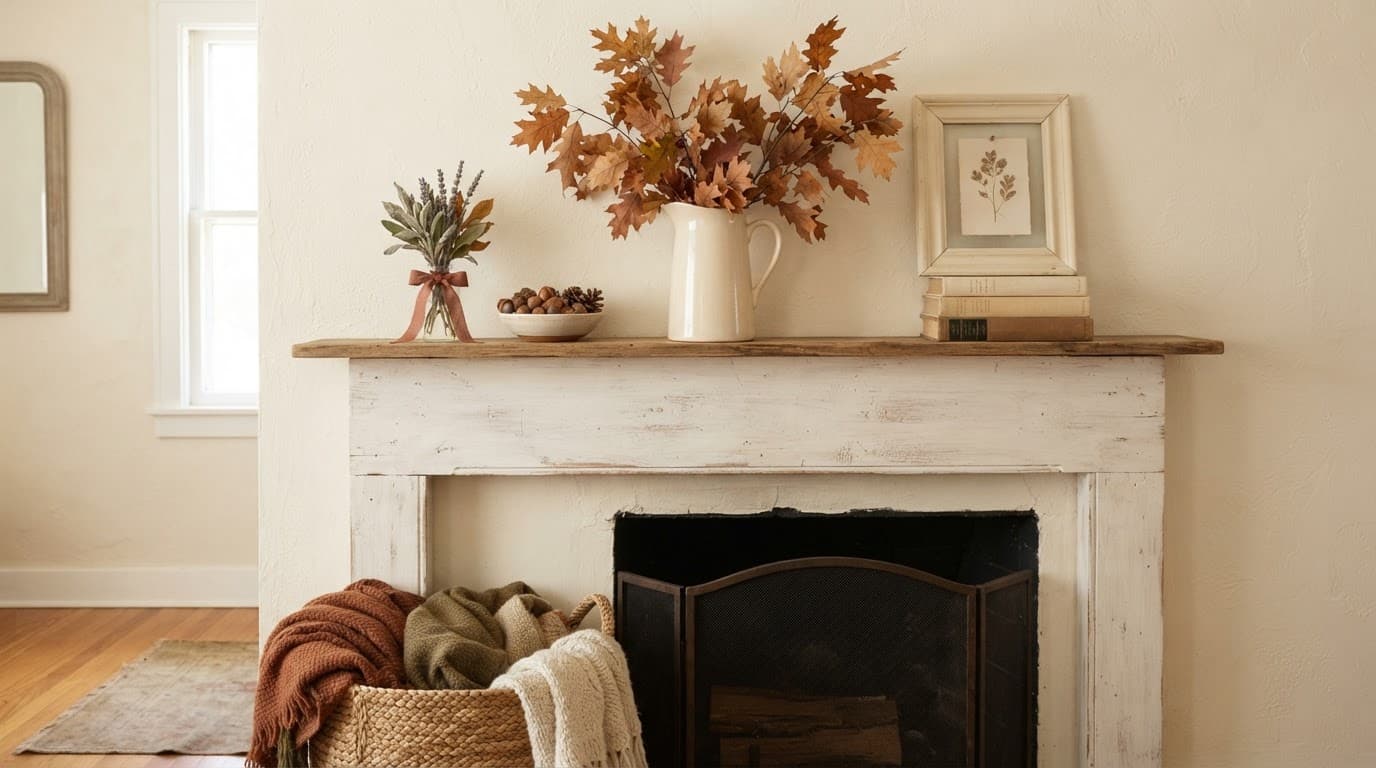
A cozy mantel with branches, pinecones, dried leaves, books, and a woven basket.

Place acorns and pine cones in a shallow bowl, or scatter a small amount around a vase for a relaxed arrangement. Dried herbs can add delicate shape and a subtle scent, while faded garden flowers bring color without looking overly themed. However, all of these materials are combustible. Keep them away from flames, sparks, hot surfaces, vents, and falling embers.

For a fireplace with an active fire, check your unit's instructions and local requirements before decorating. The International Residential Code fireplace guidance includes clearance rules for combustible materials near fireplace openings, but manufacturer requirements may be more restrictive.

Make a Simple DIY Arrangement

Give an old household item a seasonal update instead of buying a new centerpiece. Fill a thrifted pitcher with clean, dry branches, or place garden stems in a glass vase from another room. Vintage items, such as an old frame or reused container, can add character without much expense. A narrow rust or olive ribbon tied around the vase adds fall color without taking over the arrangement.

If your mantel has enough depth and safe clearance, make a short arrangement of fall garlands from dried leaves. Lay it loosely rather than covering the entire shelf, and remove it before lighting the fireplace. You can also paint an old frame cream, brown, or black, then lean it behind a vase or stack of books.

Move useful pieces between rooms as the seasons change. A basket can hold a throw in fall, books in winter, or towels in a bathroom later. The same candlesticks, bowls, frames, and vases can serve as fall home accents in different spaces, so your mantel feels fresh without requiring new decor every year.

Fall Mantel Ideas for Different Home Setups

The best fall mantel ideas depend on your room's limits as much as your decorating style. For a fall fireplace mantel, consider its depth, wall height, television placement, rental rules, and household safety. Before arranging decor, check the exact fireplace type, heat output, manufacturer instructions, required clearances, and local code.
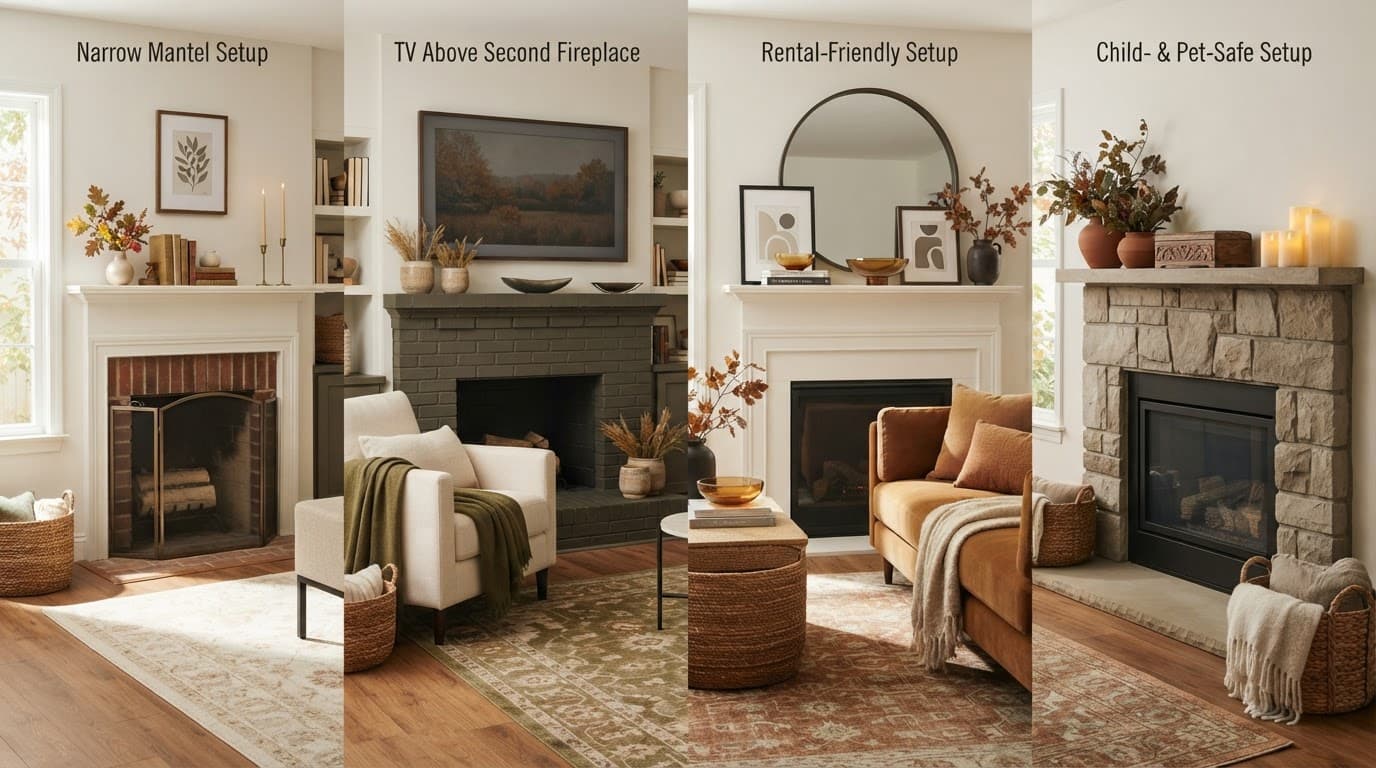
Autumn mantel arrangements with low decor, a television, mirror, frames, and a fireplace in a warm living room.

Small or Narrow Mantels

A narrow mantel looks best with a short, edited arrangement. Choose one medium-sized artwork or mirror for the wall, then keep the surface decor low with slim candlesticks, a narrow vase, and a small horizontal stack of books.

Place the artwork slightly above the mantel or lean it securely when the setup allows. This creates height without using valuable shelf space. A vase with a few stems can sit toward one side, while the candlesticks and books balance the opposite end.

Leave visible wall and mantel space between each object. That negative space keeps the arrangement from looking oversized, especially in a small living room, hallway, or apartment. Avoid tall branches, wide garlands, and deep baskets that can make the shelf feel crowded or block the firebox.

Mantels With a Television Above Them

When a television hangs above the fireplace, keep every piece low enough to protect the screen, vents, controls, and remote receiver. A low ceramic vase, shallow bowl, short framed pieces, or flameless candles can add seasonal color without competing with the television.

Choose pieces that coordinate with the surrounding living room decor. Repeat the TV's frame color in one or two objects. For example, a black frame can connect with black candlesticks, while a silver or walnut television frame can pair with a matching bowl or picture frame. For more arrangement ideas, see this guide to decorating a mantel with a TV.

Keep heat-sensitive materials, dried foliage, paper, and fragile objects away from vents. The fireplace manual and TV manufacturer's temperature limits matter more than any styling rule. Never assume that a clearance recommendation for one fireplace or television applies to yours.

Rental Fireplaces

Renters can create a layered display without drilling. Lean a mirror or artwork against the wall, then add freestanding frames, a battery-operated candle, and a small vase. Removable hooks or strips may work for lightweight pieces when the product instructions and wall surface allow them.

Adhesive products can perform poorly on textured walls, fresh paint, painted brick, and concrete. Follow the stated weight limit and removal method, clean the surface as directed, and avoid mixing adhesive systems. After fresh paint, wait about 30 days before installation unless the paint and product instructions state otherwise. Remove everything well before move-out so you have time to repair or report any damage.

Homes With Children or Pets

Use wide-based vessels, sturdy frames, secured mirrors, and LED candles. Hide cords behind furniture or use approved cord covers, and keep small breakable objects out of reach.

Avoid toxic plants, loose beads, sharp materials, and anything a child or pet could chew or swallow. Keep decor away from the firebox, hot surfaces, vents, and edges where an animal could pull it down. In these homes, a low arrangement with fewer stable pieces is both attractive and easier to maintain.

Common Fall Mantel Decorating Mistakes to Avoid

A polished mantel needs editing as much as decoration. Even beautiful seasonal displays can feel messy when too many symbols, colors, or competing focal points share one small surface. Use restraint as your fall decor styling guide, and the finished display will look collected throughout the season.
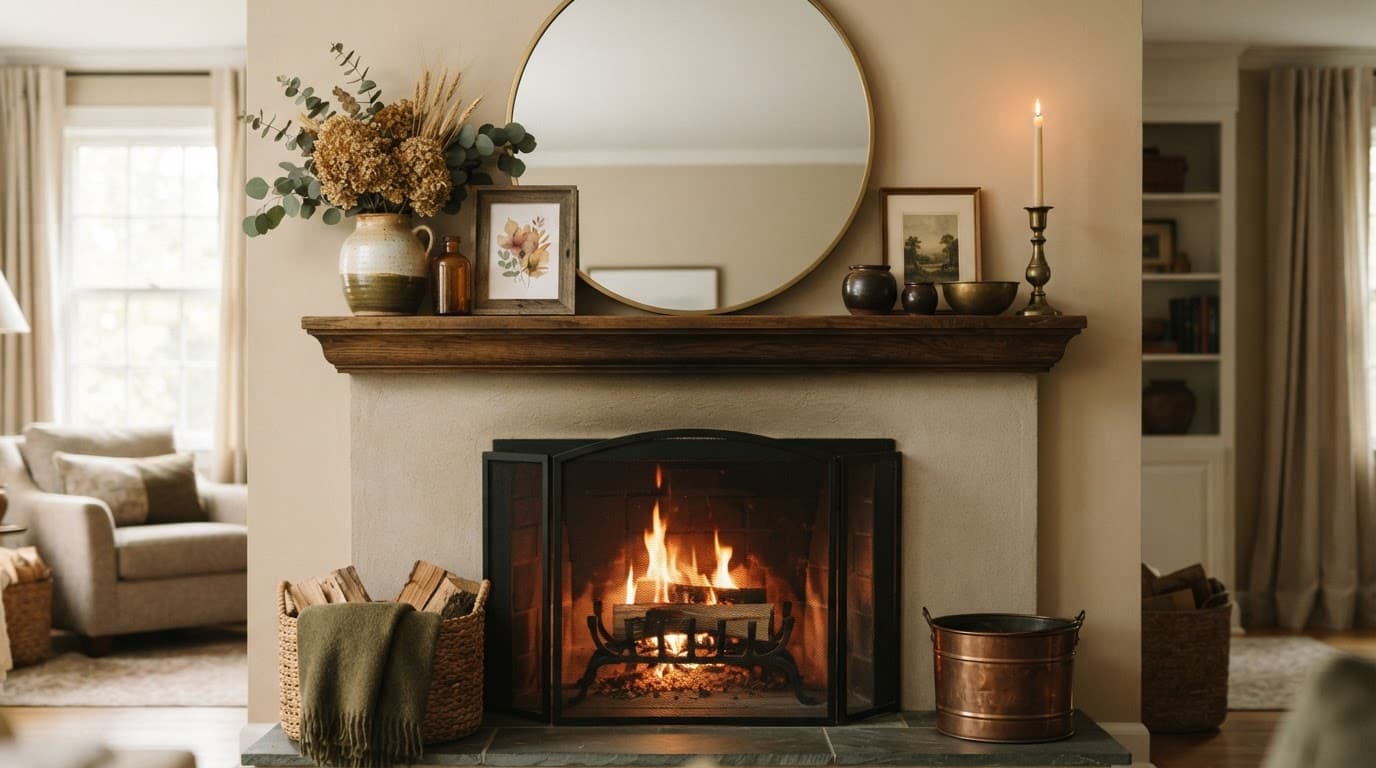
A pumpkin-free mantel with a large mirror, small decor, and dried foliage safely spaced from the firebox.

Too Many Seasonal Symbols

Signs, fall foliage, acorns, plaid, candles, figurines, wreaths, and fall garlands can all suggest fall. Put them together on one mantel, though, and the display may look more like a store shelf than part of your home.

Choose a few clear seasonal cues and leave the rest neutral. For example, pair dried branches with an amber vessel and a rust-colored textile. Keep the frame, books, and main vase in cream, wood, black, or another year-round shade.

The same rule applies to wreaths, signs, and garlands. One restrained garland is usually enough, especially when a mirror or artwork already occupies the wall. Remove anything that repeats the same message or shape. Open space gives the pieces you keep more attention.

Poor Scale or Accidental Imbalance

Small objects disappear beneath an oversized mirror, large artwork, or television. On the other hand, a wide mantel can make tiny vases and narrow frames look lost. Match your decor to the size of the wall and shelf, not only to the size of the objects you like.

Group small pieces so they read as one visual unit. A short vase, bowl, and stack of books will have more presence together than scattered across the mantel. Wide mantels also benefit from larger vessels, substantial frames, or a fuller branch arrangement.

Balance a tall item with a lower cluster on the opposite side. A tall vase beside a low bowl and books feels lighter than two tall pieces competing at both ends. Step back from the mantel and check whether one side looks visually heavier before adding anything else.

Too Much Symmetry or Too Many Colors

Matching pairs suit traditional rooms, but identical candlesticks and perfectly mirrored groupings can feel stiff in rustic, cottage, or casual spaces. Use related shapes with slightly different heights when you want a relaxed arrangement.

Color needs the same discipline. Start with a base color, add one fall accent, and choose one supporting shade. Cream, rust, and olive create a clear direction without making every object seasonal. Repeat the important colors at least once elsewhere in the room, such as in a throw, rug, artwork, or nearby chair.

Forgetting Fire and Candle Safety

Dried foliage, fabric, paper, ribbon, wood, and faux greenery can catch fire. Keep combustible materials at least 12 inches from lit candles, use stable holders, and follow the USFA's candle safety guidance.

Never leave a flame unattended. Extinguish candles before leaving the room or going to sleep, and choose flameless candles when decor sits close to heat or children and pets share the home. Follow your fireplace manufacturer's instructions, remove combustible decorations before lighting a fire, and inspect the mantel whenever you use the fireplace.  Actually, I would recommend not using flame candles.  I simply use a candle warmer and it is just fine.  One moment of forgetfulness could cost you your home or family members.  It's not worth it.

Pumpkin-Free Mantel Elements at a Glance

A seasonal mantel needs a clear focal point, a warm palette, and enough texture to keep the display interesting. These simple mantel vignettes combine natural elements, soft fabrics, aged finishes, and gentle light.
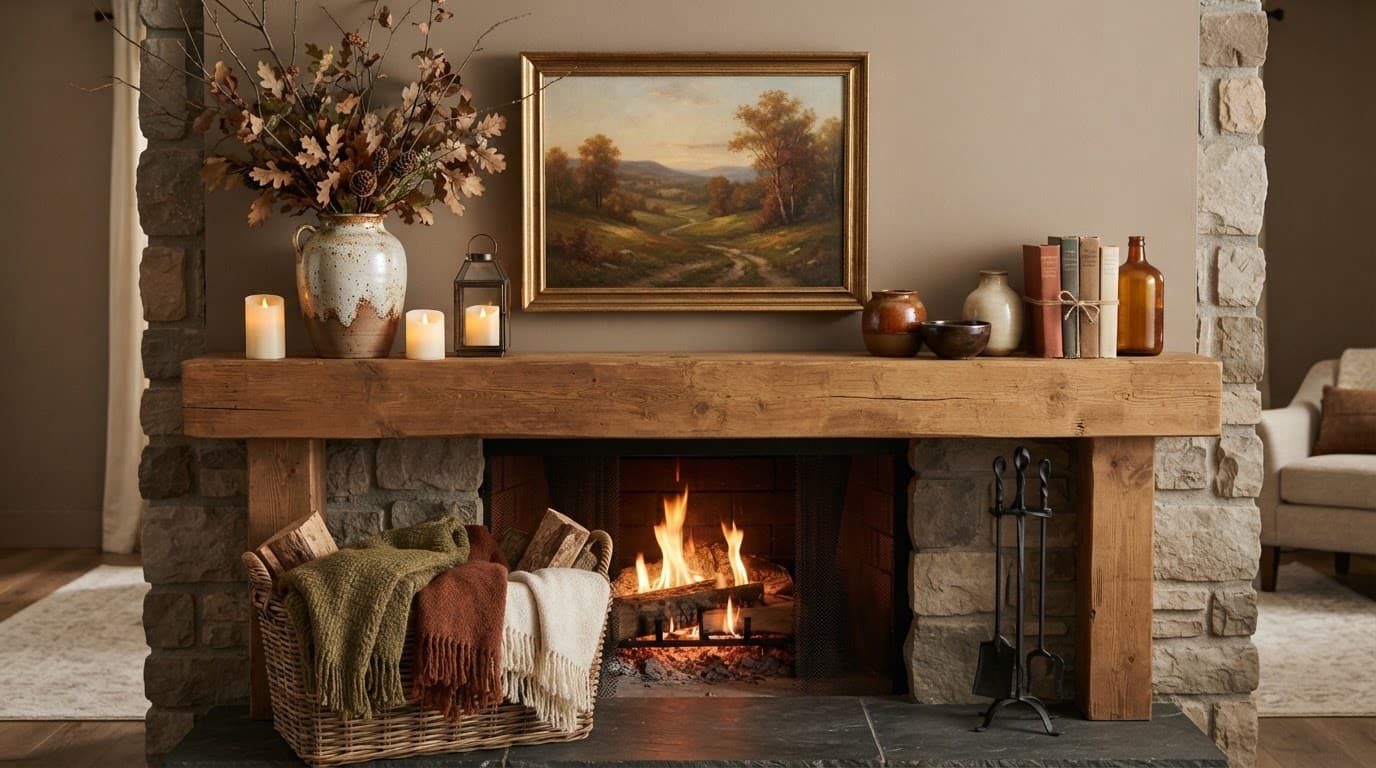
Cozy mantel with dried branches, candles, artwork, books, and warm neutral decor.

Match Each Element to Your Mantel

Use the table below as a quick guide when choosing pieces. It’s a starting point for neutral fall decor, not a checklist of items you must use. Two or three well-scaled pieces can look more polished than a crowded collection.

Decor elementBest forMain benefitWhat to watch for
Dried branchesRustic, farmhouse, and natural roomsAdds height and organic colorKeep away from flames, sparks, hot surfaces, and vents
Candles and lanternsTraditional, cottage, and cozy mantelsCreates warmth and a soft evening glowUse stable holders; choose battery-operated candles near dried decor and fabrics
Seasonal artworkSmall or narrow mantelsProvides a strong focal point without using shelf spaceSecure heavy frames and keep paper away from heat
Woven basketsHearths and relaxed family roomsAdds texture and stores folded throwsNatural fibers are combustible, so keep baskets clear of the firebox
BooksCollected, traditional, and cottage stylesAdds height and a lived-in feelBuild flat, stable stacks of decorative books and avoid visual clutter
Amber glassWarm, rustic, and vintage displaysReflects light and introduces an autumn shadeKeep it steady on the shelf and away from candle flames or heat
Wool or knitted textilesHomes with a soft, comfortable styleAdds softness and practical seasonal warmthDon't drape fabric near flames, embers, vents, or hot surfaces
Ceramic vesselsModern, farmhouse, and transitional roomsOffers useful shape, color, and visual weightChoose wide, stable bases and avoid blocking vents or controls

When your fall fireplace mantel is in use, check the fireplace manual before placing anything on or above it. Clearance depends on the fireplace type, shelf depth, materials, and installation. Local building rules may also apply. For candles, the U.S. Fire Administration's candle safety guidance recommends extinguishing every flame before leaving the room or going to bed.

A simple starting combination is one tall ceramic vessel with branches, a low stack of books, and an amber glass accent. Add a framed landscape or woven basket only if the arrangement still has open space. That restraint keeps the display seasonal, comfortable, and easy to live with.

Quick Fall Mantel Styling Checklist

Use this checklist before you call your pumpkin-free mantel finished. It keeps the display warm and seasonal while protecting the room's comfort, proportions, and safety for a cozy fall mantel.
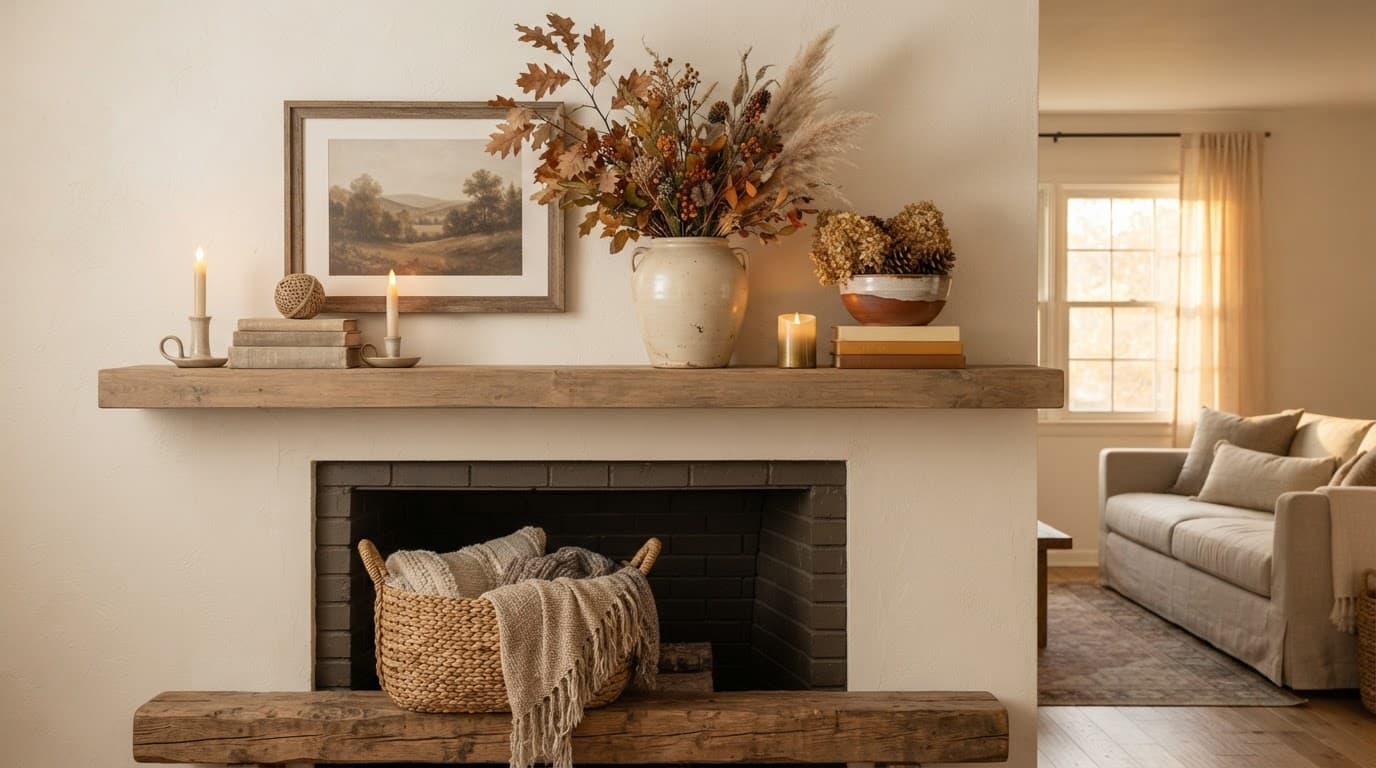
A cozy fall mantel with dried branches, books, candles, and neutral decor.

Build the Arrangement

  • Choose a palette. Start with the room's existing neutrals, then add one fall shade such as rust, olive, amber, tan, or muted burgundy. Repeat that accent once elsewhere in the room so the mantel feels connected.
  • Select one focal point. Use a mirror, framed landscape, wreath, lantern, or vase of branches as the mantel focal point. Too many centerpieces compete for attention, while one clear anchor gives the display structure.
  • Add one tall piece. A branch-filled vase or tall candlestick creates height and draws the eye upward. Place it slightly off-center for a relaxed look, especially in a rustic or cottage room.
  • Balance it with lower objects. Add stacked books, a shallow bowl, a small frame, or a low ceramic vessel on the opposite side. The pieces don't need to match, but their visual weight should feel even.
  • Mix two or three textures. Combine smooth ceramic with rough wood, woven fibers, glass, stone, or soft linen. Texture brings warmth to a neutral mantel without adding more seasonal symbols.
  • Add warm lighting. Use flameless candles, battery-operated lanterns, or a short strand of warm lights. If you use real candles, keep them in stable holders and at least 12 inches from anything that can burn, following fireplace mantel clearance guidance.
  • Shop the home before buying. Check other rooms for vases, baskets, artwork, throws, candlesticks, and other fall home accents. Moving familiar pieces often creates a more personal display than purchasing a matching seasonal set.

Check Safety and Edit the Look

  • Maintain safe clearances. Keep dried foliage, fabric, paper, wood, ribbon, and other combustible materials away from flames, hot surfaces, heat vents, sparks, and falling embers. Follow your fireplace manual because clearance requirements vary by model.
  • Protect children and pets. Choose wide-based vessels, secure heavy frames, hide cords, and keep candles and small objects out of reach. A few stable pieces are safer than a crowded collection near an active fireplace.
  • Step back and remove crowded pieces. View the mantel from the doorway and seating area. If objects overlap too much or one side feels heavy, remove an item before adding another.
  • Photograph the finished arrangement before guests arrive. A quick photo reveals awkward gaps, cluttered corners, crooked frames, and distracting repeats. Make those small edits while the display is still fresh.

Frequently Asked Questions About Fall Mantel Ideas Without Pumpkins

Pumpkins are optional when you want a cozy autumn mantel. Warm color, natural texture, soft lighting, and a well-sized focal point create the same seasonal feeling with a calmer look.
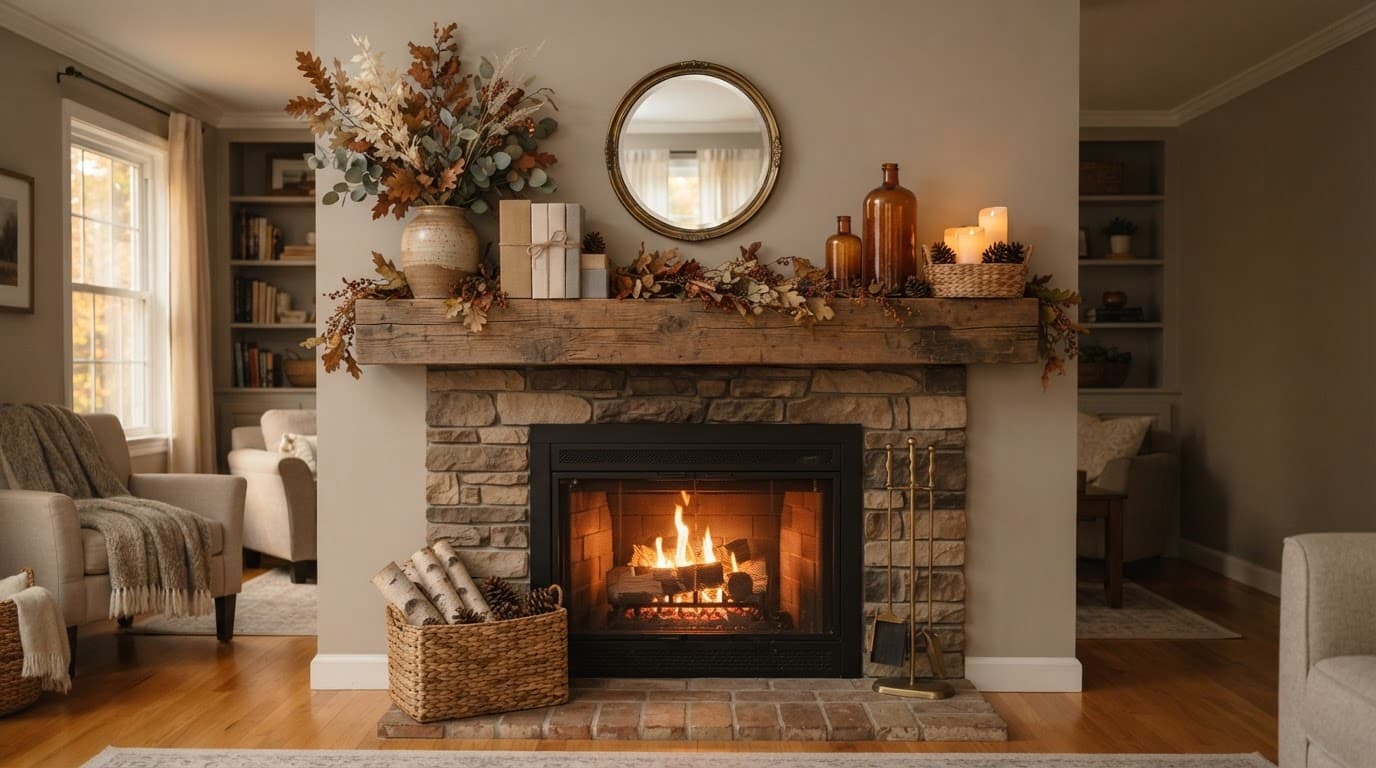
A pumpkin-free mantel with a mirror, dried branches, books, amber glass, and warm candlelight.

How do you decorate a fall mantel without pumpkins?

Begin with one focal point, such as a mirror, landscape print, wreath, lantern, or vase of branches. Add shorter pieces, including books, ceramic vessels, amber glass, or a low bowl. Keep the arrangement open so every item has room to breathe.

What can replace pumpkins?

Dried branches, wheat stems, pinecones, acorns, autumn leaves, lanterns, woven baskets, and seasonal artwork all work well. A stack of books with a rust-colored textile can also add fall character without a traditional seasonal symbol.

Which colors work best?

Cream, beige, tan, camel, olive, rust, amber, brown, charcoal, and muted burgundy suit most fall mantel styles. Build your fall color palette with one main neutral, one autumn accent, and one supporting shade. Repeating those colors elsewhere helps the mantel feel connected.

How can a neutral display feel cozy?

Layer different textures instead of adding more color. Combine ceramic, wood, woven fibers, stone, glass, linen, or wool. Battery-operated lighting and a folded throw in a nearby basket can make a cream-and-brown arrangement feel comfortable rather than plain.

What natural decorations work well?

Use eucalyptus stems, dried olive branches, willow, bare twigs, wheat, preserved leaves, pinecones, and dried flowers. Clean outdoor materials before bringing them inside, and let them dry fully. Dried materials are combustible, so keep them away from fire, sparks, hot surfaces, vents, and embers.

How do you style a small mantel?

Choose one medium-sized mirror or artwork, then keep the surface decor low. A narrow vase, short candleholders, and one small book stack are usually enough. Leave visible space between pieces, and avoid deep baskets or wide garlands that crowd the shelf.

Can you decorate a mantel with a TV above it?

Yes. Use low decor that doesn't block the screen, vents, controls, or remote receiver. A shallow bowl, low ceramic vase, small frame, or LED candle can add fall color. Always follow the fireplace and television manufacturer's temperature and clearance instructions.

Are candles and lanterns safe on a mantel?

Battery-operated candles are the safest choice near dried branches, books, fabric, children, and pets. If you use a real candle, place it on a stable, heat-resistant surface and keep it at least 12 inches from combustible materials, including paper, wood, foliage, and textiles. The National Candle Association's safety guidance also recommends never leaving a lit candle unattended.

For fireplace clearance, check the appliance manual before decorating. Manufactured fireplaces have model-specific requirements, and a general mantel rule may not apply. Guidance on fireplace mantel clearance requirements explains why mantel depth and fireplace type matter.

How do you create a farmhouse or rental mantel?

For farmhouse style, combine a distressed frame, stoneware pitcher, galvanized accent, wood, linen, and muted greenery. In a rental, lean artwork or a mirror securely instead of drilling. Removable adhesive hooks and picture strips can help with lightweight decor, but follow the product's weight limit and removal instructions. Test the surface first, avoid freshly painted or textured walls, and remove installations carefully before move-out.

Conclusion

An inviting seasonal mantel doesn't need pumpkins or a large collection of decorations. Start with one focal point, add height, layer natural textures, introduce a restrained accent color, and use warm light safely. This simple formula creates a soft autumn aesthetic without making the display feel crowded or overly themed.

Clear the mantel, choose one vase, frame, mirror, or lantern as your anchor, then build around pieces you already have at home. Shop your home first, and keep the final arrangement personal, balanced, and safe.


Cozy Autumn Room Decor Ideas for a Warm, Welcoming Home


Cozy Autumn Room Decor for a Home That Feels Warm


A soft blanket over the sofa, amber light pooling on warm wood, and a crisp evening outside can make home feel like a deep exhale. This seasonal style doesn't require a full makeover or a cart full of seasonal purchases.

For mothers and homemakers, the best fall touches are beautiful enough to enjoy and practical enough for real life. This practical autumn decor inspiration pairs warm colors, texture, and gentle lighting for a cozy fall aesthetic. If you have a fireplace, simple mantel decor can complement the sofa and textiles.

Key Takeaways

  • Build warmth in layers, starting with neutral furniture and adding seasonal color in small doses.
  • Repeat a limited palette with practical materials to create a cozy fall aesthetic throughout the home.
  • Choose washable fabrics and sturdy accents for homes with children and pets.
  • Decorate useful surfaces, including mantel decor, coffee tables, shelves, and consoles, while leaving room for everyday use.
  • Shop your home first, and buy versatile pieces that can stay out through winter.

A Warm, Layered Foundation for Fall Rooms

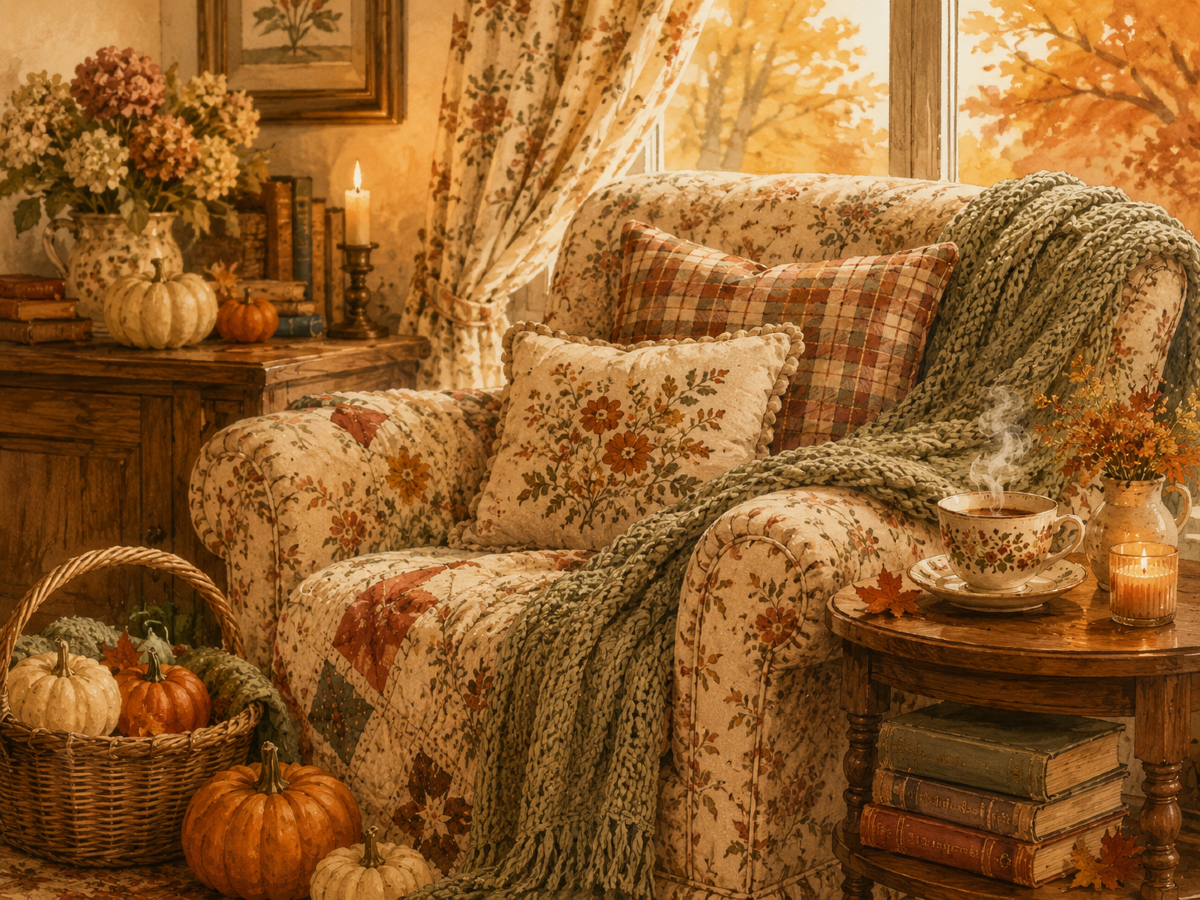
A welcoming fall room begins with what you already see every day. Keep the sofa, rug, and major furniture in place, then change the feeling through layers. Cream, camel, rust, olive, muted gold, and deep brown create an autumn color palette with a cozy fall aesthetic, without turning the room into a themed display.

Start with a neutral base, especially if your walls or furniture are light. Then add one or two richer colors through pillow covers, a throw, pottery, or a small runner. Because those pieces are easy to swap, your room can shift naturally into winter later.

Texture makes the colors feel more inviting. Pair smooth cotton with nubby boucle, worn wood, woven baskets, velvet, wool, and chunky knits to create layered textures. A simple stripe or small plaid works well beside solid fabrics. Plaid blankets add pattern without making the room feel busy. Keep the pattern scale varied, so two large patterns don't compete across the room.

Uploaded 

Use Color and Texture Without Making the Room Feel Dark

Rich fall colors need a little breathing room. Drape a rust throw across a cream sofa, place olive pillows beside tan cushions, or fold a plaid blanket over a wooden chair. Those small moves read as seasonal without closing in the room.

Light-colored walls, bare floor space, and pale curtains keep the mood cheerful. Carry the palette onto a fireplace surround with restrained mantel decor, such as a small vase, a branch, or one piece of pottery. In a darker room, add color lower down with a rug or throw, then keep lampshades and larger textiles light.

Choose washable pillow covers and durable cotton blends if children or pets share the space. Low, wide baskets hold throw blankets without tipping easily, and they hide the usual trail of books, toys, and spare socks.

A room feels cozier when every seasonal item has a job, whether it adds softness, light, storage, or a memory.

Make Soft Lighting the Heart of the Fall Atmosphere

One bright ceiling fixture can make even lovely decor feel flat. Instead, use several pools of light with warm lighting fixtures, including a table lamp beside the sofa, a floor lamp near a reading chair, and a small lamp on a console or bookshelf.

Warm white bulbs around 2700K give rooms a candlelike glow without making colors look muddy. Architectural Digest's fall ambience ideas also highlight lighting as a central part of a comfortable autumn home.

Flameless candles and string lights add warmth in places where cords are secure and out of reach. If you use real candles, keep them on a stable, clear surface and never leave them burning around children or pets. Lights placed at different heights make the room feel softer after sunset.

Simple Cozy Autumn Room Decor Ideas for Every Living Space

The most successful fall decorating focuses on the rooms your family uses most. Use these seasonal decor ideas instead of covering every tabletop. Apartments and open floor plans benefit from this restraint, since repeated colors and materials create a cozy fall aesthetic without clutter.

Turn the Living Room Into a Comfortable Gathering Place

Arrange seating so people can face one another, even if that means angling a chair toward the sofa. A soft area rug grounds the space, while baskets near the sofa keep throw blankets easy to grab during a chilly show or afternoon nap.

Style the coffee table with a short stack of books, a small vase, and natural elements such as pinecones, branches, dried leaves, or a piece of wood. Amber glass and small pumpkins add warmth, but too many objects make a useful table feel off-limits.

If you have a fireplace, keep the mantel decor low and simple. A few branches, a small framed photo, and one warm accent can add seasonal character without interfering with the room.

Create cozy nooks with a reading chair, a floor lamp, and a small side table. Use this quick formula when styling a surface: one soft item, one natural item, one warm light, and one personal item. A framed family photo or a child's handmade ceramic dish keeps the room from looking staged. For more ideas about seasonal produce and found materials, browse these fall decor ideas from Architectural Digest.

Create a Restful Autumn Bedroom Retreat

Uploaded 

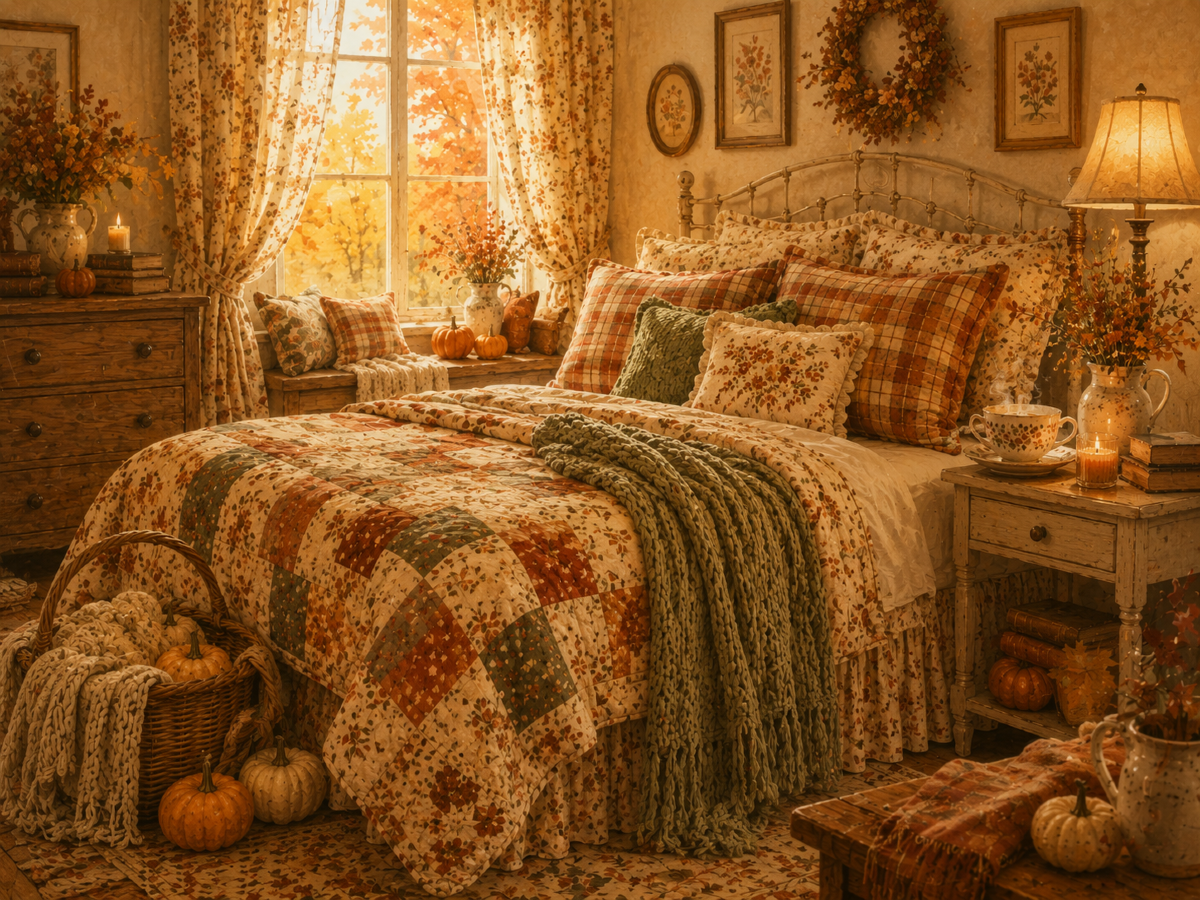
A bedroom needs softer layers, not extra visual noise. Start with cotton or flannel sheets, add a quilt, and fold a knit throw across the lower third of the bed. Two or three pillow layers are enough when the colors stay within warm neutrals.

Change only the pillow covers and throw if you want a fast seasonal reset. Add a small vase of dried stems on a dresser and use a bedside lamp instead of relying on overhead light.

Avoid strong scented candles and loose decorations near the bed. Sleep feels easier when the room stays calm, clear, and easy to put back in order.

Add Small Seasonal Touches to the Entryway and Dining Areas

An entryway works hard every day, so keep its fall look useful. Set out a woven basket for scarves, a small tray for keys, and a bench cushion in a warm fabric. A foraged fall wreath can welcome visitors, but choose dry, pest-free materials and secure them safely.

For homes with an outdoor entry, extend the look with simple front porch decor. Add a few branches or leaves as fall foliage, and use string lights only in covered areas. Keep cords secure and away from walkways.

For the dining table, use a linen runner with greenery, fresh apples, gourds, or dried stems in a low vessel for an autumn table setting. Leave enough open surface for dinner, homework, and mail. A coffee or cocoa station on a tray can make weekday mornings feel more generous, while fall cocktails offer an optional adult entertaining touch.

How to Decorate for Fall on a Budget and Keep It Practical

Good fall decor should never become another cleaning chore. Before buying anything, shop your home for baskets, blankets, jars, trays, and candles that fit your palette, whether your style leans toward farmhouse decor or something more modern. These budget-friendly fall home decor updates often create more impact than a new collection, especially when pieces work through Thanksgiving and winter.

Choose pillow covers over new pillows, and use glass jars for tea lights or dried stems. Reuse a tray, pottery, or framed photo for simple mantel decor instead of buying a new display. Buy neutral pieces that can stay through winter, then store only the smallest seasonal accents.

Refresh What You Already Own Before Buying Anything New

Move a lamp from a bedroom to the living room, or shift a chair closer to a window. Fold blankets differently, group similar pottery together, and replace one piece of artwork with a family photo or handmade item to create a cozy fall aesthetic without clutter.

Clean branches from your yard can look lovely in a tall vase or become a foraged fall wreath if they are dry, pest-free, and safe indoors. Inherited bowls, a child's watercolor, favorite old cookbooks, and handmade pieces are vintage finds that give a personal center to your space.

Keep storage simple. Place small accents in one labeled bin after the season, and choose washable textiles that can go straight into the laundry.

Avoid Common Fall Decorating Mistakes

Too much orange can overpower a room's existing colors. Use it as a small accent, then let rust, brown, cream, and olive carry most of the warmth.

Crowded shelves, fragile objects in busy pathways, and a single overhead light also make rooms harder to live in. Once you finish styling, remove anything distracting or difficult to maintain. A cozy room has clear walkways and surfaces people can still use.

Frequently Asked Questions

When should I put out autumn decor?

Early September works well for a cozy fall aesthetic, using subtle layers such as throws, warm lights, and dried stems. Save carved pumpkins and more holiday-specific items for later in the season.

Can fall decor work with a modern home?

Yes. Choose simple shapes, a limited palette, and natural materials such as linen, wood, and ceramic. Streamlined mantel decor, a rust pillow, or an amber lamp can warm a modern room while preserving clean lines.

What colors work besides orange for fall?

Fall style doesn't require pumpkin spice colors, motifs, or heavily themed accessories. Olive, camel, chocolate brown, burgundy, muted gold, and warm cream all feel seasonal. Pick shades that already appear in your flooring, furniture, or artwork for a more settled look.

How can I make fall decor pet-friendly?

Use flameless candles, sturdy baskets, and unbreakable materials in areas pets can reach. Keep dried arrangements and small decorative objects out of chewing range, especially if your pet investigates new items. For seasonal scents, use simmer pots only with supervision, good ventilation, and a stable location. Homes with children or pets may prefer unscented or flameless options.

Make Room for Autumn Comfort

Focus on comfort, not perfection. Use familiar furniture and colors with soft layers, warm lamps, natural accents, and personal pieces for a cozy fall aesthetic.

Choose one manageable change today. Place a blanket by the sofa, turn on a lamp or string lights, or add simple mantel decor with care. Those small choices can make home feel ready for slow evenings, shared meals, and the ordinary memories that matter most.

Whimsy Maxxing: 2026 Home Decor Ideas That Delight

Whimsy Maxxing Your Home Without Making It Cluttered

Is your home stuck in a loop of beige, greige, and showroom sterility? It is time to break the cycle. Whimsy maxxing is a popular lifestyle trend that involves ditching dull, mass-produced decor for vibrant color, nostalgic treasures, and eclectic, high-energy textures. It is the perfect way to transform any room into a joyful, living sanctuary that defines your personal aesthetic, all while ensuring the space remains curated rather than descending into a cluttered mess.


Key Takeaways

  • Curate with Purpose: Whimsy maxxing is about meaningful storytelling rather than pure accumulation; ensure every layered item sparks joy or holds personal significance.
  • Design Through Repetition: Maintain visual cohesion in an eclectic space by repeating 4-5 core colors and a recurring motif, such as scallops, curves, or bows, throughout the room.
  • Balance Scale and Negative Space: Use varied furniture sizes to create visual interest and leave plain areas, such as solid-color sofas or empty wall space, to give the eye a place to rest.
  • Embrace the Hunt: Build your collection over time using thrifted finds, flea market treasures, and personal mementos rather than purchasing mass-produced novelty items.
  • Prioritize Functionality: Keep your space livable by using closed storage for mundane items and ensuring that every decorative choice respects the room's primary purpose, like seating comfort or walkway clearance.

What Is Whimsy Maxxing in Home Decor?

Whimsy maxxing is a form of playful maximalism with a deeply personal point of view. It fills a room with lively color, curvy silhouettes, vintage finds, and layered patterns, all while embracing a sense of nostalgia that celebrates the objects we love. A scalloped lamp shade, a hand-painted stool, or a bright rug can change the mood of a space instantly.

The trend sits near dopamine decorating and grandma chic, yet its best version does not ask you to buy novelty items by the cartload. Instead, it invites a playful mindset, encouraging you to curate a home that reflects your creative expression. By prioritizing joy and playfulness, this approach allows you to connect with your inner child while ensuring that every decor choice feels like a meaningful discovery.

Whimsy works when each item earns its spot. It might recall a cherished memory, honor a family member, hold flowers, or simply make an ordinary Tuesday feel less beige.

While traditional maximalism focuses on filling a space with a high density of objects, patterns, and colors, this style is specifically driven by a personal, playful, and nostalgic point of view. It emphasizes meaningful storytelling and delight over pure quantity. By doing so, it ensures that every layered item serves as a spark of joy rather than just visual volume.

The Design Rules That Make Whimsy Feel Intentional

Choose four or five colors that can appear throughout the room. For example, moss green, butter yellow, burgundy, pale pink, and cream create a cheerful palette with enough depth to feel grounded.

Then mix pattern scales. Pair a large floral curtain with a small-striped pillow, rather than competing giant prints. Repeat one playful shape, such as scallops, bows, mushrooms, or curves, in several places.

Contrast keeps the space lively. A tiny ceramic dog looks better beside an oversized lamp, while a deep burgundy chair can anchor a soft floral wallpaper. Leave a few plain areas, too. A calm wall or solid-color sofa gives the eye somewhere to rest.

Build a Story, Not a Perfectly Matching Room

Matching furniture sets can make a room feel cautious. Instead, combine a thrifted side table with a new striped chair, antique books, a souvenir bowl, and art that you actually want to see every morning.

Look for objects already carrying a memory. Family china can hold keys by the door. Postcards from a favorite city can become a small gallery wall. A strange brass bird from a flea market may belong on a stack of books because it makes you laugh.

A whimsical room feels collected because it reveals the people who live there.

Personal meaning matters more than a strict formula. The visual thread can be a color, a material, a recurring shape, or a shared sense of humor.

How to Whimsy-Max Your Home Room by Room

Layer changes over time, beginning where you spend the most time. Refreshing your home decor with current 2026 decor trend ideas involves bright color, statement lighting, wallpaper, and mixed patterns, all of which can be introduced one piece at a time.

Make the Living Room Colorful, Curvy, and Collected

A living room can take a bold accent wall, patterned wallpaper behind a bookcase, or a large textile hung above the sofa. If painting feels like too much, try colorful pillows and a patterned throw first.

Add one of those unique statement pieces, such as a rounded coffee table, scalloped ottoman, or wavy mirror to anchor the space. When accessorizing, cluster objects into small vignettes rather than scattering them across every surface. Use varied heights by stacking two books, adding a small bowl, and then placing a taller lamp or framed print nearby.

A vintage frame wall, painted switch plates, or a decorative folding screen can add character without replacing major furniture. Even a playful bar cart can hold glassware, a ceramic fruit bowl, and a single plant.

Give the Bedroom a Storybook Mood

Keep the bedroom restful with a soft base color, then add brighter notes through a floral quilt, celestial pillowcases, or a ruffled bed skirt. A cream, pale blue, or muted green wall can calm busier bedding while still allowing for self-expression.

Sheer canopy-style curtains make a bed feel more tucked away, especially when paired with a warm lamp and layered quilts. Choose lamps with unusual bases, pleated shades, or colored glass. For wall art, colorful mats inside mismatched frames create an easy sense of play.

Save one small detail for yourself as a way of finding joy in your private space. Slip a favorite poem into the bedside drawer or place a tiny keepsake in a shelf nook. Private whimsy can feel more lasting than decor designed to impress guests.

Add Small Surprises to Kitchens, Bathrooms, and Hallways

Smaller rooms are ideal for bigger risks. A bathroom can handle cherry-patterned wallpaper, a bright bath mat, a colored mirror frame, or brass animal-shaped hooks. Hallways also come alive with framed art, painted trim, and a runner that has real color.

In the kitchen, swap plain cabinet knobs for ceramic flowers, glass pulls, or aged brass. Add a tiny lamp to a counter corner, display a few beautiful mugs, or use a cheerful tile behind the range.

These areas don't need a full renovation. A few expressive details can make the walk to the laundry room feel less routine.

The Best Whimsy Maxxing Ideas for a Small Budget

Thrift stores, flea markets, estate sales, resale apps, and your own closets often hold better options than a single expensive shopping trip. Seek pieces with strong color, a useful function, an unusual shape, or a story worth keeping. Embracing the little things in life means finding joy in the hunt for unique decor rather than buying everything new.

Before buying decor, check old frames, linens, lamps, ceramics, garden objects, and books. A stack of worn hardcovers can make a shelf feel warmer than a row of identical new accessories. For more visual inspiration, this 2026 home decor trends video shows how color palettes and personal details can shape a room.

Secondhand lighting needs care. Check cords, plugs, and sockets before use, and have damaged fixtures repaired by a qualified professional. Avoid using children's craft materials near heat, flames, or exposed wiring.

Try Easy DIY Projects That Add Instant Charm

A few low-cost DIY projects can bring a room to life without breaking the bank:

  • Paint a plain mirror frame in checks, dots, or a deep contrasting color.
  • Hang a sheer canopy from the ceiling with secure hardware, away from lamps and heaters.
  • Make a gallery board from cork, fabric, postcards, and small drawings, similar to the layered aesthetic of junk journaling.
  • Replace drawer pulls with colorful ceramic knobs.
  • Build a miniature shelf scene with tiny objects, fairy lights, and a shallow tray.
  • Tuck a cardboard fairy door near a baseboard or behind a bookshelf.

Keep battery packs accessible, and never pinch cords beneath rugs or furniture. The charm comes from the surprise, not from turning every shelf into a craft project.

Use Thrifting and Layering Instead of Buying a Whole New Room

Start with one anchor piece, such as a patterned rug, painted cabinet, or bright chair. Then add smaller items that repeat its color or shape. A green floral rug might lead to a green vase, a flower-shaped dish, and one striped pillow with a green thread.

This process encourages slowing down and appreciating the character of vintage design. Rotation helps, too. Store part of a collection and bring it back out with the seasons. A room feels fresher when favorite objects return after a break, reminding you to cherish the little things in life you have already collected.

How to Keep a Whimsical Home Playful, Not Cluttered

Maximalism still needs walking space, cleaning space, and places to set down a coffee. Even when you embrace the joy of everyday life, remember that group similar objects together, then give each group a clear boundary: a tray, one shelf, a wall grid, or a cabinet.

Use closed storage for the items that facilitate mundane tasks. Cords, paperwork, spare chargers, and cleaning supplies rarely add charm to your decor. Repeat colors across the room so that a mix of objects reads as a cohesive whole.

Renters can work with removable wallpaper, temporary hooks, peel-and-stick tile, and changeable textiles. Those choices allow more spontaneity in your design without risking a security deposit.

Avoid These Common Whimsy Maxxing Mistakes

Buying unrelated novelty items is the quickest path to visual noise. If you lean too heavily into kitsch aesthetics without a unifying theme, a room struggles to feel intentional. This is especially true when every surface is full, patterns share no common color, or furniture feels uncomfortable to use.

Scale matters. Several tiny items can disappear on a large wall, while one huge novelty object can crowd a small apartment. Don't copy a social media room without considering your routines, storage needs, pets, and natural light.

Choose comfort before decoration. The chair should still be good for reading. The hallway should still allow someone carrying groceries to pass.

Know When a Room Needs One More Detail or One Less

Take a photo of the room and look at it on your phone. Your eye usually lands first on the strongest color or busiest cluster. If that area feels accidental, remove one object and photograph it again.

Check for repeated colors and shapes. Then ask whether every display has breathing room. Add a final surprise only after the room works for sitting, sleeping, cooking, or getting out the door.

A whimsical home can begin with one shelf, one painted wall, or one cheerful corner.

Frequently Asked Questions

How does whimsy maxxing differ from traditional maximalism?

Traditional maximalism often focuses on high-density decorating, filling a room with as many patterns and objects as possible. In contrast, whimsy maxxing is guided by a personal, nostalgic point of view that prioritizes meaningful storytelling and deliberate playfulness over sheer quantity.

How can I keep my home from looking like a cluttered mess?

To keep a whimsical space intentional, group similar items together using trays, shelves, or wall grids to create clear boundaries. Ensure that you have adequate negative space for the eye to rest and use closed storage to hide away items like cords and paperwork that don't contribute to the aesthetic.

Is whimsy maxxing suitable for renters on a budget?

Absolutely, as the style relies heavily on thrifting, DIY projects, and personal collections rather than expensive, trendy furniture. Renters can easily participate by using removable wallpaper, peel-and-stick tiles, temporary hooks, and changeable textiles that add character without violating lease agreements.

How do I know if I have added too much decor?

Take a photo of your room and look at it on your phone, as this often reveals balance issues that aren't apparent in person. If a specific area feels accidental or chaotic rather than intentional, try removing one object at a time until the space feels both curated and comfortable.

Let Your Home Hold Small Discoveries

Whimsy maxxing gives you permission to choose everyday romanticism over rigid decorating rules. While it may have started as a social media trend, the true value of this style lies in how it invites you to curate a space that reflects your personality. A colorful object, a patterned curtain, or a tiny display can make a familiar room feel newly yours.

The best spaces are not assembled in a weekend. They gather layers over time, stay useful for daily life, and reward you with small discoveries whenever you look around, ultimately finding joy in the simple act of living in a home that feels uniquely like you.

Why Whimsy Maxxing Is the Future of Your Home

Ultimately, whimsy maxxing is about creating a living space that feels like a breathing, evolving reflection of your life. By prioritizing personal storytelling, playful color palettes, and curated layers over rigid perfection, you ensure your home is both deeply expressive and highly functional. This approach brings a sense of wonder into your everyday life, transforming routine spaces into environments that spark genuine happiness.

Whether you are adding a single scalloped edge or transforming an entire room, embrace the process of making your space a source of daily delight. If you already love expressing your personality through colorful fashion, consider this a natural extension of that same creative energy. Your home should not just be a place to store your belongings; it should be a place that celebrates your individuality and invites discovery at every turn.

In short, whimsical design is an invitation to stop seeking showroom perfection. Start building a home that makes you smile. By layering with intention, keeping clutter in check, and letting your stories guide your decor, you create a sanctuary that is uniquely yours.

Ready to get started? Pick one room, grab a favorite object you have been hiding away, and give it a prominent spot. Let it be the seed of your new, more whimsical home. Finding joy in your environment is easier than you think, and your most authentic space is just one intentional detail away.

Late Summer Porch Decor Ideas for a Cozy Transition


Late Summer Porch Ideas for a Cozy, Easy Transition


Late summer has a soft, tired glow. The evenings are still warm, but the light changes, the shadows stretch, and your porch starts to ask for a little more comfort. This is the perfect time to experiment with late summer porch decor to ease into the new season.

A good porch feels like a second living room, and the nicest front porch ideas are simple ones. Focus on layers of sun faded summer pieces, richer texture, darker tones, and a relaxed look that feels easy to live with. By refreshing your space with these elements, you can create a welcoming atmosphere that enhances your home curb appeal. Start with color, because it sets the whole mood.

Key Takeaways

  • Embrace a Grounded Palette: Use sun-faded neutrals like mushroom, sand, and cream as a base, then layer in deeper, earthy accents such as olive, clay, and navy to signal the transition to fall.
  • Prioritize Texture: Mix soft, performance-fabric textiles with natural materials like rattan, wicker, and aged wood to create a space that feels lived-in rather than staged.
  • Focus on Functional Layouts: Arrange furniture to encourage conversation and ensure walkways remain clear, using small, versatile pieces like garden stools or storage benches to maximize comfort.
  • Enhance Atmosphere with Lighting: Use warm-toned bulbs, lanterns, and string lights to soften the porch at dusk, creating an inviting glow that extends your outdoor enjoyment as evenings grow cooler.

Start with a cozy late summer color palette that feels calm, not crowded

A late summer porch should feel warm and settled, not loud. This is the moment for earthy colors, soft neutrals, and a few richer accents that hint at the transition toward early fall without making August feel over. When choosing your porch decor, focus on palettes that feel grounded rather than distracting.

In 2026, many front porch ideas are leaning toward the Slow Living Palette, with olive, clay, mushroom, dusty blue, sage, and sandy neutrals. That mix works well on a porch because it feels natural in heat, shade, and evening light. It also hides dust, pollen, and shoe marks better than bright white or candy colors.

Use sun-faded neutrals as your base

Start with the shades that look as if the sun softened them over time. Beige, sand, cream, mushroom, and warm gray give the porch a quiet backdrop. They keep the space airy, and they let wood, greenery, and darker accents stand out.

Use those colors on the largest pieces first. A neutral outdoor rug, cream seat cushions, or warm gray planters create a calm base without flattening the space. If your porch already has red brick, black railings, or stained wood floors, these lighter tones help balance the weight of those darker surfaces.

Mushroom is especially useful right now because it sits between gray and brown. It feels gentler than cool gray, but it still reads clean. On a porch, that matters. Late summer light is softer than June light, so cool shades can start to feel a little dull.

Add deeper accents for a richer late summer look

Once the base feels light, add color in small doses. Olive, rust, navy, brown, deep green, and clay all work well for late summer because they look grounded, not heavy. You do not need all of them. Two accent colors are plenty, especially on a small front porch.

Try olive pillows with a clay planter, or navy cushions with a rust throw. Dusty blue also fits the 2026 mood, especially if your porch gets a lot of sun and you want something cooler than brown. These deeper tones are practical, too, as they hide the grime that settles on outdoor fabric in late August.

Keep the darker colors at eye level and below near your front door. Pillows, a small stool, lanterns, and seasonal decor planters are enough. If every object is shouting for attention, the porch loses its calm. For a few real-world examples of that soft seasonal shift, this late summer front porch inspiration shows how simple color changes can carry the whole look.


Layer textures to make the porch feel warm and lived-in

Color gets your attention first, but texture is what makes a porch feel worth sitting in. A flat porch, all one finish and one surface, feels more like a hallway than a room.

Late summer is also a season of contrast. The air can still be sticky, the afternoons bright, and the evenings gentle. Because of that, a porch looks better when it mixes smooth and rough, soft and sturdy, old-looking and clean-lined as you begin your transition to fall.

Soften your space with outdoor pillows, throws, and an outdoor rug

Hard surfaces need softening. A woven outdoor rug underfoot, a striped cushion, and one folded throw over the arm of a chair can change the whole mood. As the days grow shorter, consider adding cozy blankets to keep nearby for cooler late August evenings.

Stick with outdoor-safe fabrics. Late summer still brings humidity, dust, and surprise rain, so indoor linen and cotton usually do not age well outside. Performance fabrics that mimic linen give you the same relaxed look with less trouble. Sunbrella remains a strong choice in 2026 because solution-dyed acrylic holds color well and stands up to UV exposure, mildew, and daily use.

Pattern helps here, too. A faded stripe, small block print, or textured weave makes a porch feel more layered than solid fabric alone. Keep the pattern scale moderate. Large tropical prints can feel too loud once summer starts winding down.

An outdoor rug also pulls everything together. Look for a thicker woven style in polypropylene or recycled PET if you want a softer feel under bare feet. If you want more ideas for using blankets and pillows as the season shifts, these summer-to-fall decor ideas show how small textile swaps can change a room or porch fast.

Mix natural materials for a relaxed, porch-friendly style

Texture also comes from the materials around the fabric. Wicker furniture, rattan details, wood side tables, braided baskets, ceramic planters, and a little dark metal create warmth without much effort.

This kind of mix feels better than a matching furniture set. A porch should look collected over time, not ordered in one click and dropped into place. Try a wicker chair next to a weathered wood table, or a ceramic pot beside metal lanterns. The contrast gives the space character.

Aged wood and unlacquered-looking metal are especially strong right now, along with HDPE outdoor furniture that mimics wicker but handles weather better. If you love the look of natural rattan, use it in covered areas and mix in sturdier outdoor pieces where the rain hits.

Leave some breathing room between materials. Too many baskets, too many planters, or too much woven texture can crowd a small porch. One or two pieces in each finish usually feels right.

Create a porch layout that invites people to sit and stay awhile

A cozy porch is not about how much you fit into it. It is about making the space easy to use.

That means the layout matters as much as the decor. If chairs face the street but not each other, conversation feels awkward. If the walkway is blocked, the porch turns into storage. Even a narrow front porch can feel inviting when your chosen outdoor furniture has a clear purpose.

Make a clear seating zone with just a few pieces

Start with one anchor. On a larger porch, that might be a small loveseat or a classic porch swing. On a modest stoop, a rocking chair or two simple chairs is enough to create a relaxing retreat.

Arrange the seats so they feel connected. A pair of chairs angled slightly inward feels more welcoming than two chairs lined up flat against the wall. If you have room, add a small round table between them. Round tables are popular in 2026 outdoor design because they soften hard lines and make compact seating areas feel less rigid.

Do not pack furniture edge to edge. A porch needs open space to breathe. Leave enough room to walk to your front entrance without weaving around a planter or clipping a chair leg.

Add small helpers that make the space more useful

The best porches have a few quiet workhorses. A side table holds a drink, keys, or a book. A basket keeps throws close by. A garden stool adds a surface and an extra seat when needed.

Storage benches are useful if your porch collects shoes, dog leashes, or watering cans. A narrow one can double as seating while keeping clutter out of sight. Meanwhile, a small ottoman can shift around the space as needed, which fits the 2026 move toward more flexible outdoor layouts.

Use helpers that match the scale of the porch. Oversized furniture can make even a pretty arrangement feel cramped. If you need visual ideas for how a small porch can transition into early fall without feeling stuffed, these porch transition examples on Pinterest are useful for seeing spacing, layering, and restraint.

Use lighting, plants, and small accents to finish the look

Once the furniture is set, the porch needs atmosphere. This is where the space starts to glow after dinner, when the heat breaks and the day slows down.

Good finishing touches do not compete with the main pieces. They support them. Light, greenery, and a few seasonal accents can make the porch feel complete without turning it into a theme display.

Pick warm lighting that makes the porch glow at night

Warm light changes everything. It softens hard corners, makes neutral colors look richer, and invites people to stay outside longer.

String lights work well across a ceiling or railing if the porch needs a gentle overhead glow. Placing lanterns on side tables adds light at eye level, while lanterns tucked into corners at floor level feel more intimate. Wall sconces near the front door help with both mood and function. If your steps get dark, motion-sensor lighting is worth adding for safety and convenience.

Use warm-white bulbs instead of cool blue light. Late summer decor already leans into earthy color and soft texture, so harsh light fights against that mood. Flameless candles inside glass hurricanes also help, especially if your porch catches wind.

Style plants and seasonal decor in a way that feels fresh

Potted plants are what keep a porch from feeling static. While your summer flowers and hanging baskets might be reaching the end of their peak, you can begin the transition to early fall by refreshing your containers. For height, designers in 2026 are still using Majesty Palms in large containers, but you can start mixing in dried hydrangeas for a more muted look.

Choose sturdy planters in clay, charcoal, or aged-looking ceramic. Those deeper finishes ground the softer greens around them. If your porch is small, one tall planter by the door and one lower pot near the steps often looks better than a cluster of tiny containers.

Your seasonal decor should stay subtle to start. Refresh the front door area with a new welcome mat and a simple fall wreath to signal the change of season. A bowl of shells or even a few faux pumpkins can act as a bridge between the seasons. You do not need to overwhelm the space, as this stage looks best when it still remembers summer. If you want a visual sense of how that progression can look over time, these early and late fall porch ideas show the shift clearly.

Frequently Asked Questions

Which fabrics work best for late summer porch decor?

Focus on performance fabrics, such as solution-dyed acrylics, which are designed to withstand humidity and UV rays while mimicking the look of linen or cotton. These materials are essential for late summer because they resist mildew and retain their color even as the season begins to shift.

How can I make a small porch feel cozy without overcrowding it?

Prioritize a clear seating zone with just a few pieces, such as two chairs angled inward with a small round table between them. By avoiding large, matching sets and keeping the floor space open, you create a functional, inviting retreat that doesn't feel cluttered.

What are the best colors to bridge the gap between summer and fall?

Look for the 2026 Slow Living Palette, which includes grounding tones like olive, clay, dusty blue, and mushroom. These colors feel natural in the soft late summer light and provide a seamless transition from bright summer shades to the richer tones of autumn.

A Porch You'll Use Every Day

A cozy porch does not need a full makeover. Better texture, warmer color, comfortable seating, and soft light can change the mood faster than a shopping spree.

The best update is usually the simplest one. Keep the base light, add a few richer accents, and choose pieces that feel good at sunset as much as they look good at noon. With the right porch decor, you can easily bridge the gap between summer and fall.

When your space feels personal, practical, and easy to live with, it becomes a true extension of your home rather than a space you simply pass through. Enhancing your outdoor living area in this way ensures that the comfort of your porch lasts long after the peak of summer has faded.