DIY Home Organization Hacks for Busy Families

Missing shoes, crowded kitchen counters, laundry piles, and school papers can make an ordinary weekday feel harder than it needs to. The most useful DIY home organization hacks for busy families don't require a custom closet or a free weekend.
They rely on simple supplies, make everyday items easy to see, and take little effort to maintain. Every family member gets an obvious place to put things, so the home can be reset without losing your evening to it. The goal isn't a picture-perfect house. It's a home that works for real life.
Key Takeaways
- Start with one high-impact hotspot, sort items into keep, move, donate, and trash, and work in 10- or 15-minute sessions.
- Create visible drop zones for shoes, coats, backpacks, lunch containers, paperwork, and other everyday belongings.
- Organize kitchens, bedrooms, and laundry areas around family routines so frequently used items stay easy to reach.
- Match storage, labels, and chores to each child's age while keeping unsafe or rarely used items secured or out of sight.
- Use short daily resets, weekly family meetings, and one-in, one-out rules to keep the system manageable as routines change.
Time-Saving Organization Hacks for the First Trouble Spot
Start by organizing one trouble spot, not the whole house. A kitchen counter, hallway bench, or junk drawer gives you a quick win and shows where the system breaks down.
Before buying bins, remove what doesn't belong. Group the remaining items by how your family uses them, then create a clear home for each group. Open storage works well for daily-use belongings because people can see where things go. Use hidden organization for rarely used items.
Set a timer for 10 or 15 minutes. When it rings, stop. Small sessions keep you from pulling everything out and creating a larger mess.
Use a quick sort with keep, move, donate, and trash piles
Work on one drawer, shelf, or surface at a time. Make four temporary piles: keep, move, donate, and trash. This simple decluttering approach is also the basis of a practical home decluttering guide.
Toss broken markers, dried glue, expired food, and mystery cords. Donate outgrown clothes, duplicate kitchen tools, and toys no one has touched in months. Move items that belong in another room before deciding where to store them.
Keep a donation bag near the door or in the trunk. When you run errands, take it with you. That prevents unwanted items from circling back into closets.
Choose inexpensive supplies that make items easy to find
Printable labels, wall hooks, storage bins, baskets, drawer dividers, magazine files, clear storage containers, a binder, and a three-hole punch can solve most daily clutter problems.
Measure shelves and drawers first. Then test one bin or divider before buying a matching set. A container that looks great but doesn't fit the way your family moves through the house becomes another thing to manage.
Storage only works when the person putting an item away can do it in seconds.
Build entryway drop zones that prevent clutter at the door
The entryway collects the proof of a busy life: backpacks, mail, shoes, coats, sports gear, and random toys. Give each person a small, visible spot before those items spread through the house.
Install two rows of hooks if wall space allows. Put low hooks where children can reach them, and use higher hooks for adult coats and bags. Add one basket per person for hats, gloves, library books, or small gear.
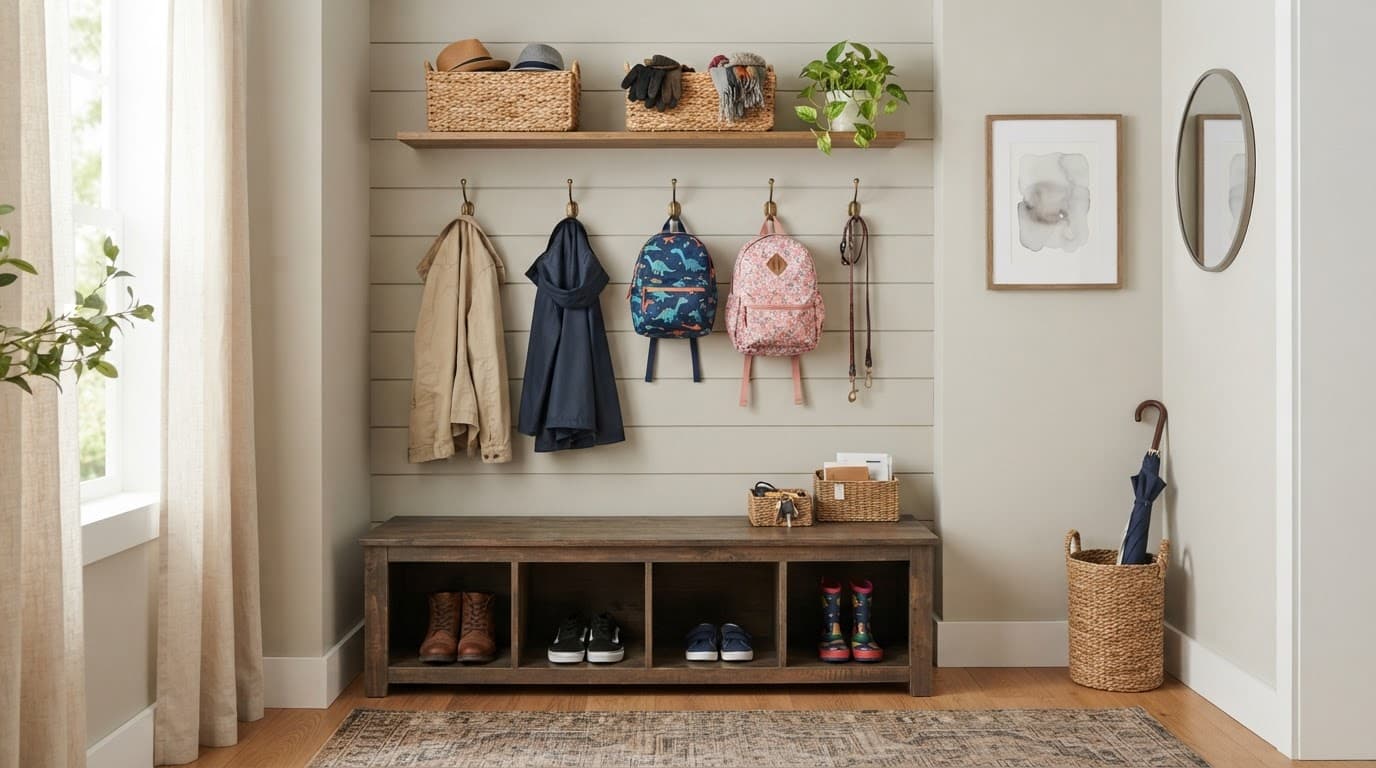
An open shoe rack or shoe caddy works well for pairs worn every day. Set a limit, such as two pairs of shoes and one coat per person. A bench compartment or upper shelf adds hidden organization for seasonal or occasional gear. Keep everyday shoes and coats easy to reach.
Create a five-minute leaving-the-house station
Place a small basket near the door for things that need to leave, such as returns, permission slips, library books, or packages. Put keys on a high hook, safely out of children's reach.
Keep lunch containers and daily bags in one visible spot. Each evening, return washed containers, pack what you can, and move tomorrow's essentials to the drop zone.
Once a week, spend 10 minutes decluttering mail, stray toys, trash, and out-of-season gear. A modest routine works better than a complicated setup that nobody remembers to use. For another simple decluttering routine, try the 12-item sorting method for items to toss, donate, and return.
Organize the kitchen around busy family routines
Kitchen organization should make breakfast, dinner, and lunch packing less chaotic. Arrange supplies by the task they support, rather than grouping everything by cabinet type.
Create zones for breakfast foods, snacks, lunch supplies, baking, and dinner prep. These areas can support meal planning without making the kitchen feel rigid. Keep frequently used plates, cups, and utensils close to where people eat. Put mixing bowls, pans, and cooking tools near the range or prep area.
Clear containers help you spot low supplies before a rushed morning. Drawer dividers stop utensils and food-storage lids from turning into a tangled pile.
Set up a kid-friendly snack and drink zone
Choose a low pantry shelf, drawer, or refrigerator bin for approved snacks, water bottles, napkins, and simple dishes. Young children do well with picture labels. Older kids can use word labels and refill the area with guidance.
During family meetings, parents can agree on approved snacks, refill responsibilities, and device-charging expectations. Keep sharp tools, cleaning products, medications, and adult-only foods somewhere secured and out of reach. The U.S. Environmental Protection Agency lists products such as cleaners, batteries, pesticides, paint, and oils among common household hazardous waste, so don't treat those items as ordinary pantry clutter.
Make a lunch-packing and family charging station
Keep lunch bags, reusable containers, labels, and grab-and-go foods together near the kitchen or entryway. A small caddy can hold scissors, reusable utensils, and snack bags.
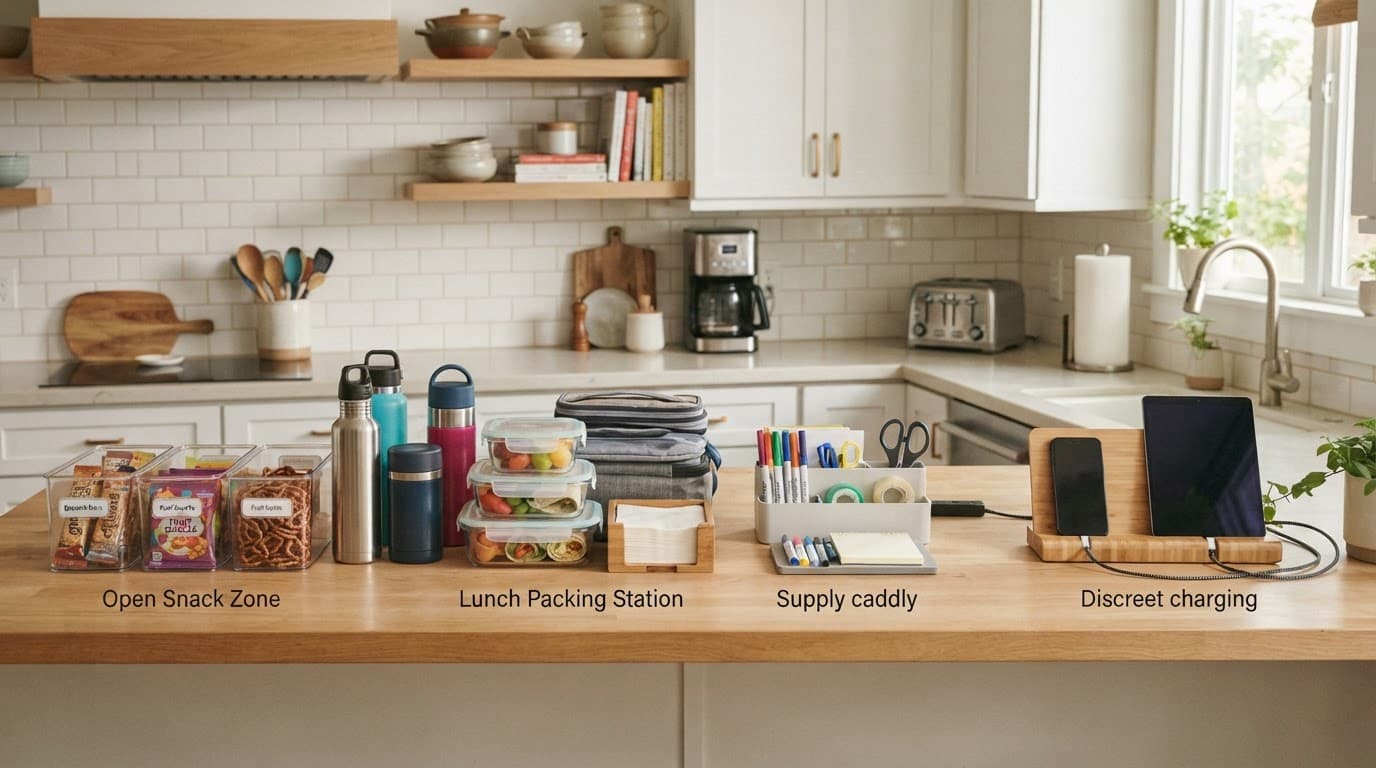
Set up a compact family command center for device charging, lunch reminders, and school forms. If space is limited, keep it visibly separate from food-prep zones. Use hidden organization inside a cabinet or concealed drawer for cords and occasional kitchen tools, while keeping frequently used supplies easy to see.
During the evening reset, wash lunch items, plug in devices, and place backpacks and forms in the drop zone.
Make kids' rooms easier to clean and maintain
Children are more likely to clean up when storage is simple and within reach, including low, open storage bins. A room with six toy categories supports simple toy containment better than one with 30 tiny containers.
When space allows, divide the room into sleep, play, and study areas. Use low bins for toys, open shelves for books, and a basket for everyday odds and ends; toy rotation can limit how many toys are available at once. Use hidden organization, such as under-bed bins and high shelves, for seasonal clothes or rarely used items, while keeping everyday belongings at child level.
Match labels and storage to each child's age
Preschoolers need big open bins and picture or printable labels. Elementary-age kids can sort books, building toys, dolls, and art supplies with word labels. Teens usually need flexible drawers, shelves, and wardrobe storage for clothing, laundry, or seasonal items.
Store everyday clothes, favorite books, and common toys at child level. Keep fragile, valuable, or unsafe belongings elsewhere. For clothing that no longer fits, build a donate box into the closet routine as part of your closet organization. Professional organizing tips on donating household items can help you make regular edit sessions part of family life.
Use a simple morning and evening reset
A short reset can include putting pajamas in a basket, returning shoes to their spot, making the bed, and doing a five-minute pickup before screen time or bedtime.
Use family meetings to choose one or two age-appropriate tasks for each child. Visual chore charts may help younger kids follow the routine without repeated reminders. Keep the standard realistic, especially during school weeks.
Stop laundry and paperwork from turning into piles
Laundry and paper piles grow because they involve several decisions. The fix is to reduce those decisions and place supplies where the work already happens.
Place hampers where clothing tends to land, such as bedrooms, bathrooms, or a stair landing. For paperwork, set up one family command center near the place where you open mail or unpack backpacks. Include folders, forms, and the shared schedule.
Create a laundry system that reduces rework
Use separate hampers or labeled sections to sort lights, darks, towels, or sports uniforms before wash day. A simple laundry system keeps stain supplies together in a child-safe caddy and reserves a clear table or counter for folding.
Maintain the laundry system with a quick daily sweep for stray socks and dish towels. Return clean clothing to bedrooms as soon as practical. Don't create so many steps that everyone leaves baskets in the hallway instead.
Process mail and school papers within 48 hours
Give each piece of paper one destination: recycle it, file it, add it to the command center, or punch it into a binder. Use separate folders for each family member, with printable labels on folders or binder tabs.
Track school events, appointments, and deadlines on a shared calendar or a digital calendar. Hold weekly family meetings to review forms, upcoming events, and responsibilities.
The NPR Life Kit guide to organizing important paperwork offers a useful reminder: papers need decisions, not a larger pile. Do a weekly paper reset, complete forms, file what matters, and clear the command center.
Keep the whole home organized with short family resets
A one-time organizing project fades fast without maintenance. Short family resets make the system stick because everyone handles a small part before clutter gets out of hand.
Try a daily five- or 10-minute reset after dinner or before bedtime. Add an after-school routine for backpacks, shoes, lunch containers, and school papers. These small habits fit into daily routines without becoming a full cleaning routine. A Sunday reset can cover the laundry system, calendar checks, and a quick sweep of shared spaces.
Use hotspot-first decluttering when time is limited
Focus on high-impact spots: the front door, kitchen counter, dining table, hallway, pantry, or laundry catchpoint. Use low-cost storage solutions while decluttering, then pick one hotspot and set a 10- to 15-minute timer. Stop when time is up.
Use a one-in, one-out rule when the house starts feeling full. It works well for toys, shoes, clothing, water bottles, and kitchen gadgets. A pre-birthday and post-holiday review also creates room before new gifts arrive.
Adapt the system for small spaces and changing needs
Apartments and shared bedrooms need vertical space. Use over-the-door organizers, wall hooks, narrow shelving, under-bed bins, and slim rolling carts for hidden organization that keeps infrequently used items out of sight.
Review your setup during family meetings, sharing household chores by age and availability as children grow, sports seasons change, or work schedules shift. The best DIY home organization hacks for busy families can change with your routines instead of locking you into one rigid system.
Frequently Asked Questions
What is the best place to start organizing a busy family home?
Start with one trouble spot, such as the entryway, kitchen counter, or laundry catchpoint. A 10- or 15-minute session can create a quick win without making the rest of the house harder to manage.
How can I make home organization easier for children?
Keep everyday belongings at child level and use open bins, simple categories, and picture or word labels that match each child's age. Assign one or two realistic tasks so children can take part without needing constant reminders.
How do I prevent entryway clutter from spreading through the house?
Create a visible drop zone with hooks, baskets, and a shoe rack or caddy. Give each family member a defined place for coats, bags, shoes, and items that need to leave the house.
What is a simple way to manage laundry and paperwork?
Place hampers where clothes usually land and sort laundry before wash day. For mail and school papers, give each item one destination: recycle it, file it, add it to the command center, or place it in the appropriate binder.
How often should we reset the home?
Try a five- or 10-minute reset each day, followed by a short weekly review of laundry, paperwork, and shared spaces. Regular small resets are easier to maintain than occasional large organizing projects.
A calmer home starts with one easy reset
The best systems are visible, simple, and easy enough for everyone to use. Start with one hotspot, remove what no longer belongs, and give everything left a clear home.
A basket by the door, a snack bin at child height, or a 10-minute evening reset can make a busy house feel more manageable. Small daily habits create order without a large budget or perfect schedule. Use family meetings to choose the next hotspot or adjust responsibilities together.