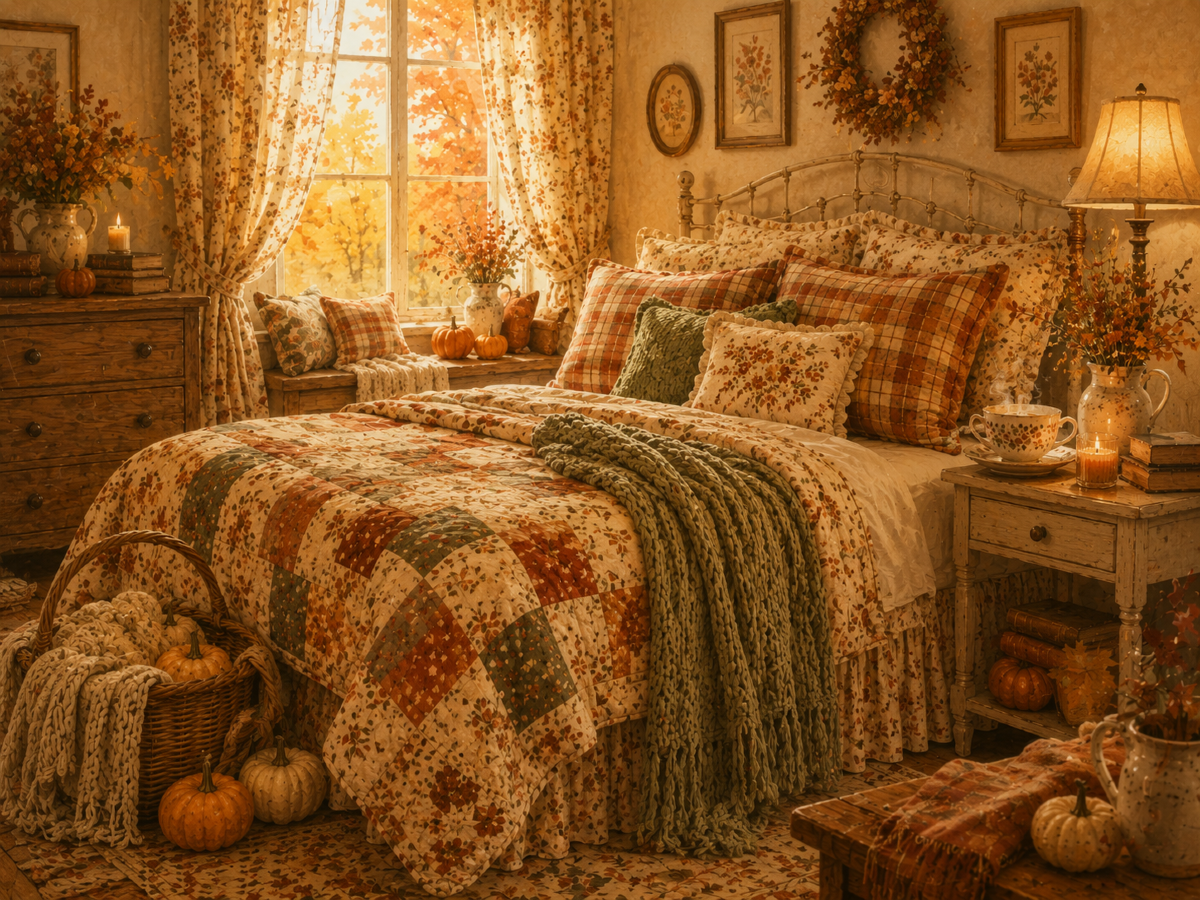
25 Fall Mantel Ideas Without Pumpkins for a Cozy Home
I want to add one thing before you read the article. When it comes to candles, I personally just use no- flame candle warmers. I'm always afraid to take the chance on a fire. If you use real fire in a fireplace, please take every precaution. No amount of beautiful decorating is worth losing your home or loved ones.
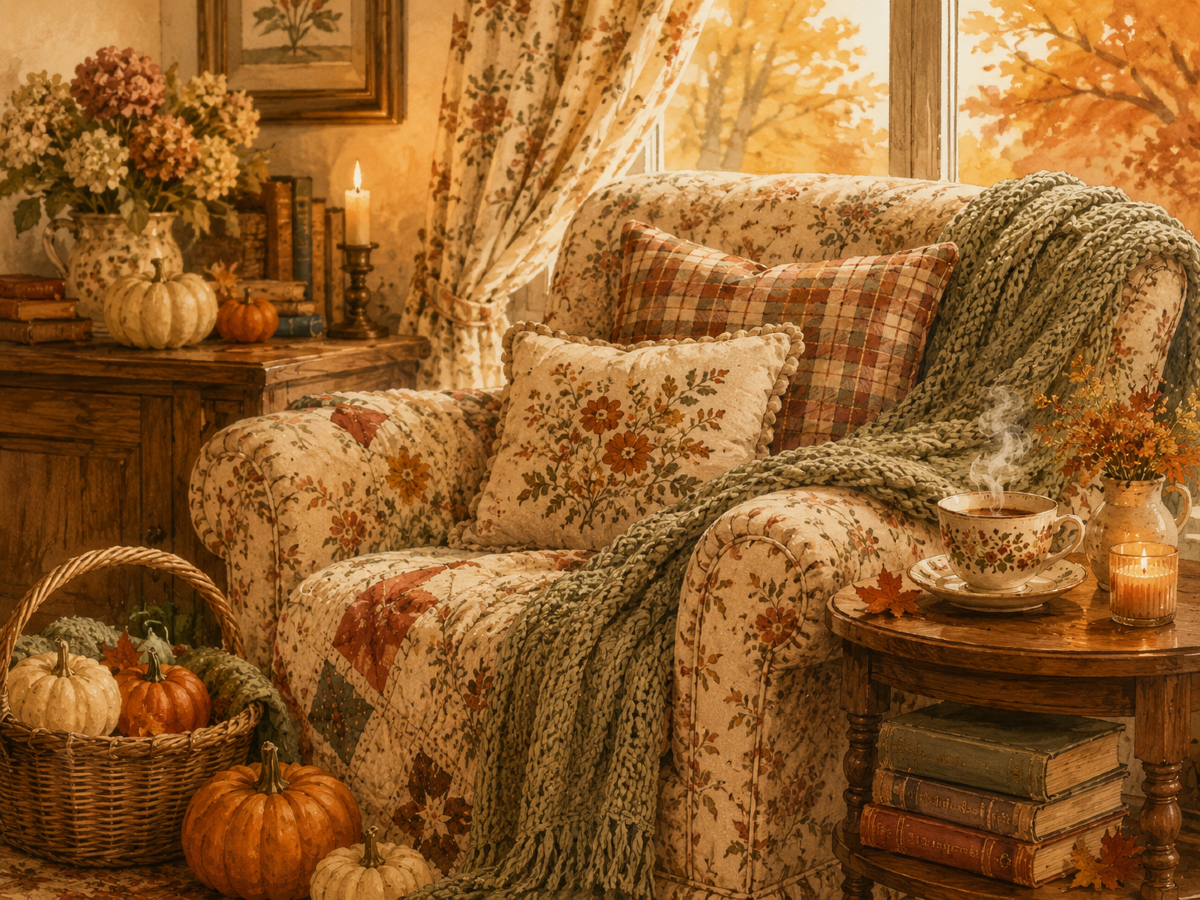
A fall fireplace mantel can feel seasonal without a single pumpkin. Warm colors, layered texture, and gentle light create a softer look with dried branches, amber glass, books, baskets, artwork, candles, and cozy textiles.
This neutral fall decor works with pieces you already own and suits farmhouse, cottage, rustic, traditional, modern, and rental homes. Together, these elements create a relaxed autumn aesthetic that feels collected instead of crowded.
Start With the Mantel, Room, and Decorating Style
Before buying a single vase or candle, study the fireplace as part of the room. Measure the mantel's length and depth, note the wall height, and consider nearby living room decor, media consoles, artwork, built-ins, televisions, and architectural details. Is the fireplace the room's main focal point, or does it compete with a large window or media console?
A narrow mantel needs slimmer, fewer pieces so the display doesn't feel cramped. Wide mantels can handle layers, a larger central feature, and taller objects at each end. Choose one style direction and repeat at least one color or material already found elsewhere in the room. This simple connection makes seasonal decorating feel intentional instead of looking like autumn items placed at random.
Choose a Warm Fall Color Palette
Start with calm neutrals such as cream, beige, tan, camel, and soft brown. These colors create a comfortable backdrop for seasonal accents without making the mantel look busy. Benjamin Moore recommends considering existing furniture, flooring, cabinets, countertops, and warm or cool lighting when building a room palette. Its whole-house color guidance also suggests choosing a dominant color, secondary colors, trim, and an accent that coordinate with the rest of the room.
For a seasonal touch, add one restrained autumn shade, then support it with one or two related colors:
- Cream with warm wood and olive creates a soft, natural display.
- Rust with amber glass and brown feels richer and more traditional.
- Burgundy with brass and ivory adds depth without relying on bright decorations.
- Charcoal with beige and black gives a modern mantel a grounded autumn look.
Use the room's existing colors as your guide. If your sofa has camel upholstery, repeat camel in a throw or ceramic vessel. If your artwork includes olive, bring that shade onto the mantel with foliage or a small bowl. One dominant color usually feels more polished than several accents competing for attention.
Match the Display to Your Home's Style
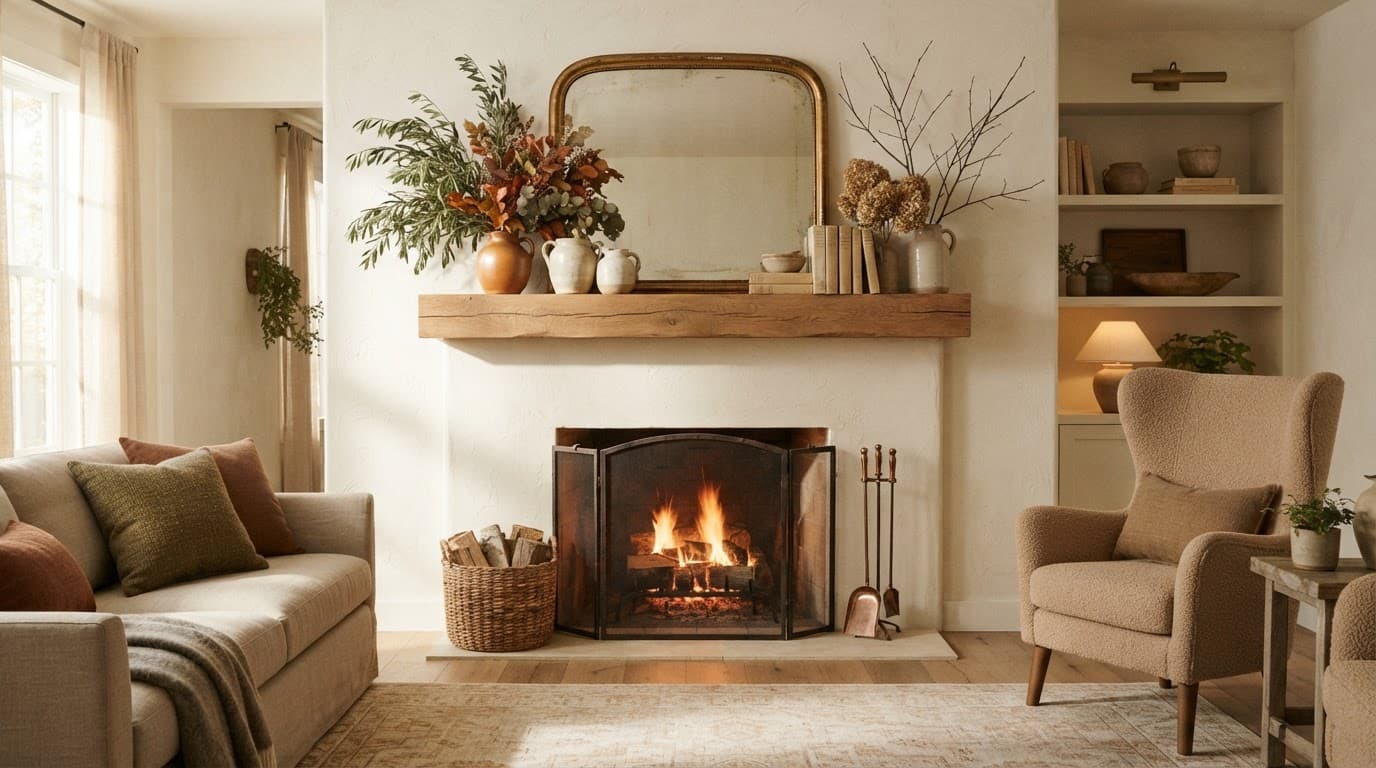
The most successful pumpkin-free seasonal mantel displays look as though they belong in the room all year, with a few thoughtful adjustments. Farmhouse rooms pair well with galvanized metal, distressed wood, linen, and woven accents. For more farmhouse color ideas, see this modern farmhouse decor guide.
Cottage mantels welcome floral prints, aged books, baskets, and vintage items such as old containers. Traditional rooms can also use vintage items, along with framed art and rich fabrics. Modern rooms look better with clean lines, simple ceramic vessels, and fewer objects. Rustic spaces suit raw wood, stone, branches, wool, brass, and tarnished silver used as subdued metallic touches.
Avoid combining every style on one small shelf. A galvanized bucket, ornate brass frame, modern sculpture, and rustic branch may each look appealing alone, but together they can make the mantel feel unsettled. Pick one clear direction, then vary the height and texture within that style.
The Best Pumpkin-Free Elements for a Cozy Fall Mantel
A cozy fall mantel depends on more than seasonal objects. Fall mantel decor feels intentional when it combines warm color, varied height, soft light, and contrasting textures. Choose a few elements, then leave enough open space for each piece to breathe.
Use Dried Branches, Leaves, and Foliage
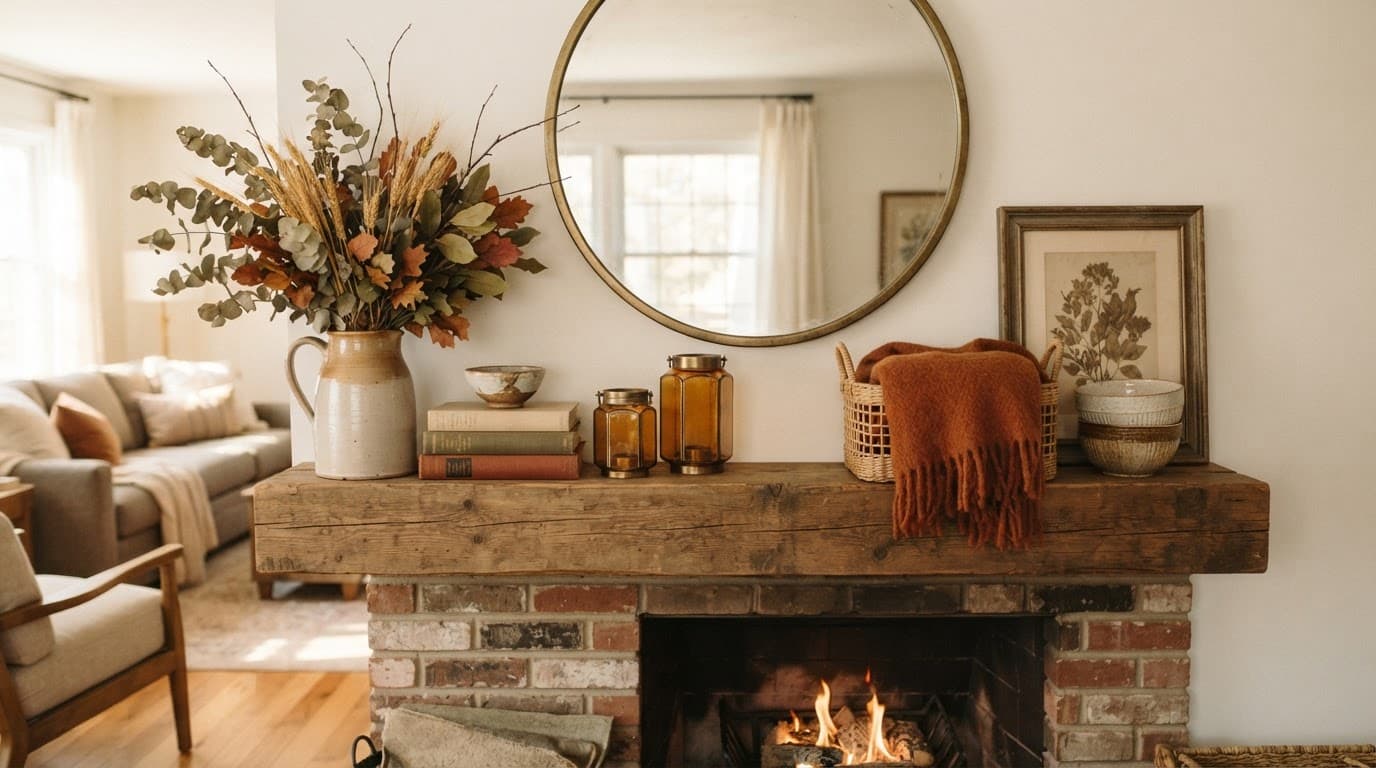
Place dried florals, dried hydrangeas, eucalyptus stems, wheat, preserved leaves, or bare twigs in a tall vase, pitcher, or stoneware vessel. An off-center arrangement adds height beside a television or mirror without creating a stiff, symmetrical display. These natural elements bring fall foliage and warm color into the room without relying on seasonal symbols.
Dried foliage is combustible decor, so keep it away from flames, pilot lights, hot metal, vents, and other heat sources. Avoid stems that overhang the firebox or could fall toward heat. In homes with children or pets, sturdy artificial branches can provide the same shape with less shedding and fewer fragile pieces.
Add Warm Light With Candles and Lanterns
LED taper candles, battery-operated pillars, string lights, amber glass, and frosted holders add a gentle glow without pumpkin-shaped accents. Vary the heights, but keep the display simple. For example, pair one lantern with two candles and a short glass holder instead of filling every inch.
Use stable, tip-resistant holders on a sturdy surface. Keep anything that can burn at least 12 inches from a lit candle, and follow the U.S. Fire Administration's candle safety guidance. Never leave a burning candle unattended. Extinguish it before leaving the room or going to sleep, and keep matches, loose clothing, and hair away from the flame.
Flameless candles are the better choice near dried foliage, fabric, children, pets, or heat. For a working fireplace, follow the manufacturer's exact clearances and local fire-safety guidance. No single mantel distance applies to every fireplace.
Layer Books and Small Decorative Objects
Horizontal stacks of decorative books can raise a vase, candle, bowl, or small sculpture to the right height. Choose neutral covers, warm brown, rust, olive, or muted burgundy for a subtle seasonal palette.
Support the stacks with only a few additional pieces, such as a ceramic bowl, wooden beads, framed print, or vintage object. Keep every book pile flat and stable, especially if children or pets can reach the mantel. Open space around the stacks prevents the display from looking crowded.
Bring in Woven, Wood, Stone, and Ceramic Texture
Mix baskets, rattan, seagrass, jute, terracotta, stone, raw wood, glass, and ceramic vessels. Rough materials add warmth, while smooth glass and glazed ceramic catch light and create contrast, even when the palette stays mostly neutral.
A small basket beside the fireplace can hold a folded throw or firewood when that placement suits the fireplace and remains safe. Layering textiles in a nearby basket adds softness without crowding the mantel. Keep woven materials away from flames, hot surfaces, vents, and falling embers.
Use Textiles and Seasonal Artwork Carefully
Place one folded wool, boucle, cotton, linen, or chunky-knit throw in a basket near the hearth. Add a plaid accent only when the mantel is deep enough to keep fabric safely away from flames and hot surfaces.
For artwork, choose fall-toned leaves, forests, landscapes, botanical sketches, still lifes, or muted abstracts. One large central piece works well above a wide mantel. On a narrower wall, layer two frames with different sizes, keeping the arrangement balanced without hiding every inch of the wall.
Choose a Focal Point That Is Not a Pumpkin
Every balanced mantel benefits from one main visual anchor. This mantel focal point might be tall branches, a mirror, seasonal artwork, a wreath, a lantern, or a candle grouping. Choose one piece with enough scale to hold attention, then leave breathing room around it instead of adding several competing centerpieces.
Create a Loose Branch Arrangement
Fill a cream ceramic vase, stoneware pitcher, glass vessel, or aged container with tall, relaxed branches. Bare branches, willow, and muted golden stems create a relaxed autumn mantel treatment without making the space feel themed. Their loose shape softens the straight lines of a fireplace, while their forest-inspired character introduces subtle woodland motifs.
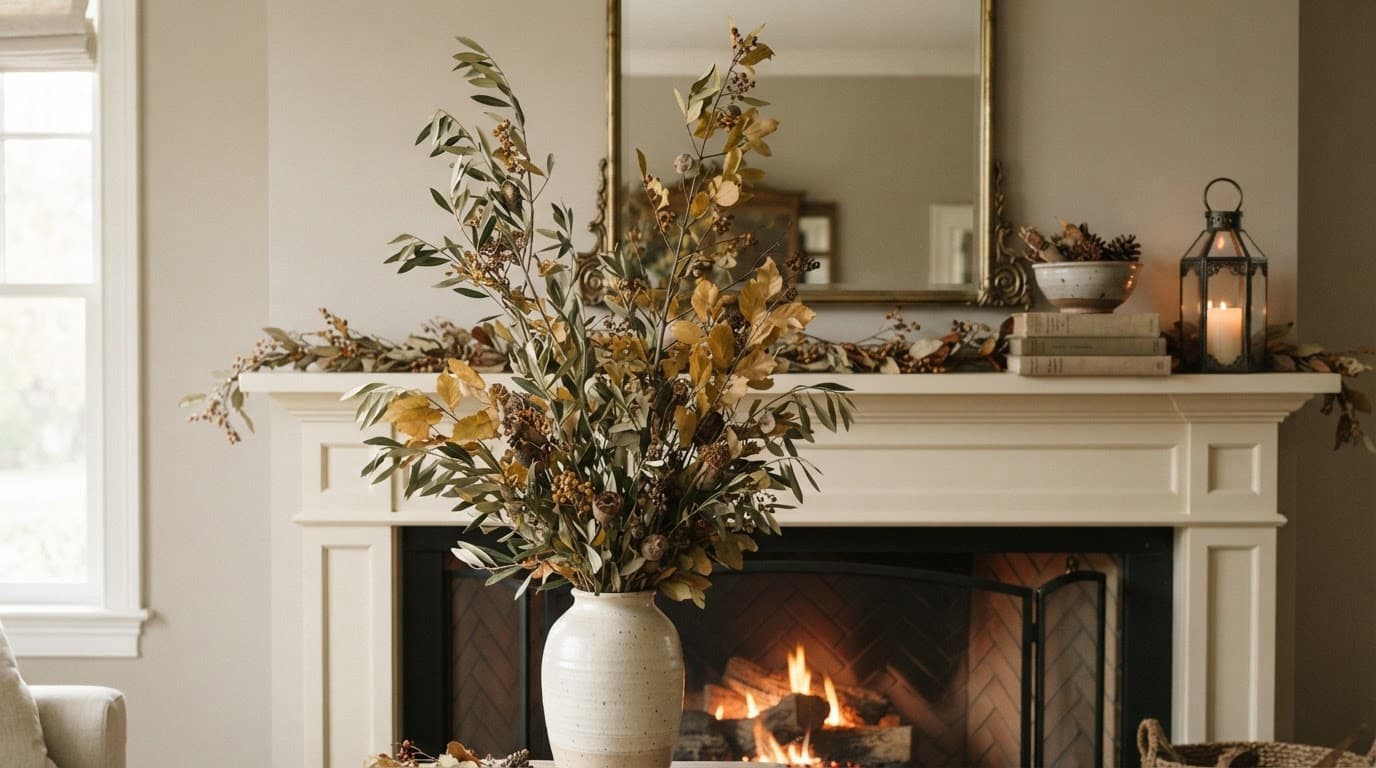
Place the vessel slightly off-center rather than directly in the middle. Balance it with shorter items on the opposite side, such as a small stack of books, a low bowl, or one lantern. The branches provide the height and visual interest that a large pumpkin display often supplies, while the uneven arrangement feels more relaxed.
Keep dried branches away from flames, sparks, hot surfaces, and vents. If you plan to use the fireplace, remove combustible stems before lighting a fire.
Use a Mirror or Seasonal Artwork
One large piece keeps a simple mantel polished. Choose a round mirror for a softer look, an arched frame for a cottage feel, or a rectangular piece for a clean, classic arrangement. Fall art prints featuring leaves, landscapes, botanical sketches, or muted abstracts can add seasonal character without overwhelming the room.
A wide mantel can support one large frame layered with a smaller one. For a narrower shelf, use one piece and let the surrounding wall remain visible. Wood, brass, black, cream, or tarnished silver frames and vessels can complement different rooms without competing with the primary piece. Leaning artwork against the wall is useful when drilling isn't practical, especially in a rental, but keep the frame stable and away from the fireplace opening.
Heavy mirrors and frames need proper wall anchors or mounting hardware. Secure them carefully above a fireplace so they don't shift or fall, and follow the fireplace manufacturer's clearance instructions.
Try a Wreath or Lantern Grouping
A muted wreath is an easy pumpkin-free focal point. Look for eucalyptus, wheat, grapevine, magnolia, or simple branch wreaths in faded green, tan, cream, and brown. Hang one directly above the mantel, or place it over a mirror for a layered arrangement.
A wreath isn't your only option. One large lantern can anchor a compact mantel, while a pair of lanterns creates balance on a wider one. Fill them with battery-operated candles, pinecones, leaves, or glass votives, but avoid cramming in every seasonal accent.
Keep combustible filler separate from lit flames, and choose battery-operated candles near dry materials. The U.S. Fire Administration's candle guidance recommends stable holders and keeping burning candles at least 12 inches from anything that can burn. Skip multiple signs and small wreaths, which can make the arrangement look scattered.
Five Ready-to-Use Fall Mantel Arrangements
These five mantel vignettes offer complete starting points for different decorating styles. Each combination can be adapted to your room's scale, so shop your home before buying anything new. Keep the focal point clear, repeat a restrained fall color palette, and leave open space between objects.
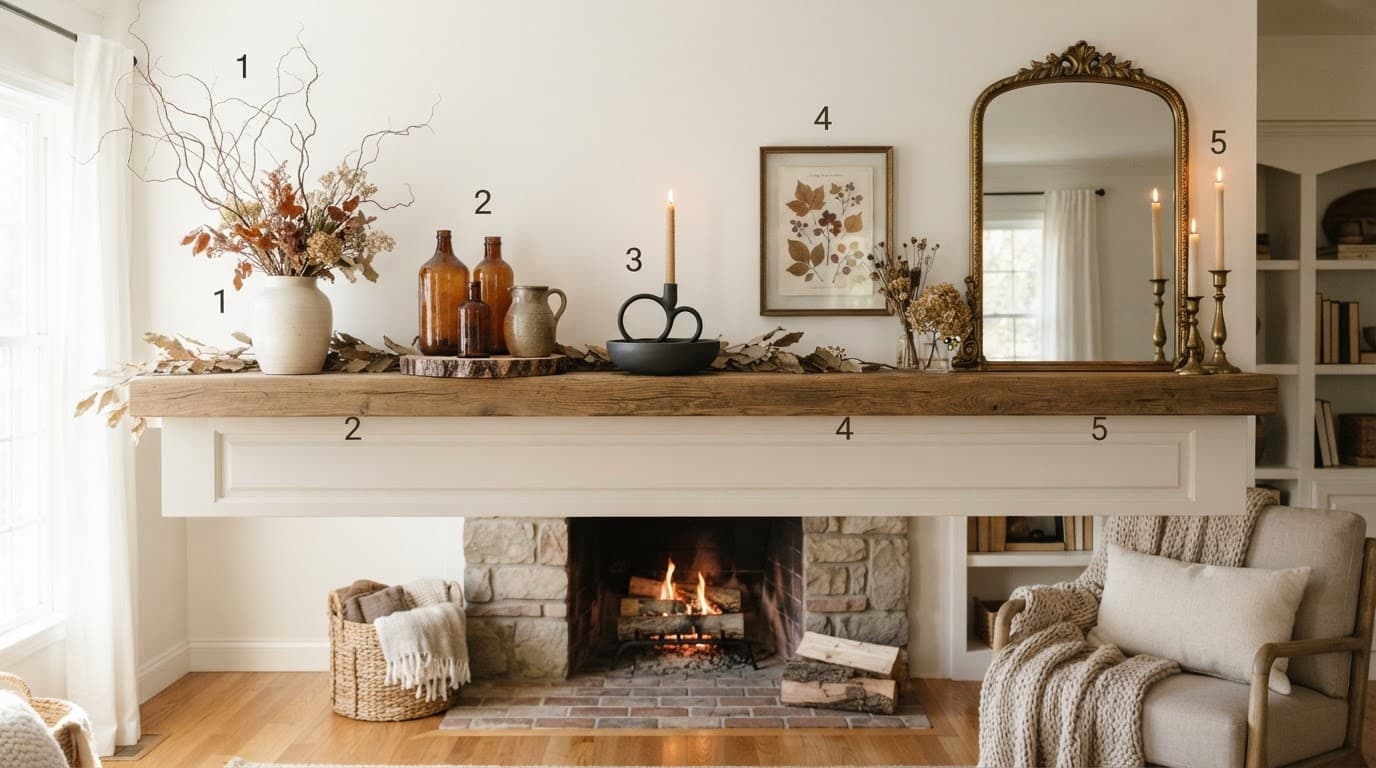
Neutral and Natural
Start with a cream ceramic vase filled with bare branches. Place it slightly off-center, then balance its height with beige candlesticks or battery-operated candles on the opposite side. A short stack of neutral books can raise a small olive or tan accent without making the mantel feel crowded.
Add a woven basket near the hearth with a folded throw inside. Cream, beige, olive, and light tan create soft neutral fall decor for Scandinavian, farmhouse, and relaxed transitional interiors. Keep the arrangement airy, with visible wall space around the vase and branches.
Rustic and Warm
For a rustic mantel, lean a distressed wood frame against the wall and place a stoneware pitcher nearby. Add two amber glass bottles and brass candle holders for warmth and shine against the rougher materials. Tarnished silver is another aged-metal option that adds depth without brightening the display.
A folded wool throw in rust, brown, or oatmeal can sit in a basket beside the fireplace. This arrangement works especially well in cabins, farmhouse rooms, and traditional homes with wood floors. Use wood, brown, and rust as the main colors, then add one smooth ceramic or glass piece so the display doesn't become visually heavy.
Modern and Minimal
Choose one large abstract print or a simple round mirror as the focal point. Beneath it, place a low ceramic vessel, one sculptural candleholder, and a small stack of books. Resist the urge to fill every open area, because generous space gives this arrangement its modern look.
Keep the palette to cream, charcoal, black, and muted brown. This combination suits contemporary, mid-century, and pared-back apartments. Battery-operated candles are practical, especially when the mantel sits above a working fireplace.
Cottage-Inspired
Layer botanical artwork with a small vintage frame, keeping the larger piece behind the smaller one. Add a floral vase with dried stems, a stack of aged books, and a woven basket near the hearth. Soft brown, faded rose, cream, and olive give the display a gentle country feel.
Choose one main pattern, such as the botanical print or floral vase, and let the other pieces remain quiet. That approach keeps cottage decor collected rather than cluttered. This arrangement fits English cottage, vintage farmhouse, and casual traditional interiors.
Rich and Traditional
Center a framed landscape or antique-style mirror above the mantel. Place brass candle holders with burgundy taper candles or battery-operated alternatives on either side. Add dark wood, amber glass, and a deep brown ceramic vase for depth.
The layered palette feels right in traditional dining rooms, historic homes, and spaces with leather or dark wood furniture. Keep the display refined by skipping novelty signs and overly themed decorations. If you use real candles, follow the USFA's candle safety guidance and keep combustible decor well away from heat.
How to Style a Fall Mantel Step by Step
A polished fall fireplace mantel starts with editing, not shopping. This repeatable fall decor styling method works for wide stone fireplaces, narrow apartment mantels, and shallow shelves above electric inserts. Build the arrangement slowly, then finish with a careful safety check.
Clear and Clean the Surface
Remove every existing decoration so you can see the mantel's actual shape and condition. Wipe away dust, soot, and residue with a suitable cleaner. Then inspect the surface for heat damage, discoloration, cracks, uneven spots, or loose trim.
Check for blocked vents, fireplace controls, switches, remote receivers, and access panels. Everyday pieces can stay if they don't compete with your design, but store anything too colorful, fragile, or bulky until winter. Starting with fewer objects makes seasonal decorating easier and keeps the next steps manageable.
Place the Largest Piece First
Choose one anchor, such as a mirror, artwork, wreath, vase, or lantern, as the mantel focal point. Center it for a formal arrangement, or shift it slightly for a more relaxed look. A large focal piece should remain visible from both the main seating area and the room's entrance.
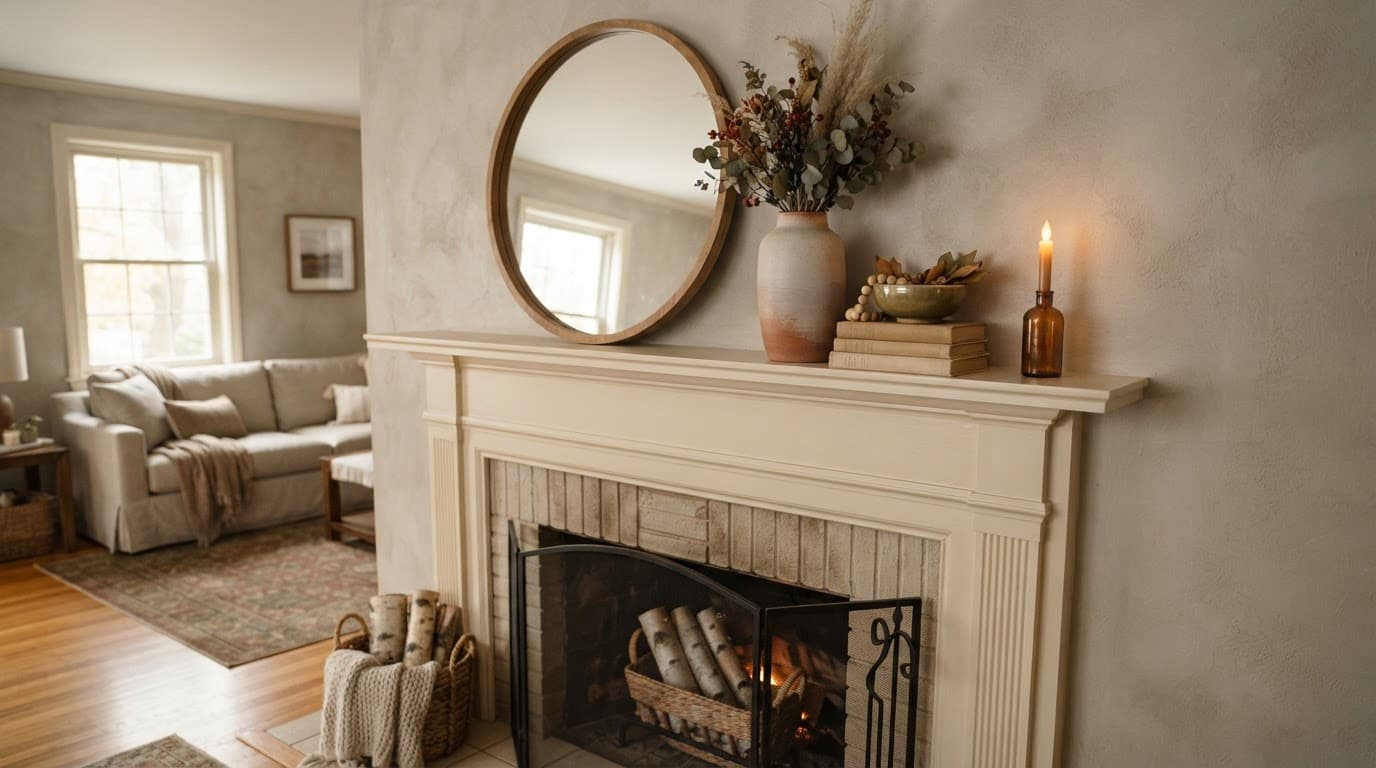
Lean artwork only when it sits securely and can't slide toward the firebox. Heavy mirrors and frames need proper wall anchors or mounting hardware. If your fireplace has a manufacturer clearance chart, follow it before positioning any combustible frame, wreath, or vase.
Balance Height, Weight, and Layers
Next, add taller objects near the focal point and shorter pieces toward the edges. For example, balance a tall vase with stacked books, a low bowl, or candlesticks on the opposite side. The two sides should feel related, but they don't need to match unless you prefer a formal style.
Lean smaller frames against the wall and overlap a few pieces to create depth. Keep heavier objects on stable surfaces, especially in homes with children or pets. Leave the front edge clear so the mantel feels open and nothing can be easily knocked forward.
Add Texture, Color, and Light
Once the structure feels balanced, introduce one or two autumn-colored accents. Rust, olive, amber, tan, and muted burgundy create a welcoming fall color palette without turning the display into a theme.
Mix woven fibers, wood, ceramic, glass, and textiles for contrast. Try layering textiles with a small fabric accent, but keep it well away from heat. Then add battery-operated candles or warm string lights. Dried foliage works best as a final layer, placed in a vase or vessel rather than packed into every empty space.
Step Back, Photograph, and Edit
View the mantel from the doorway and your usual seating area. Take a quick photo because the camera often reveals crowded corners, uneven spacing, or repeated shapes that are easy to miss in person.
Remove one or two pieces if the display looks busy. Finally, confirm that nothing blocks vents, doors, controls, or required clearances. Fireplace rules vary by model, so check the manufacturer's instructions and mantel clearance guidance before using the fireplace. Keep dried foliage, fabric, wood, paper, and real flames outside the approved clearance zone.
Inexpensive Fall Mantel Ideas Using What You Have
You don't need a shopping cart full of fall mantel decor to create a warm seasonal display. Shop your home first, then look outdoors for simple materials that add texture, color, and height at little or no cost. A vase from the entryway, books from a bedroom shelf, or a basket from the living room can take on a fresh purpose for the season.
Before buying several small decorations, consider one versatile accent you can reuse each year. A simple wreath, mirror, vase, or set of candlesticks usually adds more value than a collection of novelty pieces.
Use Low-Cost Natural Materials
Fallen branches, acorns, pine cones, dried leaves, garden flowers, and herbs can bring an understated autumn feel to your mantel. These pieces of fall foliage add texture and color while keeping your display connected to natural elements. Choose materials that are legally available where you live, and avoid collecting from parks, protected areas, or private property without permission. A few bare branches in a pitcher may create more visual impact than a shelf crowded with purchased decorations.
Clean every outdoor item before bringing it inside. Brush away soil and insects, then allow branches, leaves, flowers, and herbs to dry completely in a well-ventilated area. Don't bring damp or moldy materials indoors, and discard anything that smells musty or shows signs of pests.
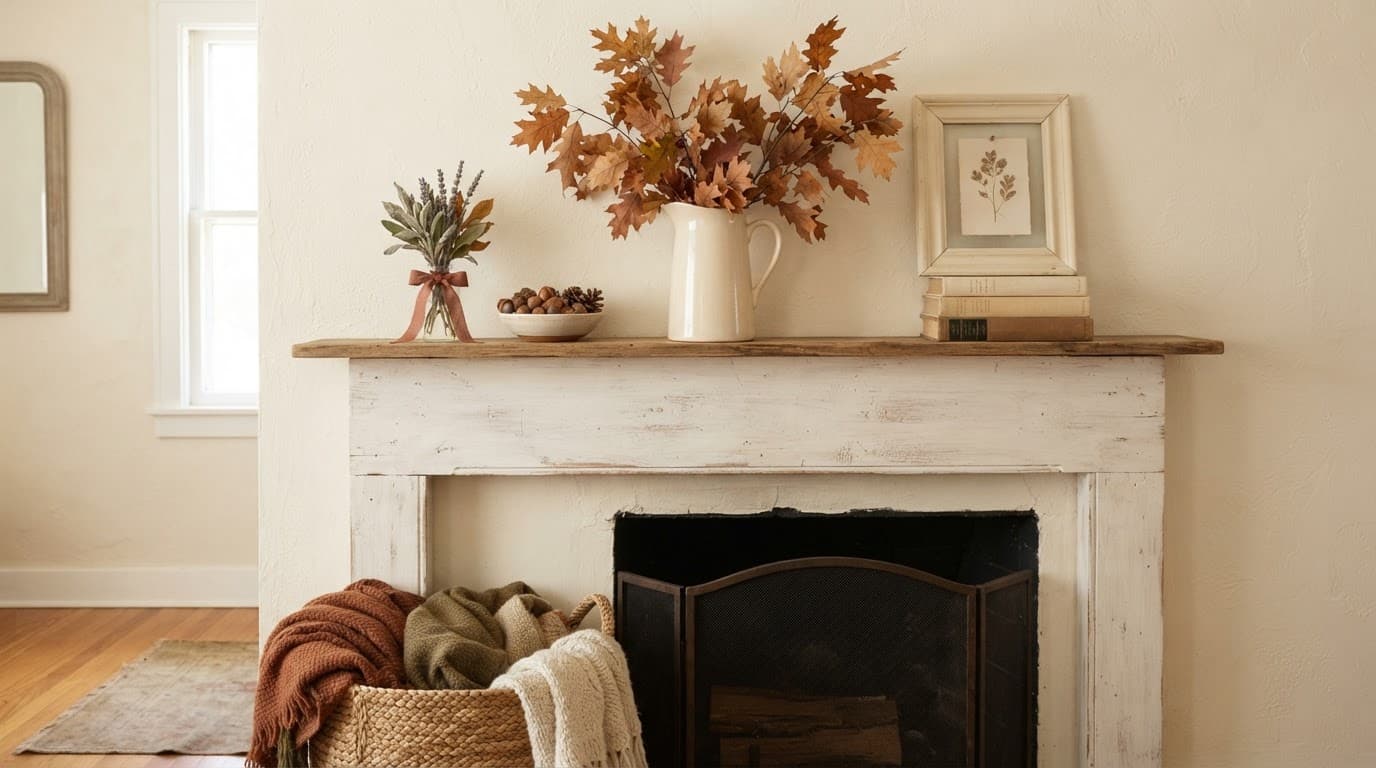
Place acorns and pine cones in a shallow bowl, or scatter a small amount around a vase for a relaxed arrangement. Dried herbs can add delicate shape and a subtle scent, while faded garden flowers bring color without looking overly themed. However, all of these materials are combustible. Keep them away from flames, sparks, hot surfaces, vents, and falling embers.
For a fireplace with an active fire, check your unit's instructions and local requirements before decorating. The International Residential Code fireplace guidance includes clearance rules for combustible materials near fireplace openings, but manufacturer requirements may be more restrictive.
Make a Simple DIY Arrangement
Give an old household item a seasonal update instead of buying a new centerpiece. Fill a thrifted pitcher with clean, dry branches, or place garden stems in a glass vase from another room. Vintage items, such as an old frame or reused container, can add character without much expense. A narrow rust or olive ribbon tied around the vase adds fall color without taking over the arrangement.
If your mantel has enough depth and safe clearance, make a short arrangement of fall garlands from dried leaves. Lay it loosely rather than covering the entire shelf, and remove it before lighting the fireplace. You can also paint an old frame cream, brown, or black, then lean it behind a vase or stack of books.
Move useful pieces between rooms as the seasons change. A basket can hold a throw in fall, books in winter, or towels in a bathroom later. The same candlesticks, bowls, frames, and vases can serve as fall home accents in different spaces, so your mantel feels fresh without requiring new decor every year.
Fall Mantel Ideas for Different Home Setups
The best fall mantel ideas depend on your room's limits as much as your decorating style. For a fall fireplace mantel, consider its depth, wall height, television placement, rental rules, and household safety. Before arranging decor, check the exact fireplace type, heat output, manufacturer instructions, required clearances, and local code.
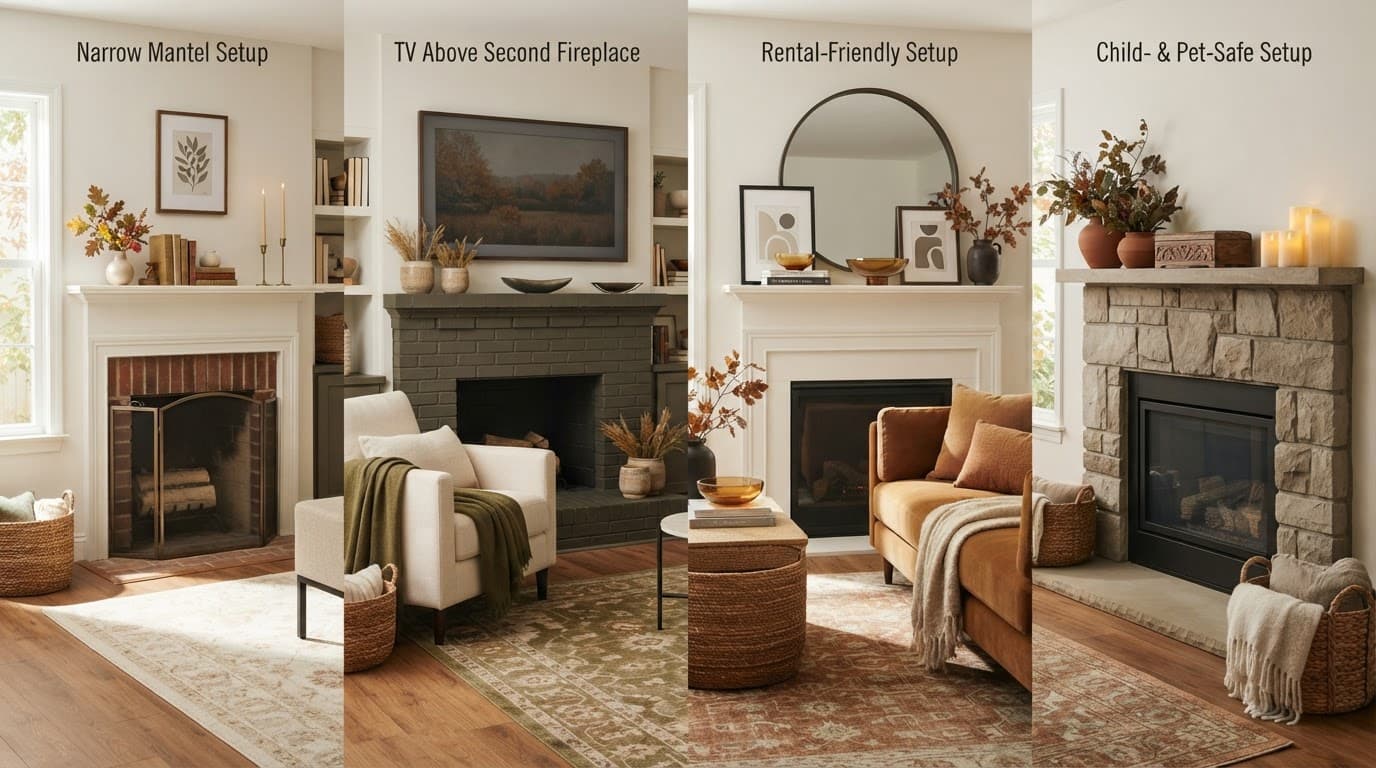
Small or Narrow Mantels
A narrow mantel looks best with a short, edited arrangement. Choose one medium-sized artwork or mirror for the wall, then keep the surface decor low with slim candlesticks, a narrow vase, and a small horizontal stack of books.
Place the artwork slightly above the mantel or lean it securely when the setup allows. This creates height without using valuable shelf space. A vase with a few stems can sit toward one side, while the candlesticks and books balance the opposite end.
Leave visible wall and mantel space between each object. That negative space keeps the arrangement from looking oversized, especially in a small living room, hallway, or apartment. Avoid tall branches, wide garlands, and deep baskets that can make the shelf feel crowded or block the firebox.
Mantels With a Television Above Them
When a television hangs above the fireplace, keep every piece low enough to protect the screen, vents, controls, and remote receiver. A low ceramic vase, shallow bowl, short framed pieces, or flameless candles can add seasonal color without competing with the television.
Choose pieces that coordinate with the surrounding living room decor. Repeat the TV's frame color in one or two objects. For example, a black frame can connect with black candlesticks, while a silver or walnut television frame can pair with a matching bowl or picture frame. For more arrangement ideas, see this guide to decorating a mantel with a TV.
Keep heat-sensitive materials, dried foliage, paper, and fragile objects away from vents. The fireplace manual and TV manufacturer's temperature limits matter more than any styling rule. Never assume that a clearance recommendation for one fireplace or television applies to yours.
Rental Fireplaces
Renters can create a layered display without drilling. Lean a mirror or artwork against the wall, then add freestanding frames, a battery-operated candle, and a small vase. Removable hooks or strips may work for lightweight pieces when the product instructions and wall surface allow them.
Adhesive products can perform poorly on textured walls, fresh paint, painted brick, and concrete. Follow the stated weight limit and removal method, clean the surface as directed, and avoid mixing adhesive systems. After fresh paint, wait about 30 days before installation unless the paint and product instructions state otherwise. Remove everything well before move-out so you have time to repair or report any damage.
Homes With Children or Pets
Use wide-based vessels, sturdy frames, secured mirrors, and LED candles. Hide cords behind furniture or use approved cord covers, and keep small breakable objects out of reach.
Avoid toxic plants, loose beads, sharp materials, and anything a child or pet could chew or swallow. Keep decor away from the firebox, hot surfaces, vents, and edges where an animal could pull it down. In these homes, a low arrangement with fewer stable pieces is both attractive and easier to maintain.
Common Fall Mantel Decorating Mistakes to Avoid
A polished mantel needs editing as much as decoration. Even beautiful seasonal displays can feel messy when too many symbols, colors, or competing focal points share one small surface. Use restraint as your fall decor styling guide, and the finished display will look collected throughout the season.
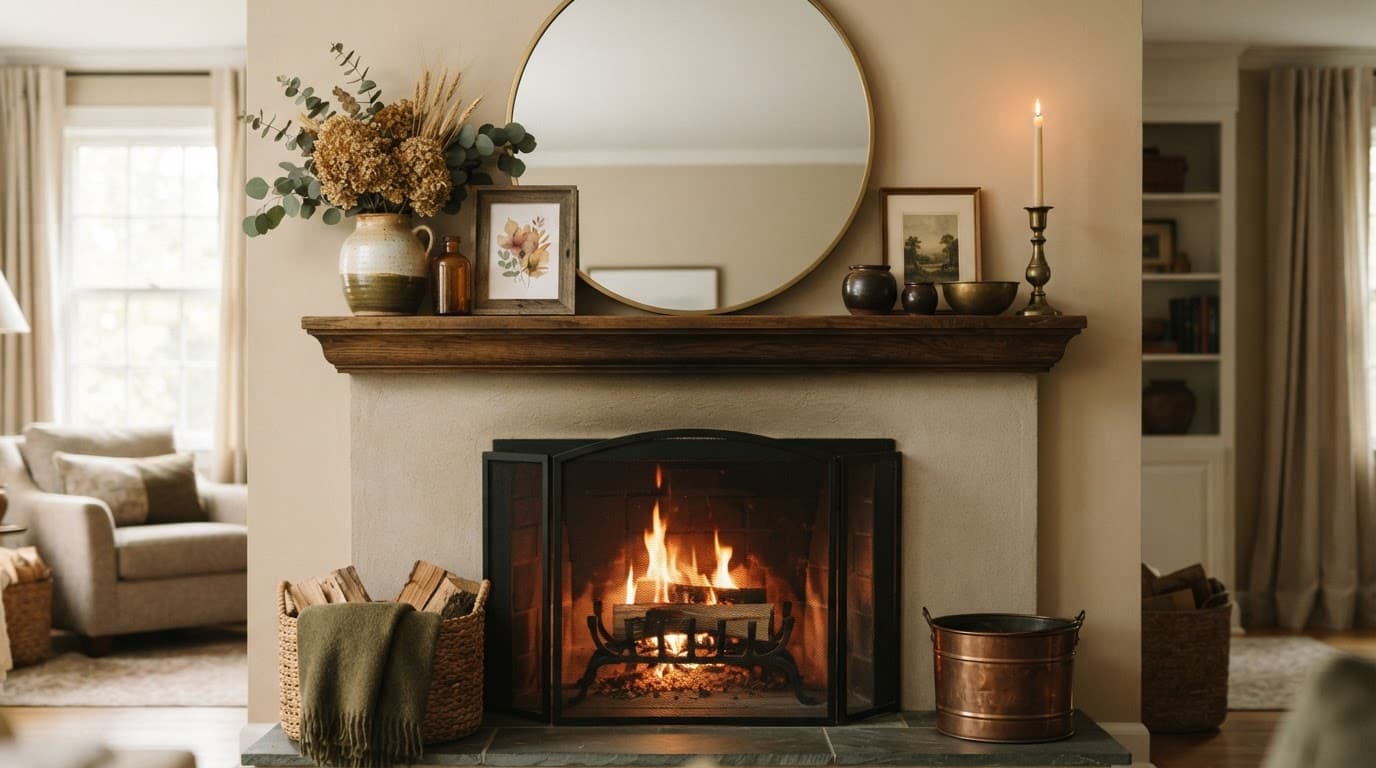
Too Many Seasonal Symbols
Signs, fall foliage, acorns, plaid, candles, figurines, wreaths, and fall garlands can all suggest fall. Put them together on one mantel, though, and the display may look more like a store shelf than part of your home.
Choose a few clear seasonal cues and leave the rest neutral. For example, pair dried branches with an amber vessel and a rust-colored textile. Keep the frame, books, and main vase in cream, wood, black, or another year-round shade.
The same rule applies to wreaths, signs, and garlands. One restrained garland is usually enough, especially when a mirror or artwork already occupies the wall. Remove anything that repeats the same message or shape. Open space gives the pieces you keep more attention.
Poor Scale or Accidental Imbalance
Small objects disappear beneath an oversized mirror, large artwork, or television. On the other hand, a wide mantel can make tiny vases and narrow frames look lost. Match your decor to the size of the wall and shelf, not only to the size of the objects you like.
Group small pieces so they read as one visual unit. A short vase, bowl, and stack of books will have more presence together than scattered across the mantel. Wide mantels also benefit from larger vessels, substantial frames, or a fuller branch arrangement.
Balance a tall item with a lower cluster on the opposite side. A tall vase beside a low bowl and books feels lighter than two tall pieces competing at both ends. Step back from the mantel and check whether one side looks visually heavier before adding anything else.
Too Much Symmetry or Too Many Colors
Matching pairs suit traditional rooms, but identical candlesticks and perfectly mirrored groupings can feel stiff in rustic, cottage, or casual spaces. Use related shapes with slightly different heights when you want a relaxed arrangement.
Color needs the same discipline. Start with a base color, add one fall accent, and choose one supporting shade. Cream, rust, and olive create a clear direction without making every object seasonal. Repeat the important colors at least once elsewhere in the room, such as in a throw, rug, artwork, or nearby chair.
Forgetting Fire and Candle Safety
Dried foliage, fabric, paper, ribbon, wood, and faux greenery can catch fire. Keep combustible materials at least 12 inches from lit candles, use stable holders, and follow the USFA's candle safety guidance.
Never leave a flame unattended. Extinguish candles before leaving the room or going to sleep, and choose flameless candles when decor sits close to heat or children and pets share the home. Follow your fireplace manufacturer's instructions, remove combustible decorations before lighting a fire, and inspect the mantel whenever you use the fireplace. Actually, I would recommend not using flame candles. I simply use a candle warmer and it is just fine. One moment of forgetfulness could cost you your home or family members. It's not worth it.
Pumpkin-Free Mantel Elements at a Glance
A seasonal mantel needs a clear focal point, a warm palette, and enough texture to keep the display interesting. These simple mantel vignettes combine natural elements, soft fabrics, aged finishes, and gentle light.
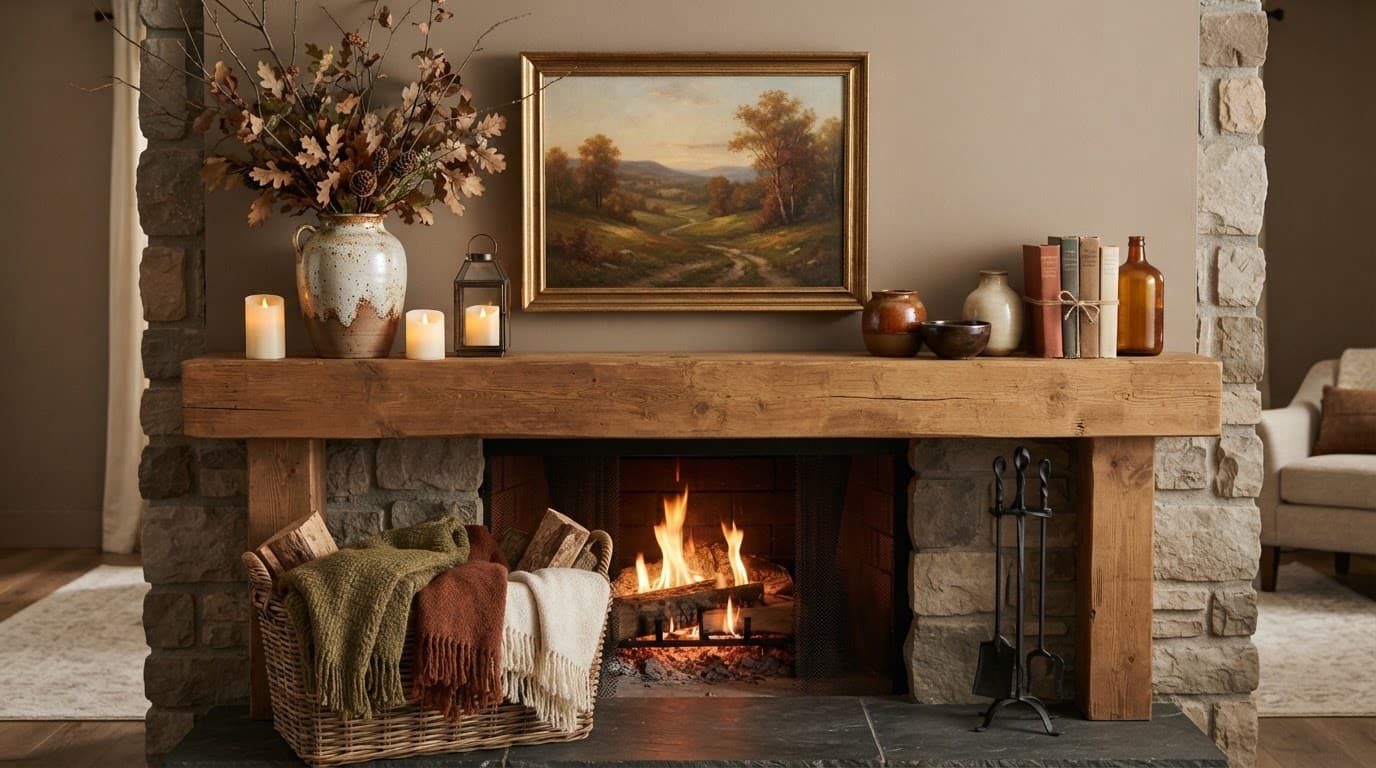
Match Each Element to Your Mantel
Use the table below as a quick guide when choosing pieces. It’s a starting point for neutral fall decor, not a checklist of items you must use. Two or three well-scaled pieces can look more polished than a crowded collection.
| Decor element | Best for | Main benefit | What to watch for |
|---|
| Dried branches | Rustic, farmhouse, and natural rooms | Adds height and organic color | Keep away from flames, sparks, hot surfaces, and vents |
| Candles and lanterns | Traditional, cottage, and cozy mantels | Creates warmth and a soft evening glow | Use stable holders; choose battery-operated candles near dried decor and fabrics |
| Seasonal artwork | Small or narrow mantels | Provides a strong focal point without using shelf space | Secure heavy frames and keep paper away from heat |
| Woven baskets | Hearths and relaxed family rooms | Adds texture and stores folded throws | Natural fibers are combustible, so keep baskets clear of the firebox |
| Books | Collected, traditional, and cottage styles | Adds height and a lived-in feel | Build flat, stable stacks of decorative books and avoid visual clutter |
| Amber glass | Warm, rustic, and vintage displays | Reflects light and introduces an autumn shade | Keep it steady on the shelf and away from candle flames or heat |
| Wool or knitted textiles | Homes with a soft, comfortable style | Adds softness and practical seasonal warmth | Don't drape fabric near flames, embers, vents, or hot surfaces |
| Ceramic vessels | Modern, farmhouse, and transitional rooms | Offers useful shape, color, and visual weight | Choose wide, stable bases and avoid blocking vents or controls |
When your fall fireplace mantel is in use, check the fireplace manual before placing anything on or above it. Clearance depends on the fireplace type, shelf depth, materials, and installation. Local building rules may also apply. For candles, the U.S. Fire Administration's candle safety guidance recommends extinguishing every flame before leaving the room or going to bed.
A simple starting combination is one tall ceramic vessel with branches, a low stack of books, and an amber glass accent. Add a framed landscape or woven basket only if the arrangement still has open space. That restraint keeps the display seasonal, comfortable, and easy to live with.
Quick Fall Mantel Styling Checklist
Use this checklist before you call your pumpkin-free mantel finished. It keeps the display warm and seasonal while protecting the room's comfort, proportions, and safety for a cozy fall mantel.
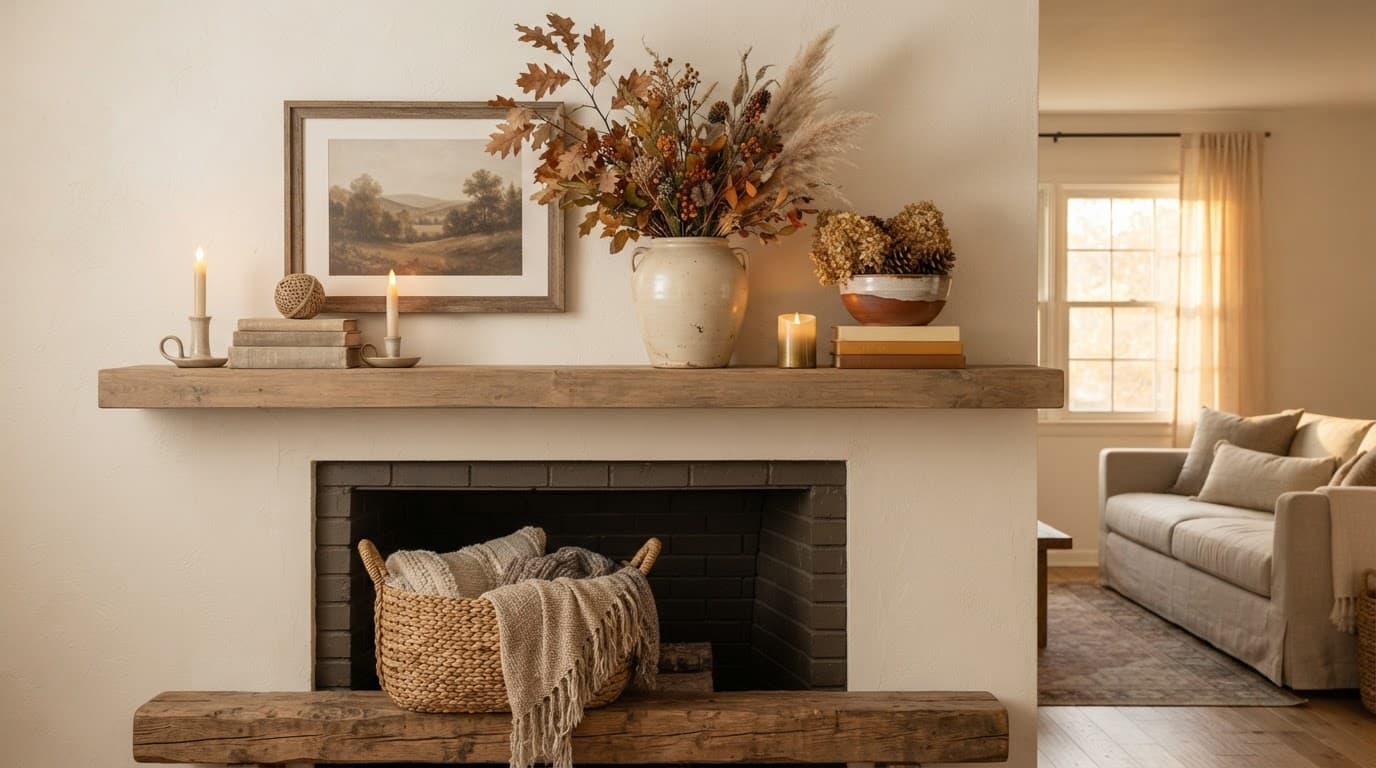
Build the Arrangement
- Choose a palette. Start with the room's existing neutrals, then add one fall shade such as rust, olive, amber, tan, or muted burgundy. Repeat that accent once elsewhere in the room so the mantel feels connected.
- Select one focal point. Use a mirror, framed landscape, wreath, lantern, or vase of branches as the mantel focal point. Too many centerpieces compete for attention, while one clear anchor gives the display structure.
- Add one tall piece. A branch-filled vase or tall candlestick creates height and draws the eye upward. Place it slightly off-center for a relaxed look, especially in a rustic or cottage room.
- Balance it with lower objects. Add stacked books, a shallow bowl, a small frame, or a low ceramic vessel on the opposite side. The pieces don't need to match, but their visual weight should feel even.
- Mix two or three textures. Combine smooth ceramic with rough wood, woven fibers, glass, stone, or soft linen. Texture brings warmth to a neutral mantel without adding more seasonal symbols.
- Add warm lighting. Use flameless candles, battery-operated lanterns, or a short strand of warm lights. If you use real candles, keep them in stable holders and at least 12 inches from anything that can burn, following fireplace mantel clearance guidance.
- Shop the home before buying. Check other rooms for vases, baskets, artwork, throws, candlesticks, and other fall home accents. Moving familiar pieces often creates a more personal display than purchasing a matching seasonal set.
Check Safety and Edit the Look
- Maintain safe clearances. Keep dried foliage, fabric, paper, wood, ribbon, and other combustible materials away from flames, hot surfaces, heat vents, sparks, and falling embers. Follow your fireplace manual because clearance requirements vary by model.
- Protect children and pets. Choose wide-based vessels, secure heavy frames, hide cords, and keep candles and small objects out of reach. A few stable pieces are safer than a crowded collection near an active fireplace.
- Step back and remove crowded pieces. View the mantel from the doorway and seating area. If objects overlap too much or one side feels heavy, remove an item before adding another.
- Photograph the finished arrangement before guests arrive. A quick photo reveals awkward gaps, cluttered corners, crooked frames, and distracting repeats. Make those small edits while the display is still fresh.
Frequently Asked Questions About Fall Mantel Ideas Without Pumpkins
Pumpkins are optional when you want a cozy autumn mantel. Warm color, natural texture, soft lighting, and a well-sized focal point create the same seasonal feeling with a calmer look.
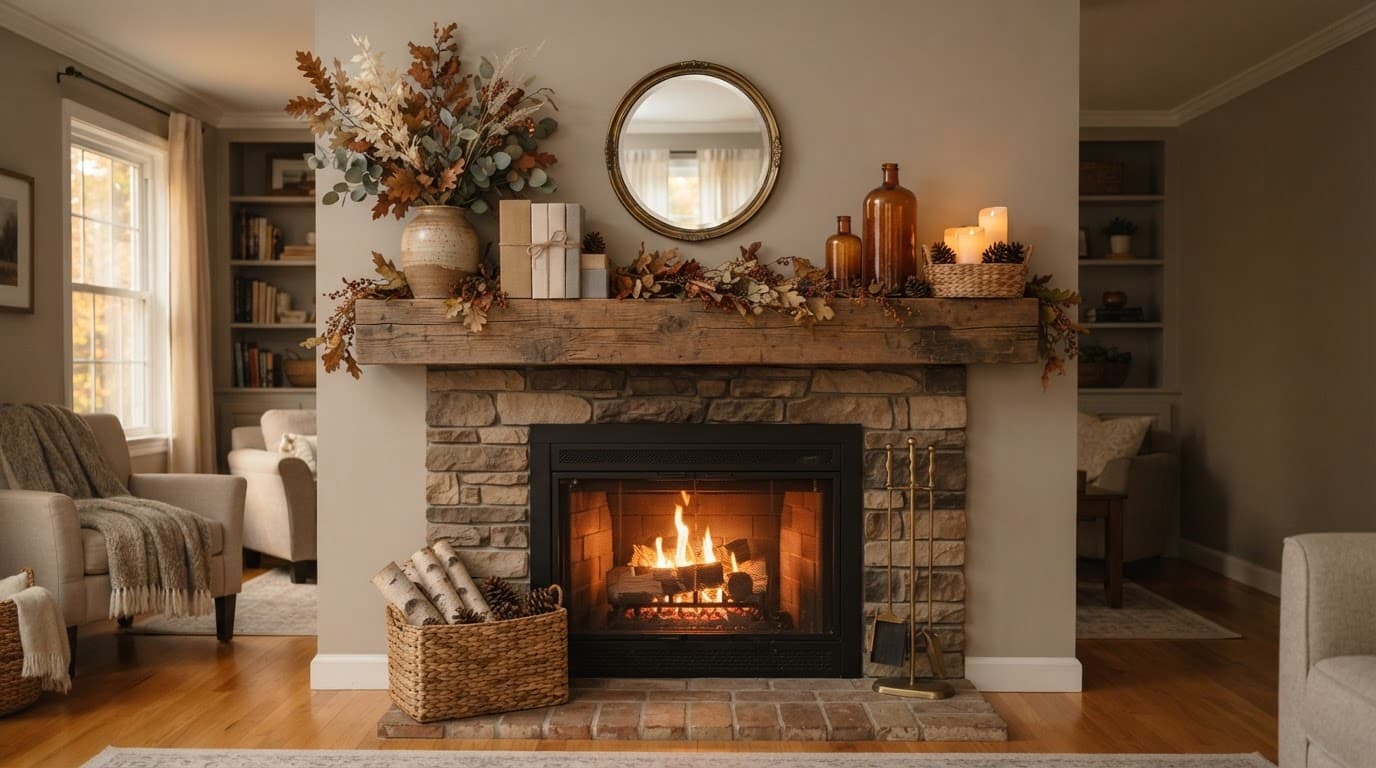
How do you decorate a fall mantel without pumpkins?
Begin with one focal point, such as a mirror, landscape print, wreath, lantern, or vase of branches. Add shorter pieces, including books, ceramic vessels, amber glass, or a low bowl. Keep the arrangement open so every item has room to breathe.
What can replace pumpkins?
Dried branches, wheat stems, pinecones, acorns, autumn leaves, lanterns, woven baskets, and seasonal artwork all work well. A stack of books with a rust-colored textile can also add fall character without a traditional seasonal symbol.
Which colors work best?
Cream, beige, tan, camel, olive, rust, amber, brown, charcoal, and muted burgundy suit most fall mantel styles. Build your fall color palette with one main neutral, one autumn accent, and one supporting shade. Repeating those colors elsewhere helps the mantel feel connected.
How can a neutral display feel cozy?
Layer different textures instead of adding more color. Combine ceramic, wood, woven fibers, stone, glass, linen, or wool. Battery-operated lighting and a folded throw in a nearby basket can make a cream-and-brown arrangement feel comfortable rather than plain.
What natural decorations work well?
Use eucalyptus stems, dried olive branches, willow, bare twigs, wheat, preserved leaves, pinecones, and dried flowers. Clean outdoor materials before bringing them inside, and let them dry fully. Dried materials are combustible, so keep them away from fire, sparks, hot surfaces, vents, and embers.
How do you style a small mantel?
Choose one medium-sized mirror or artwork, then keep the surface decor low. A narrow vase, short candleholders, and one small book stack are usually enough. Leave visible space between pieces, and avoid deep baskets or wide garlands that crowd the shelf.
Can you decorate a mantel with a TV above it?
Yes. Use low decor that doesn't block the screen, vents, controls, or remote receiver. A shallow bowl, low ceramic vase, small frame, or LED candle can add fall color. Always follow the fireplace and television manufacturer's temperature and clearance instructions.
Are candles and lanterns safe on a mantel?
Battery-operated candles are the safest choice near dried branches, books, fabric, children, and pets. If you use a real candle, place it on a stable, heat-resistant surface and keep it at least 12 inches from combustible materials, including paper, wood, foliage, and textiles. The National Candle Association's safety guidance also recommends never leaving a lit candle unattended.
For fireplace clearance, check the appliance manual before decorating. Manufactured fireplaces have model-specific requirements, and a general mantel rule may not apply. Guidance on fireplace mantel clearance requirements explains why mantel depth and fireplace type matter.
How do you create a farmhouse or rental mantel?
For farmhouse style, combine a distressed frame, stoneware pitcher, galvanized accent, wood, linen, and muted greenery. In a rental, lean artwork or a mirror securely instead of drilling. Removable adhesive hooks and picture strips can help with lightweight decor, but follow the product's weight limit and removal instructions. Test the surface first, avoid freshly painted or textured walls, and remove installations carefully before move-out.
Conclusion
An inviting seasonal mantel doesn't need pumpkins or a large collection of decorations. Start with one focal point, add height, layer natural textures, introduce a restrained accent color, and use warm light safely. This simple formula creates a soft autumn aesthetic without making the display feel crowded or overly themed.
Clear the mantel, choose one vase, frame, mirror, or lantern as your anchor, then build around pieces you already have at home. Shop your home first, and keep the final arrangement personal, balanced, and safe.