Screen Free Ideas for Busy Family Weeknights

Dinner is over, everyone is tired, and the remote sits within easy reach. If you're trying a screen-free week, start small with one repeatable evening activity, such as cooking together.
Screen-free family evening ideas can fit into the gap between clearing plates and brushing teeth. Simple no-screen activities for kids don't require a craft-store trip or an energetic parent.
Choose family activities at home that match tonight's mood, beginning with a short, repeatable routine.
Key Takeaways
- Start small with a repeatable 5- to 30-minute activity that fits your family’s time and energy.
- Keep simple supplies nearby and offer children a choice between a couple of activities to make evenings easier to begin.
- Everyday moments—meal prep, dinner conversation, and cleanup—can become screen-free family time.
- Adapt activities to children’s ages, abilities, and interests, and choose a natural stopping point before bedtime.
- A short, low-pressure activity is enough; you don’t need to plan every evening or fill every minute.
Make Screen-Free Weeknights Easier to Start
Choose a Realistic Time Window
Start with a 15- to 30-minute block between dinner and bedtime. Cooking together, chatting, or clearing the table can count, too.
The American Academy of Pediatrics' family media resources can help you decide where screen-free time fits into your routine.
Keep Supplies Close at Hand
Put paper, crayons, cards, board games, a puzzle, and a favorite game in one small basket. Then you won't spend your available time hunting for supplies.
Rotate things you already own. A forgotten deck of cards can feel fresh after a few weeks away.
Let Kids Help Choose
Offer two choices: "Would you rather draw or play dominoes?" You can also take turns choosing the evening's activity.
During a screen-free week, try starting at a predictable time, perhaps after plates reach the sink. You can repeat an activity, leaving room for choice without a nightly negotiation.
Quick screen free ideas for the first 15 minutes

Move and Reset After the Day
Try a dance break, animal walks, or a short obstacle course with cushions on a clear floor. On warm evenings, it can be one of your screen-free summer activities. On slower evenings, stretch together.
Adapt movement to your space and everyone's abilities. CDC child activity guidance recommends activity throughout the day for ages 3 to 5 and at least 60 minutes daily for ages 6 to 17. A brief evening session can contribute without meeting the full target.
Play a No-Prep Guessing Game
Play “I Spy,” act out animals in charades for pretend play, or guess a safe household object by touch for sensory play. Touching and guessing gives kids a hands-on experience. Choose large objects without sharp edges or small detachable parts.
Preschoolers can choose between two answers. Older children can give trickier clues. Meanwhile, a parent folding towels nearby can lead a verbal round.
Draw or Tell a Story Together
Invent an animal with an unusual talent or design a dream treehouse. Share paper, or let everyone draw their own version.
Without supplies, build a story aloud. Each person adds one sentence, and the last speaker gives it an ending before bedtime.
Screen-Free Ideas to Try Around Dinner
Some of the easiest screen free ideas happen during jobs you'd do anyway.
Give Kids a Role in Meal Prep
Children can wash produce, stir cool ingredients, set napkins, or choose between two side dishes. These practical life tasks should match their abilities, with supervision around heat, blades, and breakable dishes.
On warm evenings, make a no-cook snack together as one of your screen-free summer activities. While you work, describe a favorite food or invent a name for tonight's meal.
Make the Dinner Table More Conversational
Ask about the funniest, best, or most surprising part of the day. Let a different person choose the question tomorrow.
Keep conversation welcoming rather than turning dinner into a school or behavior quiz. The AAP's family media planning guidance includes the dinner table among suggested screen-free zones.
Turn Cleanup Into a Shared Routine
Share household chores by giving everyone a manageable task: carry napkins, wipe a safe surface, or put away unbreakable items. Play a short cleanup song or set a timer as a stopping cue.
Focus on finishing together. Younger children don't need to compete with an older sibling's speed.
After-dinner screen-free family activities that take 15 to 30 minutes
Choose a Game That Fits Everyone's Energy
Cards, matching games, dominoes, and short board games work well when everyone wants to sit. Check the rules and likely game length before opening the box.
If competition frustrates younger children, play cooperatively. Work together to find all the matching pairs, with adults offering clues instead of keeping score.
Build or Create With Materials at Home
Build a blanket fort, stack a block tower, or make a paper airplane and aim toward a floor target. Recycled boxes can become garages or shops for pretend play.
Choose a natural stopping point, such as completing one structure or making one card. Keep forts clear of heaters, cords, and unstable furniture.
Take a Short Outdoor Break
Try screen-free summer activities like sidewalk chalk or a walk around the block. These outdoor activities invite nature exploration and active outdoor play, but consider weather, visibility, local conditions, and supervision.
Indoors, search for birds through a window or run a hallway scavenger hunt. A summer bucket list can help you collect ideas for a screen-free week. Brief active outings can add movement, but they don't necessarily meet CDC's daily activity recommendations.
Calm Screen-Free Activities Before Bed
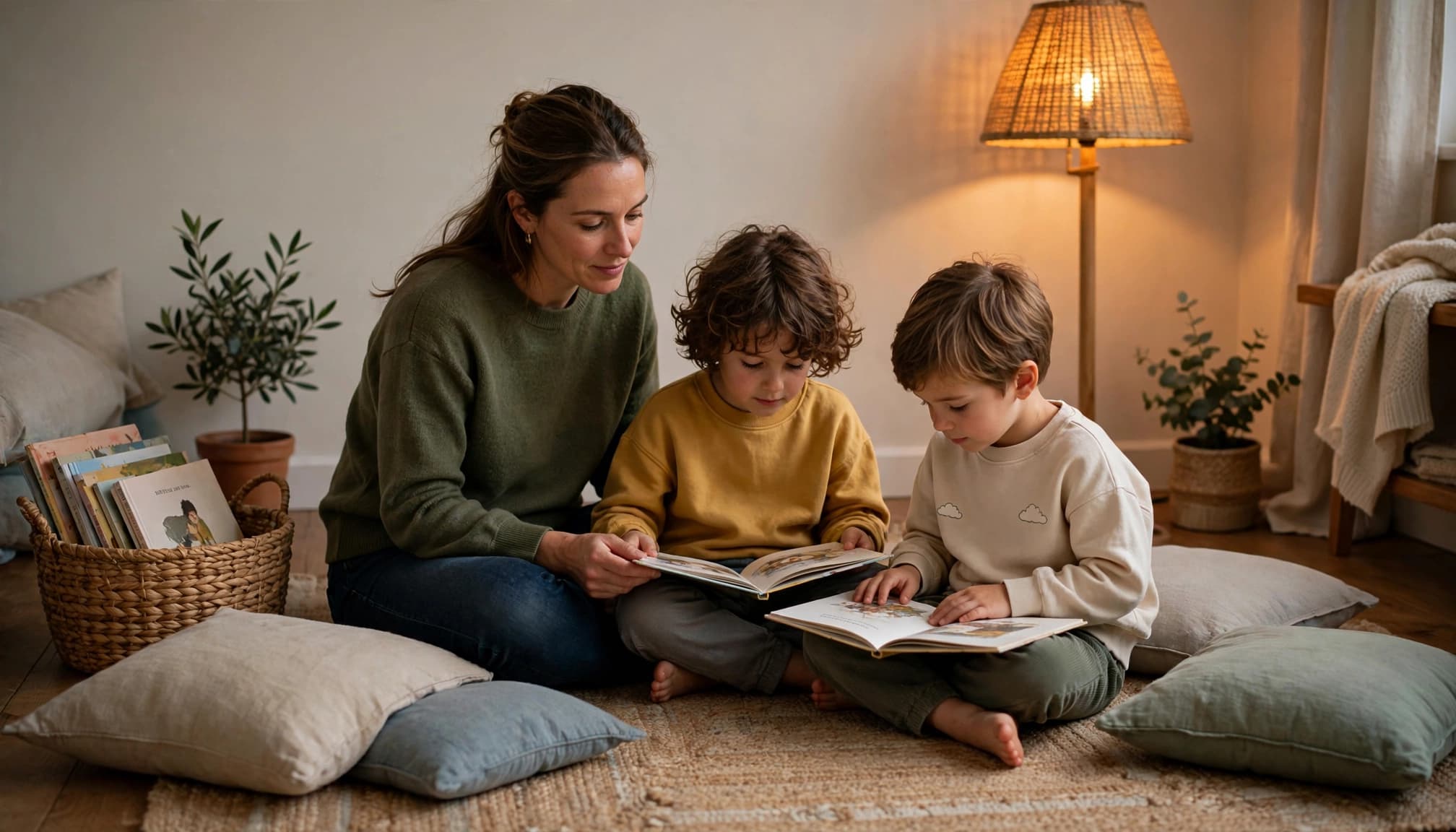
Read Together in a Way That Suits the Evening
Choose a picture book, a short chapter, or a child's retelling of a familiar story to ease into bedtime routines. In summer, a seasonal story can be one of your screen-free summer activities. Keep books nearby so choosing doesn't swallow reading time.
Siblings can share the reading if they want. When bedtime is close, one brief book is enough.
Try a Quiet Puzzle or Tabletop Activity
Set out a small puzzle, coloring page, sticker activity, or simple building task. Quiet puzzle activities or sensory play can support fine motor skills while offering a slower transition.
Choose something easy to pause. During a screen-free week, keep a couple of quiet options ready for evenings when children need a slower transition. Save glitter, noisy toys, and sprawling construction projects for another time.
Add a Brief Family Check-In
Invite each person to share something they enjoyed and something they're looking forward to tomorrow. Gratitude can be an optional prompt.
Younger children might point to a drawing or name one person. Allow anyone to pass; this works better as relaxed conversation than a required performance.
Choose the right screen-free family activities for your evening
These screen-free family activities offer different levels of setup and movement. Use the table to plan a screen-free week, adapting choices for the season. Some work well as screen-free summer activities, including outdoor activities like nature exploration.
| Activity | Time | Setup | Energy level | Suggested ages |
|---|---|---|---|---|
| I Spy | 5 to 10 minutes | None | Low | 3+ |
| Dance break | 5 to 15 minutes | Clear floor | High | 2+, supervised |
| Drawing | 10 to 20 minutes | Paper, crayons | Low | 3+ |
| Blanket fort | 15 to 30 minutes | Blankets, stable supports | Medium | 4+, supervised |
| Read-aloud | 5 to 20 minutes | One book | Low | All ages |
| Nature exploration | 10 to 20 minutes | Outdoor space | Low | 3+, supervised |
Treat ages as starting suggestions, then adapt activities to your child's abilities. Also, gear supervision to your own children. These are just suggestions.
Match the Activity to the Time You Have
With 10 to 15 minutes, choose guessing games, drawing, or board games. A longer gap allows building or a short walk.
Before starting, name the endpoint: one round, one picture, or one trip around the block.
Adapt Activities to Your Children's Ages
For preschoolers, simplify rules and use large, age-safe materials. School-age children can plan designs or invent clues, building creative problem-solving skills.
Older children can choose a helpful role in mixed-age play. They shouldn't have to entertain everyone or become the evening's babysitter. Consider different attention spans when choosing an activity.
Choose for the Adults' Energy, Too
Reading and guessing games suit a parent who needs to sit. Dancing, an obstacle course, or scavenger hunts demand more movement and supervision.
Choose something you can comfortably manage. A conversation while sorting laundry still counts as shared family time.
Common Challenges With Screen-Free Weeknights
"My Kids Ask for Screens as Soon as We Get Home"
If your family uses devices, make their place in the schedule predictable. The AAP's Family Media Plan can help organize those decisions.
Give advance notice, identify the next activity, and keep the basket visible. Introduce changes gradually and respond calmly.
"I Don't Have Time to Plan"
Keep three reusable ideas on the fridge rather than preparing something new daily. Add seasonal choices, including screen-free summer activities like supervised water play or sidewalk chalk, to a summer bucket list.
During a screen-free week, choose an idea at breakfast or cleanup, when you're already together.
A dependable favorite saves planning time. You don't need a different activity every evening.
"My Kids Have Different Ages or Interests"
Offer easier and more challenging versions of the same activity. Some options allow independent play alongside shared time, such as drawing while a sibling works on a puzzle.
Let each child choose one part. Parallel activities, like drawing beside a sibling doing a puzzle, also create shared time.
"Some Nights Everyone Is Tired"
Shorten the plan or choose something quieter. Read a few pages, chat while washing produce, or share one funny moment.
Screen-free family evening ideas should fit your household. A tired Tuesday doesn't need the same schedule as a relaxed Friday.
FAQs About Screen-Free Family Evening Ideas
What Are Easy Screen-Free Activities for a Busy Weeknight?
Try I Spy, a five-minute drawing prompt, or taking turns adding sentences to a story. Each can start within minutes.
How Can I Keep Kids Entertained Without Screens After Dinner?
Use a familiar sequence: clear plates, choose between two activities, then begin bedtime preparations. Keep the choices suited to everyone's energy.
What Can Families Do Together at Home Without Buying Supplies?
Tell stories, play charades, stretch, or build a supervised blanket fort. Paper, cushions, and empty boxes can support plenty of creative play.
How Long Should a Screen-Free Family Activity Last?
There's no single required length. Start with whatever fits, even five or ten minutes, and stop before the activity crowds out bedtime.
What Are Good Screen-Free Evening Activities for Toddlers and Preschoolers?
Picture books, animal movements, large-crayon drawing, and simple guessing games work well. Supervise closely and adjust each activity to the child's abilities.
How Can I Handle Kids Who Ask for Screens Every Night?
Give notice before the transition and name a concrete alternative. Keep expectations predictable, then adjust your approach if it doesn't suit your family.
What Are Quiet Screen-Free Activities Before Bedtime?
Read, color, complete a small puzzle, or share a gentle check-in. Choose activities you can pause without leaving a big cleanup job.
Start With One Activity That Fits Tonight
A screen-free evening can begin with one repeatable activity between dinner and bed. You don't need to fill every minute or prepare a perfect plan to make room for family connection.
Choose something that fits tonight's time and energy; in summer, pick an idea from your summer bucket list. Keep the supplies handy, and your family can begin a screen-free week with one repeatable activity, without planning every evening.