Old-Fashioned Thanksgiving Traditions to Bring Back

Old-fashioned Thanksgiving traditions can feel warm and personal without a perfect menu or a house full of decorations. The appeal is in shared time: making a familiar dish together, hearing a family story, and lingering after dinner.
You can revive those moments without recreating someone else's holiday or adding more work to an already busy week. Choose Thanksgiving dinner traditions that suit the people at your table, then leave enough room for everyone to enjoy them.
Key Takeaways
- Choose one or two Thanksgiving traditions that suit the people at your table, rather than trying to recreate a whole holiday from memory.
- Make the meal a shared effort with clear, manageable tasks, and keep the table comfortable and practical.
- Offer optional ways to share gratitude, family stories, games, and the parade so guests can take part in ways that feel comfortable.
- Adapt the menu and activities to guests' needs, and store and reheat leftovers according to USDA food-safety guidance.
How to Bring an Old-Fashioned Thanksgiving Back to Your Table
Choose the parts of the holiday you miss, rather than trying to reproduce the whole holiday from memory. Perhaps that's your grandfather's sweet potatoes or the pleasure of everyone helping before dinner. One familiar detail can give the day a sense of continuity.
Thanksgiving menus weren't defined by the 1621 Plymouth feast. Recipes and dinner tables varied in the 19th century and the 20th century. An old cookbook might include chicken pie or stuffing. A cherished recipe is one possible Thanksgiving tradition, not a required menu.
Make the meal a shared family effort
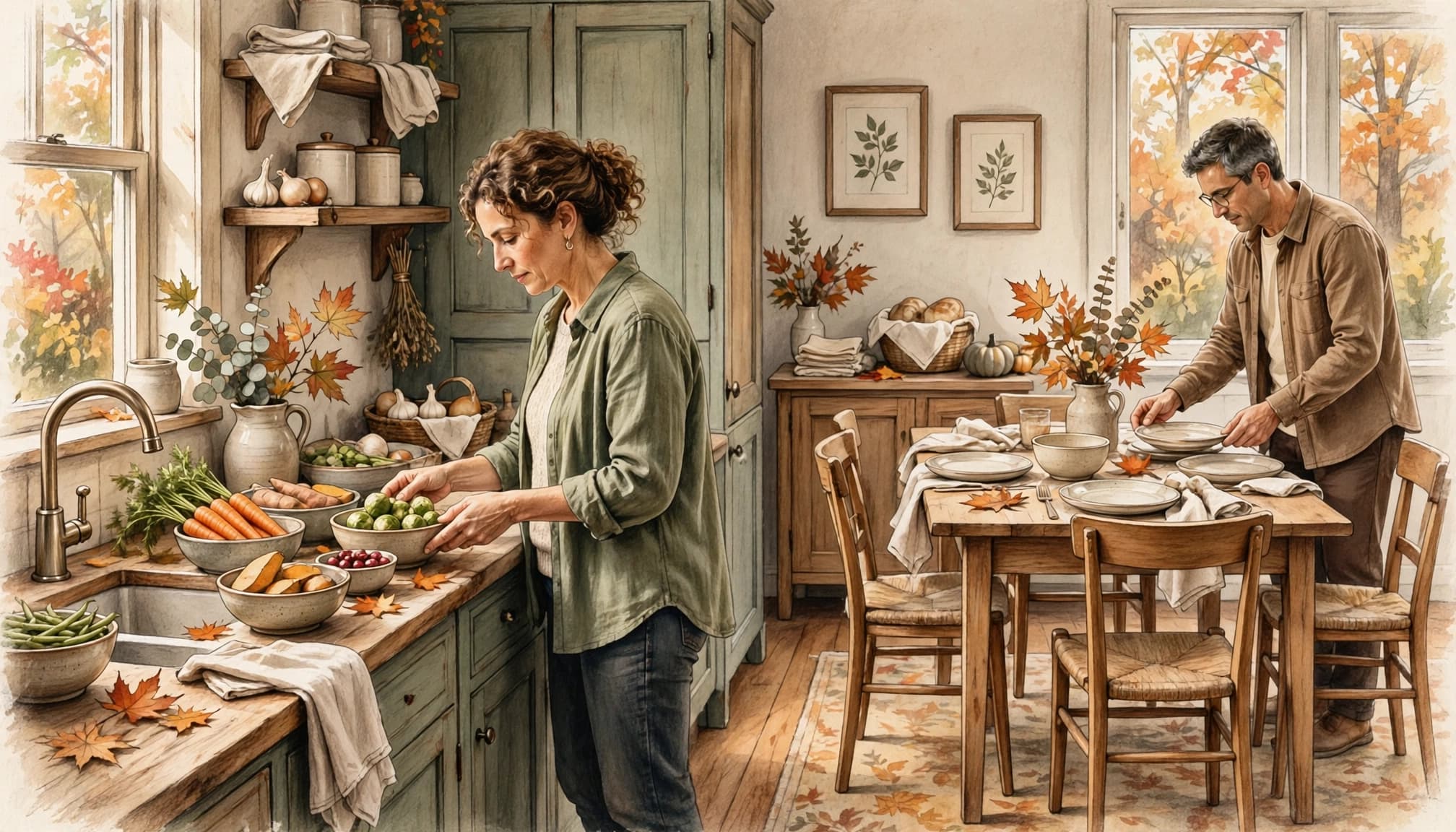
Before shopping begins, agree on a dish or a clear kitchen task with each willing guest. Someone can bring a family recipe, another person can wash produce, and someone else can set the table. Clear jobs work better than a general invitation to help.
Keep the assignments manageable. A guest traveling several hours might bring rolls instead of a casserole that needs careful transport. Children can fold napkins or arrange place cards with supervision. Meanwhile, a relative who prefers staying out of the kitchen might choose music or help clear dishes.
If someone brings a treasured recipe, ask whether they'd like company while making it. Cooking together gives younger relatives a chance to learn the small details a recipe card might leave out. Write down those details afterward, with the cook's permission, so another person can make the dish next time.
Keep raw-poultry handling and thermometer checks with an attentive cook. Follow the USDA's safe food-handling guidance: wash hands, keep raw meat separate from ready-to-eat foods, and clean utensils and work surfaces between tasks.
Set a simple table with meaning
Start with the dishes you already own. Matching plates aren't a requirement for a welcoming meal, and a mixture of everyday bowls and serving pieces can make the table feel familiar.
Add one personal touch instead of buying a complete set of seasonal decorations. Handwritten place cards, a few clean seasonal leaves, or a centerpiece made by the family are enough. Keep decorations low so people can see and talk across the table.
If you have a tablecloth or serving dish with a family connection, use it when doing so feels comfortable. Tell guests where it came from, but don't turn the meal into a lesson about handling precious objects. Everyday dishes are a better choice when worrying about breakage would spoil your afternoon.
Also, make the table practical. Leave room for elbows, keep hot dishes beyond small children's reach, and place frequently needed items where guests can reach them. If serving bowls crowd the table, put the food on a nearby counter. Comfort matters more than matching place settings, especially when people plan to stay awhile.
Bring Back the Simple Thanksgiving Traditions That Make People Feel Close
A familiar story or game can become one of your family's Thanksgiving dinner traditions. Choose one or two activities that give guests an easy way to join in, then let the afternoon take its own shape. A quiet conversation can be as welcome as an organized game.
Share gratitude in a way that feels comfortable
A gratitude tradition works best when everyone has choices. Some people enjoy saying what they appreciate before dinner. Others would rather write a note or listen while someone else speaks.
Set a bowl and a few scraps of paper on a side table. Guests can add something they're thankful for whenever they feel ready. During dessert, invite someone to read the notes without names, or leave them for people to browse on their own.
For a spoken version, keep the invitation small: share one thing you appreciate, if you'd like. There's no need for a polished speech or a meaningful life lesson. A helpful neighbor or a favorite meal is worth mentioning.
Let children draw their answers, and help with writing only when they ask. Above all, make it easy to pass. Someone dealing with grief, illness, or a difficult year shouldn't have to explain their feelings in front of the table.
If people want to save their notes, tuck them into an envelope with the year written outside. Ask before reading them aloud at a future gathering, since a private note may feel different years later.

Make room for stories, games, and the parade
Give family stories a natural opening by bringing out a few photographs or asking about a familiar recipe. Invite the person who knows the story to tell it in their own way. Others can add their memories without turning the conversation into a debate over every detail.
Ask whether guests recognize dishes in old cookbooks. Some recipes include oysters, turtle soup, celery, gelatin mold salads, Jell-O, or mincemeat pie. These aren't universal customs. Recipes can prompt memories of changing tastes, forgotten Thanksgiving traditions, and Thanksgiving desserts families once served.
Ask permission before recording a story. A short voice recording can preserve a relative's telling, but putting a phone in someone's face may make an easy conversation feel like an interview.
Later, offer a familiar card or board game with rules someone can explain quickly. Uno, Go Fish, or dominoes can give different generations something to do together. Keep the game optional, and choose seating that works for the people playing.
If watching Macy's parade is part of your family's routine, leave time for it instead of scheduling competing activities. Guests can watch together while others finish getting ready.
A post-meal walk is another easy option when weather and mobility allow. Those staying inside can enjoy coffee or conversation. You don't need everyone doing the same thing for the gathering to feel connected.
Keep Thanksgiving Traditions Welcoming and Easy to Repeat
Your celebration can change as your household changes. Work schedules, food needs, and the people attending may look different each year. Keep the parts people enjoy, and adjust anything that makes joining the celebration harder than it needs to be.
Let the menu fit the people coming
Ask about allergies and dietary needs before settling the menu. Then agree on dishes people can comfortably eat, including familiar sides like stuffing, rather than leaving a guest to make a meal out of whatever happens to work.
A smaller household may prefer turkey breast or chicken pie instead of a whole bird. A vegetarian main dish can sit alongside familiar sides, and a store-bought pie is a convenient choice among Thanksgiving desserts that can free someone to spend the morning with visiting relatives. The meal can reflect your household's cultural traditions, too.
World War I conservation campaigns affected home cooking, while World War II sugar rations shaped baking. Treat old recipes as stories you can adapt, not obligations.
Contribution also takes different forms. Someone who can't stand for long periods might share a recipe or help plan the shopping. Another guest may need to arrive without bringing anything.
Keep family favorites when people want them, but don't make one person responsible for cooking the same dish forever. Ask whether they'd enjoy passing along the recipe or taking a year off. That gives a tradition room to continue without turning affection into an obligation.
Give remote loved ones a place in the day
Choose a particular moment for a video call, such as the first slice of pie or a brief exchange of gratitude. A clear invitation is easier to join than an open-ended call that runs through the whole meal.
Place one device where the remote guest can see faces and hear the conversation. During the call, let someone nearby help include them instead of leaving them watching a distant table.
You can also share a recipe beforehand and compare the finished dishes. If a live call doesn't suit someone's schedule or access needs, send a photograph or voice message. Ask before sharing images of other guests.
Keep expectations modest. A short, attentive conversation is easier to enjoy than a long call full of background noise. Once you've said goodbye, put the device away unless another guest is expected.
Turn leftovers into a relaxed next-day ritual
Plan a simple meal around what remains: turkey sandwiches, reheated sides, or soup made with leftover turkey. Keep it casual enough that nobody feels responsible for hosting a second holiday.
First, put the food away safely. USDA guidance says to refrigerate perishable food promptly, within two hours at room temperature. If the temperature is above 90°F, that window drops to one hour.
Divide turkey and large dishes into smaller portions, then refrigerate them in shallow containers. Don't leave everything on the counter waiting to cool. If guests are still talking, ask a few willing helpers to handle storage while the conversation continues.
Label containers with their contents and the date. Use refrigerated leftovers within three to four days, or freeze portions you won't eat in that time. That makes it easier to enjoy the food without feeling you must finish everything at once.
When reheating, follow the USDA's leftover reheating guidance: bring leftovers to 165°F, measured with a food thermometer. Bring sauces, soups, and gravies to a rolling boil.
Then share the next-day meal without resetting the entire table or planning another round of activities. Yesterday's food and unhurried company are enough.
Frequently Asked Questions
How can I bring back an old-fashioned Thanksgiving tradition?
Choose a familiar dish, story, or activity that people at your table enjoy. Start with one simple tradition and let it change as your household changes.
How can guests help with Thanksgiving dinner?
Agree on clear, manageable tasks before the meal, such as bringing a recipe, washing produce, or setting the table. Match each task to what the guest can comfortably do, and let people pass if they don't want to help.
How can I make a gratitude tradition comfortable for everyone?
Offer several ways to take part, such as speaking, writing a note, drawing, or listening. Make it easy to pass, and ask before reading saved notes aloud at a future gathering.
How long can Thanksgiving leftovers stay in the refrigerator?
Refrigerate perishable food within two hours at room temperature, or within one hour when the temperature is above 90°F. Use refrigerated leftovers within three to four days, and reheat them to 165°F.
Keep the Tradition Small Enough to Enjoy
A familiar holiday grows out of food, gratitude, stories, and time together. You can keep those things while changing the menu, welcoming someone by video, or letting a tired cook take a break.
Choose one simple tradition to try at your next gathering. Share a recipe, leave out a bowl for gratitude notes, or bring a familiar game to the table.
Let people's enjoyment decide what returns. A tradition is easier to keep when everyone has room to make it their own.